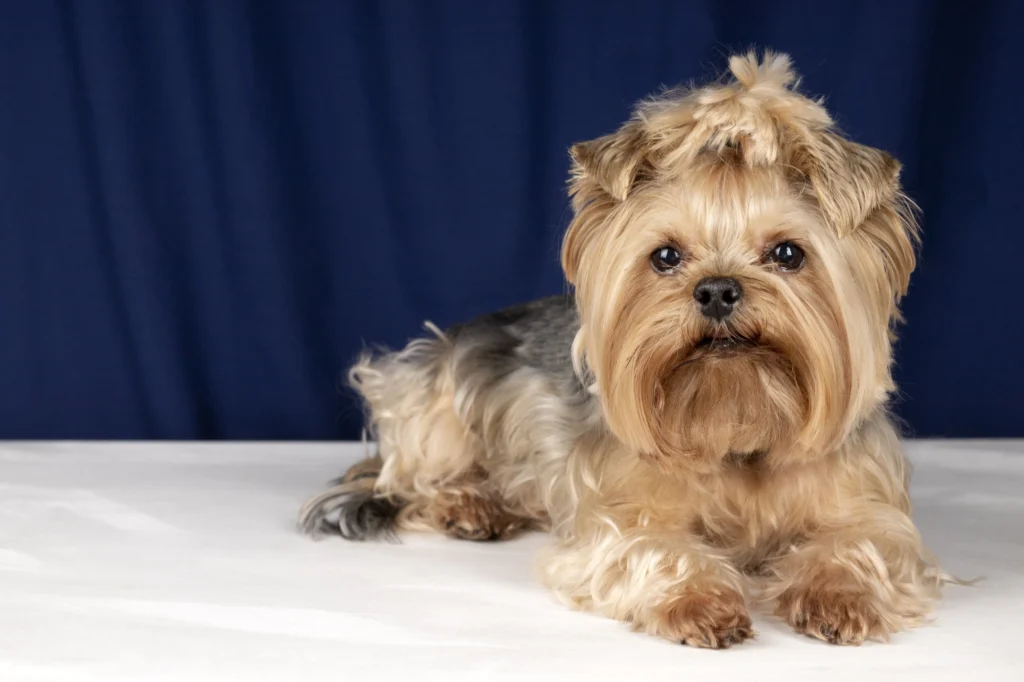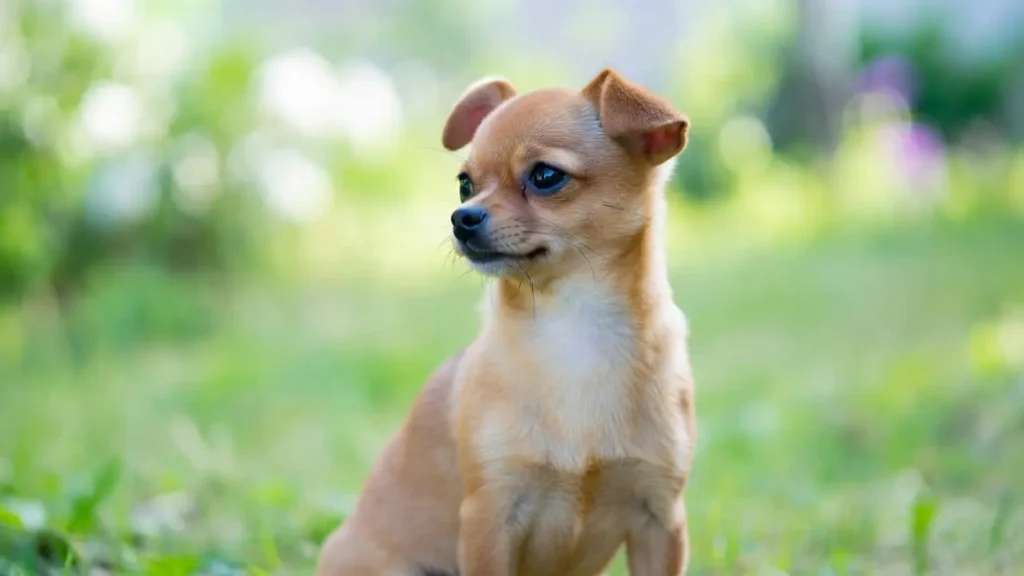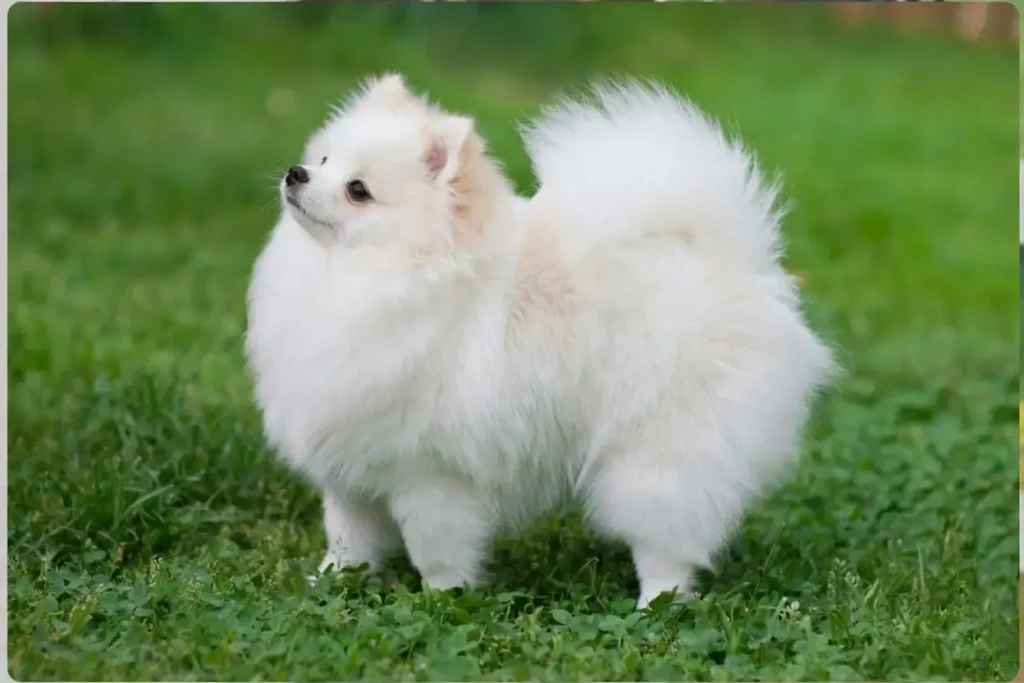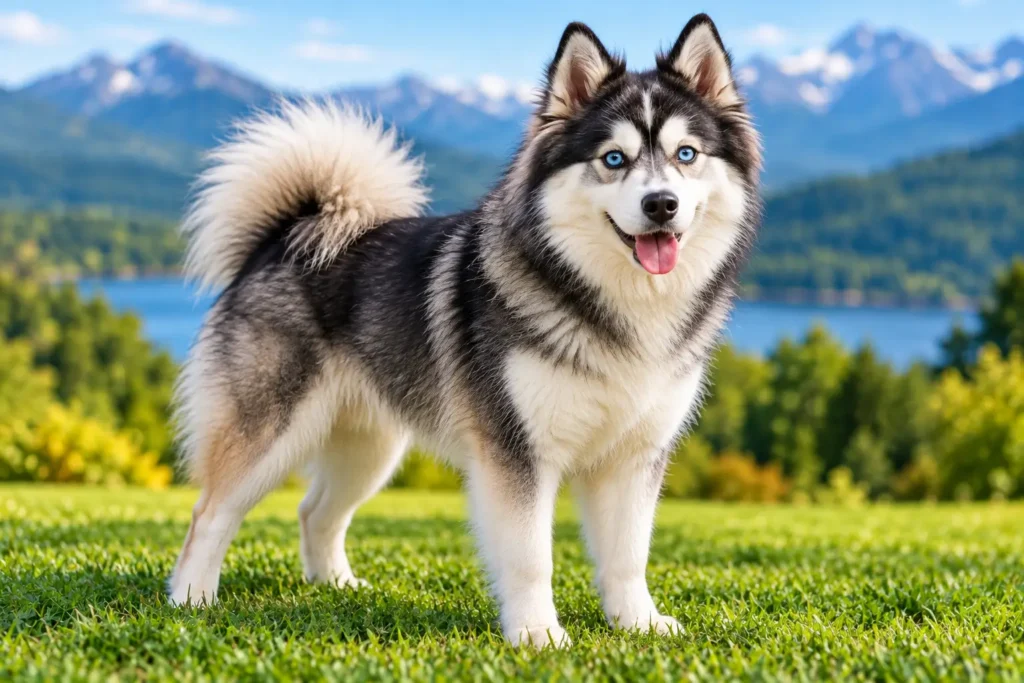
A Pomsky is a cross between a Pomeranian and a Siberian Husky, usually bred as a small-to-medium companion dog with the fluffy coat, erect ears, and facial markings people associate with a miniature Husky.
A full-grown Pomsky can vary considerably because the two parent breeds differ dramatically in size. Many adults fall around 16–24 pounds, but the broader range can extend from roughly 12 to 35 pounds depending on parent size and generation. Pomskies are intelligent, energetic, affectionate, vocal, heavy-shedding dogs that typically live around 12–15 years.
The appeal of the Husky Pomeranian mix is obvious: wolf-like looks in a smaller body. But appearance is only part of the picture. A Pomsky can also inherit the Husky’s independence and energy alongside the Pomeranian’s alertness, attachment to people, and tendency to vocalize.
Before buying one, prospective owners should understand that Pomskies are not standardized in the same way as established purebred dogs. Adult size, coat, eye color, activity level, and temperament can vary even between puppies from the same litter.
Pomsky Dog at a Glance
| Trait | Typical Pomsky |
| Parent breeds | Pomeranian × Siberian Husky |
| Type | Designer mixed breed |
| Adult weight | Commonly 16–24 lb; broader range about 12–35 lb |
| Height | Roughly 10–18 inches |
| Lifespan | About 12–15 years |
| Coat | Dense double coat |
| Shedding | Moderate to heavy |
| Energy | Moderate to high |
| Exercise | Around 60 minutes daily for many adults |
| Trainability | Intelligent but sometimes independent |
| Barking/vocalizing | Moderate to high |
| Good with children | Often, with socialization and supervision |
| Apartment living | Possible with sufficient exercise |
| Typical puppy cost | Often about 2,500–5,000 from health-testing breeders |
| AKC recognized | No |
What Is a Pomsky Dog?
A Pomsky is a deliberately bred Pomeranian–Siberian Husky mix created primarily as a companion dog.
The name combines:
Pom — Pomeranian
sky — Husky
The two parent breeds are very different in physical size.
A Pomeranian may weigh only a few pounds, while an adult Siberian Husky can exceed 50 pounds. This large parental difference explains why Pomsky puppies can mature into noticeably different adult sizes.
Competitor veterinary material describes modern Pomskies as a relatively new cross that became established during the early 2010s. Because of the size difference between the foundation breeds, first-generation breeding generally uses a Siberian Husky female and Pomeranian male rather than the reverse.
The result should not be viewed as a guaranteed miniature Husky.
A puppy can inherit:
- Husky-like markings
- Pomeranian-like facial features
- Husky-style blue eyes
- Brown eyes
- A curled tail
- A shorter coat
- A long woolly coat
- More independent behavior
- More companion-oriented behavior
That variability is fundamental to understanding the breed.
Is a Pomsky a Real Dog Breed?
A Pomsky is a recognized type of designer crossbreed, but it is not currently an American Kennel Club-recognized pure breed.
There is no single universally enforced breed standard that guarantees:
- Weight
- Height
- Coat type
- Eye color
- Temperament
- Working drive
Breed-focused organizations are working toward greater consistency, but the Pomsky remains genetically more variable than an established pure breed.
This is why two adult Pomskies can look very different even though both are genuinely Pomeranian–Husky crosses.
How Big Does a Full-Grown Pomsky Get?
Most full-grown Pomskies are small-to-medium dogs, but adult size can range from roughly 12 to 35 pounds.
A common adult range is approximately:
- Weight: 16–24 pounds
- Height: 10–18 inches at the shoulder
Some standard-size Pomskies reach around 35 pounds, while selectively bred smaller dogs can remain under 15 pounds.
The American Pomsky Kennel Club size categories cited by veterinary competitors divide them approximately into:
| Pomsky Size | Weight | Height |
| Toy | Up to 15 lb | Under 10 in |
| Mini | About 12–20 lb | Up to 14 in |
| Standard | About 20–35 lb | Roughly 12–18 in |
These categories are useful descriptions, but they do not make adult size perfectly predictable.
Why Does Adult Pomsky Size Vary So Much?
Adult Pomsky size varies because Pomeranians and Siberian Huskies are extremely different in body size, and each puppy receives a different genetic combination.
The variation depends on:
- Size of both parents
- Percentage of Pomeranian ancestry
- Percentage of Husky ancestry
- Generation of the cross
- Individual genetics
- Nutrition during growth
- Health
A first-generation 50:50 Pomsky may develop differently from a Pomsky bred back toward a Pomeranian.
That is why breeders promising an exact adult weight for a very young puppy should be treated cautiously.
Embark likewise notes that there is no reliable way to know exactly how large every Pomsky puppy will become.
What Does a Full-Grown Pomsky Look Like?
A full-grown Pomsky usually combines Spitz-type features with a dense coat, erect ears, expressive eyes, and a curled or plumed tail.
Common physical characteristics include:
- Triangular upright ears
- Almond-shaped or round eyes
- Dense undercoat
- Fluffy tail
- Compact body
- Husky-style facial mask
- Pomeranian-like plume coat
- Fox-like expression
Many people expect an adult Pomsky to look exactly like a Husky puppy.
That can happen—but it is not guaranteed.
Some adults become:
- More Pomeranian-like
- Taller and more Husky-like
- Less heavily marked
- Larger than expected
- Smaller than expected
This unpredictability is one of the most important facts to understand before buying a Pomsky.
What Colors Can a Pomsky Be?
Pomskies occur in a wide range of colors because both parent breeds contribute extensive coat-color variation.
Common colors and combinations include:
- Black and white
- Gray and white
- Red and white
- Brown
- Chocolate
- Sable
- Agouti
- Wolf gray
- Cream
- White
- Black
- Tan
- Blue or dilute shades
Facial masks are common but not required.
Can Pomskies Have Blue Eyes?
Yes. Pomskies can have blue, brown, amber, greenish, gray, or mixed-color eyes.
Some have:
Heterochromia — one eye is a different color from the other.
Others may have:
Parti eyes — more than one color appears within the same iris.
Blue eyes are strongly associated with the Siberian Husky side, but they cannot be guaranteed in every puppy.
What Coat Types Do Pomskies Have?
Pomskies have a double coat, but coat length and density vary considerably.
Common descriptions include:
Standard coat
Shorter and less dramatic than the heavily fluffy types.
Plush coat
Medium length with noticeably fuller furnishings on the:
- Tail
- Legs
- Neck
- Ears
Wooly coat
Longer, denser, and much more visually dramatic.
The longer the coat, the greater the grooming commitment tends to be.
What Is a Pomsky’s Temperament Like?
A typical Pomsky is intelligent, affectionate, alert, playful, energetic, and strongly attached to people, but independence and stubbornness are also common.
Potential traits include:
- Playfulness
- Confidence
- Curiosity
- Affection
- Alertness
- Independence
- High intelligence
- Vocal behavior
- Strong attachment to family
- Moderate prey drive
The key word is variable.
A Pomsky is not simply “half Husky personality + half Pomeranian personality.”
Genetics do not divide that neatly.
One dog may lean heavily toward the sociable Pomeranian side, while another behaves more like an independent northern working dog.
Are Pomskies Affectionate?
Most Pomskies are highly people-oriented and enjoy close interaction with their families.
Many like to:
- Sit close to their owners
- Follow family members around
- Play interactive games
- Sleep near people
- Participate in household activity
This attachment can become problematic when the dog never learns to spend time alone.
Gradual independence training during puppyhood can reduce the risk of separation-related distress.
Are Pomskies Vocal?
Yes. Many Pomskies are more vocal than the average companion dog.
Possible vocal behaviors include:
- Alert barking
- Excitement barking
- Whining
- Husky-like talking
- Howling
Not every Pomsky is noisy, but both foundation breeds can be expressive vocally.
This matters particularly for apartment owners.
A Pomsky may physically fit easily into a small apartment but still create problems if barking or howling is poorly managed.
Are Pomskies Aggressive?
Pomskies are not inherently aggressive, but poor socialization, fear, frustration, resource guarding, or inadequate training can create behavioral problems in any dog.
Early exposure should include:
- Different adults
- Calm children
- Other dogs
- Household sounds
- Traffic
- Grooming
- Veterinary handling
- Different surfaces
- Car travel
Positive experiences during puppyhood help create a more adaptable adult.
Are Pomskies Good Family Dogs?
Pomskies can be excellent family dogs when their exercise, socialization, training, and companionship needs are met.
They often suit households that want a dog that is:
- Interactive
- Playful
- Intelligent
- Affectionate
- Active
- Relatively compact
They are less ideal for families looking for a quiet, low-maintenance lap dog.
The Pomsky’s attractive appearance sometimes causes people to underestimate how much work the Husky ancestry can contribute.
Are Pomskies Good With Children?
Well-socialized Pomskies can live successfully with children, but supervision is especially important with young children.
A dog should always have:
- A quiet retreat
- Protection from rough handling
- Controlled feeding space
- Respect around sleep
- Safe handling during play
Children should also learn not to:
- Pull fur
- Grab tails
- Climb on the dog
- Interrupt eating
- Wake the dog suddenly
Some competitors suggest that Pomskies may be easier in households with older children because individual dogs can be sensitive, active, or independent.
Are Pomskies Good With Other Dogs?
Many Pomskies are social with other dogs, especially when introduced and socialized properly from puppyhood.
The Siberian Husky has a strong history of working around other dogs, while Pomeranians can also be socially confident.
Still, individual personality matters more than the breed label.
Are Pomskies Good With Cats?
Pomskies can live with cats, but early introductions are important because some inherit a stronger chasing or prey drive.
A Pomsky raised with a cat from puppyhood may adapt well.
New introductions should be:
- Gradual
- Supervised
- Controlled
- Reward-based
Cats should always have elevated escape areas that the dog cannot access.
Small prey animals such as hamsters, rabbits, or guinea pigs may require much more caution.
How Much Exercise Does a Pomsky Need?
Many adult Pomskies need about 60 minutes of physical activity per day, although individual requirements vary.
A practical schedule might include:
- 30-minute morning walk
- 30-minute evening walk
- Short training sessions
- Indoor play
- Puzzle feeding
More energetic adults may enjoy longer activity.
Competitor breed sources consistently characterize Pomskies as moderate-to-high energy dogs, with some adults comfortable on two 30-minute daily walks and others capable of much more demanding activities.
What Activities Are Good for a Pomsky?
Good Pomsky activities include:
- Brisk walking
- Hiking
- Fetch
- Agility
- Trick training
- Puzzle toys
- Scent games
- Swimming
- Running after physical maturity
- Interactive play
Their intelligence means mental fatigue matters as much as physical fatigue.
A long walk alone may not satisfy a dog whose brain remains under-stimulated.
Scent-based games can be particularly useful because nose work training for dogs combines mental problem-solving with controlled physical activity.
Are Pomskies Easy to Train?
Pomskies learn quickly, but intelligence does not necessarily mean automatic obedience.
They may inherit:
- Husky independence
- Pomeranian confidence
- Short attention spans
- Strong food motivation
- Curiosity
- Selective cooperation
Effective training should be:
- Consistent
- Short
- Reward-based
- Varied
- Clear
Harsh correction can increase fear or conflict rather than improving reliability.
A force-free dog training approach based on reinforcement is better suited to building cooperation with an intelligent, independent dog.
When Should Pomsky Training Start?
Training should start as soon as the puppy comes home.
Early priorities include:
- Name recognition
- Recall
- Sit
- Drop
- Leave it
- Loose-leash walking
- Crate training
- Grooming tolerance
- Toilet training
- Calmness around visitors
Training a puppy is not about demanding perfect obedience.
The goal is to build predictable communication and useful habits before unwanted behaviors become established.
Can a Pomsky Live in an Apartment?
Yes, a Pomsky can live in an apartment if its exercise, mental stimulation, and noise are managed effectively.
Physical size is rarely the main limitation.
The bigger concerns are:
- Barking
- Howling
- Boredom
- Separation distress
- Lack of exercise
An exercised and trained Pomsky may live more comfortably in an apartment than an under-stimulated Pomsky with access to a large garden.
A yard does not replace walks or mental engagement.
Can Pomskies Be Left Alone?
Pomskies should learn to tolerate short periods alone, but many are highly social dogs and may struggle when regularly isolated for long working days.
Possible signs of separation distress include:
- Barking
- Howling
- Pacing
- Destructive chewing
- Indoor toileting
- Scratching doors
- Refusing food when alone
Independence training should begin gradually while the puppy is calm.
How Much Grooming Does a Pomsky Need?
Pomskies require regular brushing because their dense double coat sheds throughout the year and more heavily during seasonal coat changes.
A realistic routine is:
- Brush 2–3 times weekly
- Increase brushing during shedding seasons
- Check ears weekly
- Trim nails as needed
- Brush teeth regularly
- Bathe when necessary
Long wooly coats may need more frequent brushing.
PetMD’s breed guidance recommends brushing many Pomskies two to three times each week and increasing care during seasonal undercoat shedding.
Do Pomskies Shed a Lot?
Yes. Pomskies are generally moderate-to-heavy shedders.
They inherit a double coat from both sides of the family.
Heavy shedding often becomes most noticeable during seasonal undercoat loss.
Owners should expect:
- Hair on furniture
- Hair on clothes
- More vacuuming
- Regular coat maintenance
A Pomsky is not a good choice for someone specifically seeking a low-shedding dog.
Should You Shave a Pomsky?
Routine shaving of a healthy Pomsky’s double coat is generally unnecessary and can interfere with the coat’s normal protective function.
Regular brushing and professional de-shedding are usually preferable.
Clipping may sometimes be required for medical reasons under veterinary or professional grooming guidance.
How Often Should a Pomsky Be Bathed?
Many Pomskies can be bathed roughly once every four to six weeks, although actual frequency depends on activity and coat condition.
Over-bathing can dry the skin.
A dog that swims, rolls in mud, or has a dermatologic condition may require a different schedule.
What Health Problems Can Pomskies Have?
Pomskies can inherit health risks associated with either Pomeranians or Siberian Huskies.
Conditions discussed in veterinary and breed sources include:
- Patellar luxation
- Hip dysplasia
- Eye disease
- Dental disease
- Allergies
- Skin problems
Because the Pomsky is still relatively new, long-term population-level health data are less extensive than for long-established breeds.
Patellar luxation
Patellar luxation occurs when the kneecap moves out of its normal groove.
Possible signs include:
- Skipping steps
- Sudden hind-leg lifting
- Bunny hopping
- Limping
- Knee discomfort
This condition is particularly relevant because it occurs commonly in smaller breeds such as the Pomeranian.
Hip dysplasia
Hip dysplasia occurs when the hip joint develops abnormally, potentially leading to instability and arthritis.
Signs can include:
- Difficulty rising
- Limping
- Reduced jumping
- Reluctance to use stairs
- Hind-leg weakness
UrbanPetGuide’s guide to hip dysplasia in dogs explains the warning signs and management options in more detail.
Veterinary competitor material lists both patellar luxation and hip dysplasia among reported Pomsky concerns.
Eye problems
Potential inherited eye concerns may include:
- Cataracts
- Progressive retinal atrophy
- Other inherited ocular disorders
Responsible breeders should discuss eye screening performed on breeding dogs.
Dental disease
Smaller Pomskies may inherit the Pomeranian tendency toward dental crowding and periodontal disease.
Preventive care includes:
- Daily or frequent tooth brushing
- Veterinary dental checks
- Professional dental cleaning when required
How Long Do Pomskies Live?
A healthy Pomsky generally has an estimated lifespan of about 12–15 years.
Some sources place the typical estimate at:
- 12–14 years
- 13–15 years
The range remains approximate because the cross is relatively young and large long-term health datasets are still developing.
Embark estimates approximately 13–15 years based partly on the longevity of the two parent breeds.
Longevity is influenced by:
- Genetics
- Body weight
- Dental care
- Nutrition
- Exercise
- Preventive veterinary care
- Accident prevention
What Should a Pomsky Eat?
A Pomsky should eat a complete and balanced dog food appropriate for its life stage, body size, health, and energy requirement.
There is no special diet required simply because the dog is a Pomsky.
Choose food according to:
- Puppy vs adult stage
- Calorie density
- Body condition
- Activity
- Food tolerance
- Veterinary needs
Puppies should receive food appropriate for growth.
Adults generally require maintenance nutrition.
How Much Should a Pomsky Puppy Eat?
The amount depends on body weight, food calorie density, age, and expected adult size rather than the breed name alone.
Young puppies also need more frequent meals than adults.
A practical progression may be:
- Young puppy: 3–4 meals daily
- Older puppy: 2–3 meals
- Adult: typically 2 meals
Your food’s calorie content matters because one cup of one kibble may provide dramatically more energy than one cup of another.
For a more detailed age-based approach, see how much to feed a puppy.
How Much Should an Adult Pomsky Eat?
Feed according to calorie needs and body condition rather than using one universal cup amount.
Two adult Pomskies may have completely different requirements if one is:
- 14 pounds and sedentary
while another is:
- 30 pounds and highly active
Monitor:
- Rib coverage
- Waist definition
- Weight trend
- Energy level
Adjust intake when activity changes.
Can Pomskies Become Overweight?
Yes. Pomskies can gain excess weight when calorie intake exceeds activity.
This can be particularly easy when:
- Treats are frequent
- Training uses large treats
- Exercise decreases
- Portion sizes are estimated rather than measured
Excess weight places additional strain on the joints and may worsen existing orthopedic problems.
Is a Pomsky Good for a First-Time Dog Owner?
A Pomsky can work for a committed first-time owner, but it is not necessarily the easiest beginner dog.
Challenges may include:
- High intelligence
- Independence
- Vocal behavior
- Heavy shedding
- Exercise needs
- Separation sensitivity
- Prey drive
- Variable adult temperament
An owner willing to attend training classes and provide daily enrichment has a better chance of success than someone selecting the dog mainly for appearance.
Is a Pomsky a Good Apartment Dog?
Potentially yes, but lifestyle matters more than square footage.
A Pomsky can adapt to apartment life when the owner provides:
- Daily exercise
- Mental stimulation
- Toilet breaks
- Consistent training
- Barking management
The biggest apartment problem is usually not the dog’s size.
It is noise.
Can Pomskies Handle Hot Weather?
Pomskies generally tolerate cold conditions better than intense heat because of their dense double coat.
During warm weather:
- Walk early or late
- Avoid hot pavement
- Provide shade
- Keep fresh water available
- Avoid strenuous midday activity
- Watch for excessive panting
Never leave a dog in a parked vehicle.
Can Pomskies Handle Cold Weather?
Most Pomskies tolerate cool and cold conditions relatively well because both foundation breeds carry dense coats.
Individual tolerance still depends on:
- Coat length
- Body size
- Age
- Health
- Weather
- Wetness
- Wind
Cold tolerance should never be used as a reason to leave a companion dog outdoors for prolonged periods.
How Much Does a Pomsky Cost?
A responsibly bred Pomsky puppy commonly costs approximately 2,500–5,000 in the United States, although prices vary substantially.
PetMD cites a typical Pomsky price of about 2,500–5,000, depending partly on parent quality and health testing.
Other sources give similar ranges beginning around $2,000.
Price may depend on:
- Breeder reputation
- Health screening
- Generation
- Parent size
- Coat
- Eye color
- Region
- Demand
Rare appearance should never be prioritized over health.
Why Are Pomskies Expensive?
Pomskies are expensive partly because responsible breeding can involve reproductive veterinary care, parent health testing, puppy care, and relatively limited availability.
Responsible breeding costs may include:
- Genetic testing
- Eye screening
- Orthopedic screening
- Artificial insemination
- Pregnancy care
- Veterinary examinations
- Vaccinations
- Microchipping
- Early socialization
- Puppy raising
A lower purchase price is not automatically a bargain if health screening has been skipped.
What Should You Ask a Pomsky Breeder?
Ask for documented health information on both parent dogs rather than choosing a puppy primarily by eye color or coat pattern.
Questions should cover:
- What health testing was performed on both parents?
- Can I see the results?
- What are the parents’ weights?
- What generation is the puppy?
- How were the puppies socialized?
- Have puppies been examined by a veterinarian?
- What vaccinations and parasite prevention have been given?
- What food are they currently eating?
- What support does the breeder provide after purchase?
- Will the breeder take the dog back if circumstances change?
The breeder should also be willing to ask you questions.
Responsible breeders care where their puppies go.
What Are F1, F1b, F2, and Multigenerational Pomskies?
These labels describe how the Pomsky was bred and can influence how strongly each parent breed is represented genetically.
F1 Pomsky
A direct:
Pomeranian × Siberian Husky
cross.
F1b Pomsky
An F1 Pomsky bred back to one of the parent breeds, often a Pomeranian when the goal is smaller size.
F2 Pomsky
Two F1 Pomskies bred together.
Multigenerational Pomsky
Pomsky lines bred from later generations.
Generation may influence general tendencies, but it still cannot guarantee an exact adult appearance or personality.
At What Age Is a Pomsky Full Grown?
Most Pomskies reach most of their adult height within the first year, though body development can continue beyond that point.
Smaller individuals may mature faster than larger ones.
A dog may reach near-final height while continuing to develop:
- Muscle
- Chest width
- Coat
- Adult body condition
The fluffy adult coat may also create the appearance of additional size.
Does a Pomsky Stay Small?
Some Pomskies remain quite small, but buying a Pomsky does not guarantee a miniature Husky-sized dog.
Adult size depends heavily on genetics.
A puppy from larger parents is more likely to mature larger than one produced from carefully selected smaller lines.
Avoid breeders claiming guaranteed “micro” or extremely tiny adult size without discussing health implications.
What Is a Pomsky Adult Like Compared With a Puppy?
A Pomsky adult is usually calmer and more physically developed than a puppy, but the breed’s intelligence, vocal nature, activity, and social needs remain.
Puppies commonly require more:
- Toilet breaks
- Supervision
- Meals
- Socialization
- Chew management
- Short training sessions
Adults still need:
- Exercise
- Mental enrichment
- Grooming
- Training
- Social contact
The cute puppy appearance should not obscure the reality that the dog may live with you for 12–15 years.
What Is the Difference Between a Pomsky and a Siberian Husky?
The Pomsky is substantially smaller on average and was developed primarily as a companion cross rather than a traditional sled dog.
A Husky generally has:
- Greater body size
- More predictable breed type
- Strong endurance
- Established working history
A Pomsky generally has:
- Smaller size
- Greater genetic variation
- More Pomeranian influence
- More variation in coat and temperament
However, some Pomskies inherit surprisingly strong Husky-like activity and independence.
What Is the Difference Between a Pomsky and a Pomeranian?
Pomskies are usually larger, more athletic, and more Husky-like than purebred Pomeranians.
A Pomsky may inherit:
- Longer legs
- Larger frame
- Husky markings
- Blue eyes
- Greater endurance
Both can be:
- Vocal
- Intelligent
- Fluffy
- People-oriented
- Alert
Is a Pomsky Hypoallergenic?
No. Pomskies are not considered hypoallergenic.
Their dense double coat sheds.
People with dog allergies can react to proteins in:
- Dander
- Saliva
- Urine
rather than simply to visible hair.
Does a Pomsky Smell?
A healthy, regularly groomed Pomsky should not have an unusually strong odor.
Persistent odor can indicate:
- Ear infection
- Skin disease
- Dental disease
- Moist coat
- Anal gland problems
An unexplained change in odor warrants investigation rather than simply more bathing.
Does a Pomsky Bark a Lot?
Some Pomskies bark frequently, while others use more Husky-like whining, talking, or howling.
Noise is one of the more variable behavioral traits.
Training can reduce unnecessary barking, but owners should not expect a naturally silent breed.
Do Pomskies Dig?
Some Pomskies enjoy digging, particularly when bored or influenced by Husky-like behavior.
A Pomsky breeder competitor specifically identifies digging as a behavior new owners sometimes underestimate.
Providing:
- Exercise
- Enrichment
- Supervision
- A designated digging area
can help manage the behavior.
Is a Pomsky Right for You?
A Pomsky is a good match for someone who wants an intelligent, active companion and accepts that adult size and temperament cannot be predicted perfectly.
A Pomsky may suit you if you:
- Enjoy walking daily
- Like training dogs
- Want an interactive companion
- Can tolerate shedding
- Do not mind some vocal behavior
- Have time for grooming
- Can provide mental enrichment
- Are comfortable with mixed-breed variability
A Pomsky may not suit you if you:
- Want a low-energy lap dog
- Hate dog hair
- Need a very quiet pet
- Leave home for long periods every day
- Want guaranteed adult size
- Want completely predictable temperament
- Are choosing mainly for social-media appearance