

Nose work training dogs means teaching dogs to search for food, toys, or target odors through scent. It turns sniffing into a structured activity that gives anxious dogs confidence, bored dogs mental variety, and active dogs focused work.
The demand for simple dog enrichment is practical, not theoretical. The American Pet Products Association reported that dog ownership reached 53% of United States households in 2025, equal to about 71 million dog-owning households. That was about 4 million more dog-owning households than the previous year. For trainers, pet service businesses, rescues, and owners, this scale makes low-cost indoor dog activities a useful daily-care topic.
This guide explains how scent games for dogs work, which dogs benefit, how to start at home, and how to adjust beginner canine nose work for anxiety, boredom, high energy, puppies, senior dogs, and apartment living.
What is nose work training for dogs?
Nose work training for dogs is scent-based training where your dog searches for a hidden food reward, toy, or target odor and receives reinforcement after finding the source. The task uses the dog’s natural olfactory system as the main learning channel.
Canine nose work has 4 core parts:
- Search cue: The word or phrase that starts the search, such as “find it.”
- Search area: The defined space where the dog works.
- Scent source: The hidden food, toy, or odor target.
- Reward event: The marker and reinforcement after the dog finds the source.
Scent Work is a sport where dogs search for cotton swabs scented with essential oils. Scent work can build confidence in shy dogs and works for many kinds of dogs.
A beginner home plan does not require competition odors. Start with kibble, soft treats, a favorite toy, towels, cardboard boxes, cups, muffin tins, and a quiet room. Formal canine nose work can come later.
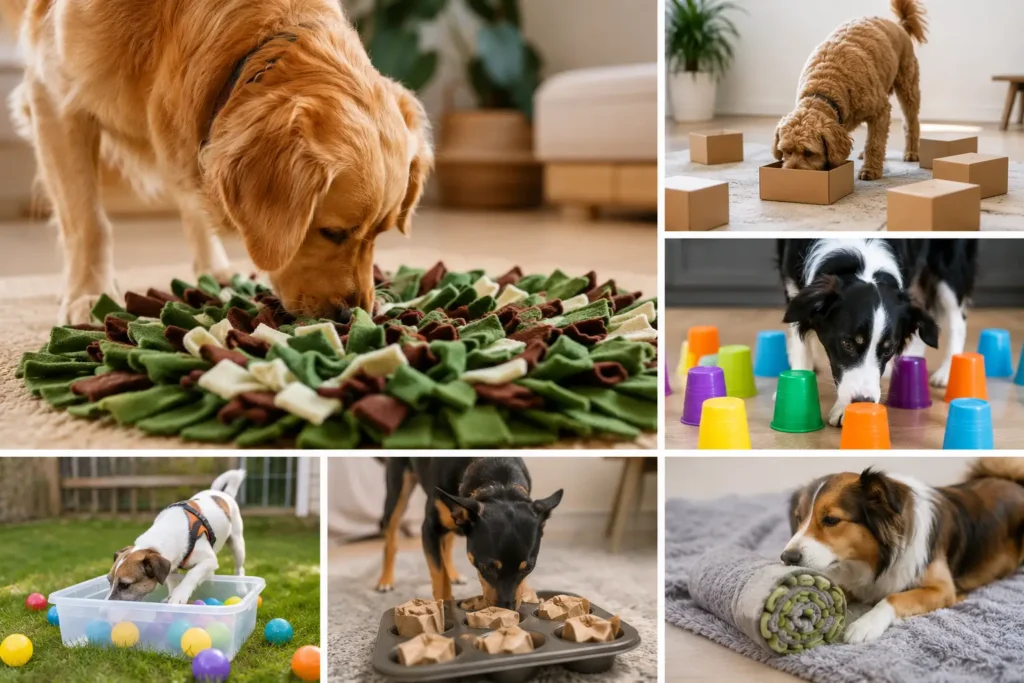
Why does canine nose work fit anxious, bored, and active dogs?
Canine nose work fits anxious, bored, and active dogs because scent searching uses problem-solving, choice, movement, and food reinforcement without heavy physical pressure. The activity can stay small, quiet, and predictable.
Dogs gather environmental information through smell. Olfaction in dogs helps recognize individuals, collect environmental information, make decisions, and learn. That evidence supports scent work as a natural cognitive task, not only a game.
Dogs have more than 100 million sensory receptor sites in the nasal cavity, compared with about 6 million in people. The dog brain area used for odor analysis is about 40 times larger than the comparable human brain area.
The scent-search process also slows many dogs down. Your dog lowers its head, samples odor, checks air movement, investigates edges, and solves one clear task. That task gives anxious dogs structure, bored dogs novelty, and active dogs mental work.
How does the dog’s nose make scent games useful?
The dog nose makes scent games useful because dogs process odor as information, not decoration. Scent helps dogs locate food, identify people, track movement, recognize social signals, and form environmental memory.
The canine olfactory system includes the nasal cavity, olfactory receptors, olfactory bulb, and vomeronasal organ. Olfactory receptors sit mainly on the ethmoturbinates, while the vomeronasal organ detects chemical signals that can affect behavior or physiology.
That biology matters for training. A dog does not simply “smell a treat.” The dog follows odor concentration, air movement, surface contamination, human handling odor, food odor, and room airflow. A simple treat hidden in a towel gives the dog a layered sensory problem.
This is why nose work training dogs often tire the dog faster than random indoor play. The dog searches, evaluates, commits, and gets feedback. The mental loop stays clear.
Which dogs benefit from beginner scent games?
Anxious, bored, active, senior, adolescent, recovering, and apartment-living dogs can benefit from beginner scent games if the game matches the dog’s age, health, and emotional state. The search must stay easy enough for success.
Enrichment activities can prevent boredom, build confidence, teach problem-solving, encourage searching, and help dogs manage energy for calmer behavior. That advice aligns closely with beginner canine nose work.
The table below defines common dog profiles and suitable starting points. The table dimensions are dog profile, main challenge, beginner scent game, and adjustment.
| Dog profile | Main challenge | Beginner scent game | Adjustment |
| Anxious dog | Environmental uncertainty | Treat scatter search | Use 3 to 5 easy treats in one quiet room |
| Bored dog | Low mental novelty | Box search | Rotate the box number, not the difficulty too fast |
| Active dog | Excess movement | Find the trail | Add distance after the dog searches calmly |
| Senior dog | Joint comfort | Towel roll | Keep hides low and surfaces non-slip |
| Puppy | Short attention span | Cup choice | Use 30 to 60-second sessions |
| Reactive dog | Trigger sensitivity | Closed-room search | Search away from windows, doors, and traffic noise |
| Apartment dog | Limited outdoor space | Snuffle mat search | Use washable fabric and small search zones |
This table shows that scent games are not one activity. The same scent principle changes by dog profile, room space, food value, duration, surface, and distraction level.
Why do bored dogs benefit from canine nose work?
Bored dogs benefit from canine nose work because scent searches add novelty, choice, and problem-solving to daily routines. The activity changes the dog’s job from waiting to searching.
According to Purdue Extension, boring or barren environments can contribute to abnormal behaviors, including excessive licking, chewing, vocalization, and manipulation of the environment. Food hiding challenges dogs by encouraging food search and longer feeding behavior.
Enrichment activities can prevent boredom, build confidence, teach problem-solving, encourage searching, and help dogs manage energy for calmer behavior. Those benefits match the intent behind beginner scent games for dogs.
A bored dog often needs variation more than difficulty. Change the room, container, surface, or reward placement. Keep the cue consistent.
Weekly scent game rotation for bored dogs
The table below gives a 7-day rotation for bored dogs. The table dimensions are day, game, search area, and main purpose.
| Day | Scent game | Search area | Main purpose |
| Monday | Treat scatter | Mat or rug | Calm sniffing |
| Tuesday | Towel roll | Kitchen floor | Problem-solving |
| Wednesday | Box search | Living room | Object search |
| Thursday | Cup choice | Hallway | Scent choice |
| Friday | Room edge search | Bedroom | Perimeter search |
| Saturday | Indoor trail | 2 rooms | Movement plus scent |
| Sunday | Find the toy | One room | Toy scent search |
This rotation keeps indoor dog activities structured without making every session identical.
Why do active dogs benefit from indoor dog activities?
Active dogs benefit from indoor dog activities because mental tasks add focus without adding constant speed. Nose work gives energy to a task, a boundary, and a reward location.
Thinking takes energy and can be tiring, and that cognitive enrichment can include puzzles, object names, new skills, and problem-solving tasks. Dogs of all ages and physical abilities benefit from mental stimulation.
Active dogs often get more physical exercise, but physical exercise alone may not teach calm investigation. A dog can return from a walk still restless if the dog has not used problem-solving or self-control. Nose work training dogs helps create a different pattern: sniff, evaluate, locate, pause, reward.
Use 3 short scent sessions instead of one long session:
- Morning: 3-minute treat scatter before work.
- Afternoon: 5-minute box search after a walk.
- Evening: 5-minute towel roll before rest.
This schedule gives the dog several small search outlets across the day.
What equipment do you need for nose work training dogs?
Beginner nose work training dogs requires food rewards, simple objects, a marker word, and a safe search area. A formal scent kit is optional at the start.
Start with these 8 items:
- Soft treats: small pieces create a stronger odor than many dry biscuits.
- Kibble: useful for meal-based searches.
- Cardboard boxes: boxes hold odor and create search boundaries.
- Towels: fabric folds create low-cost hiding pockets.
- Plastic cups: cups create simple scent choices.
- Muffin tin: tray holes create controlled food locations.
- Toy: useful for dogs that prefer play over food.
- Marker word: “yes” marks the correct find.
Avoid essential oils, cleaners, medication containers, sharp plastic, and breakable objects in beginner scent games. Competition scent work uses specific odor protocols, but beginner enrichment can use food and toys only.
How do you start nose work training dogs at home?
Start nose work training dogs at home by making the first searches visible, short, and easy. The dog learns faster when early searches create success, not frustration.
Follow this 6-step beginner sequence.
- Prepare the search area. Remove unsafe items, food bowls, loose wires, and slippery objects.
- Choose one reward. Use soft food, kibble, or a toy.
- Place 3 visible treats. Keep the dog outside the room or behind a baby gate.
- Give one cue. Say “find it” once.
- Mark the find. Say “yes” as the dog reaches each treat.
- End after success. Stop before the dog gets tired or confused.
Do not point at every treat. Handler pointing teaches the dog to watch hands instead of following scent.
Beginner scent game 1: Treat scatter search
Treat scatter search is a beginner scent game where you place small food pieces on a safe floor area and cue your dog to find each piece. It teaches calm sniffing before hidden searches.
Use this game for anxious dogs, puppies, senior dogs, and dogs that stare at the handler during training.
How to play:
- Place 5 to 10 tiny treats on a mat.
- Say “find it” once.
- Stand still and let the dog search.
- Mark calmly agrees with “yes.”
- End after all treats are found.
Increase difficulty by placing treats farther apart, not by hiding them too soon.
Beginner scent game 2: Towel roll search
Towel roll search is a scent game where treats sit inside loose towel folds, so your dog uncovers food with the nose and paws. It adds texture without complex rules.
Use it for indoor dog activities during rain, heat, recovery days, or short evening routines.
How to play:
- Lay a towel flat.
- Place 4 treats across the towel.
- Roll the towel once.
- Cue “find it.”
- Let the dog unroll the towel.
Keep the first version loose. A tight towel roll can frustrate puppies, senior dogs, and anxious dogs.
Beginner scent game 3: Cardboard box search
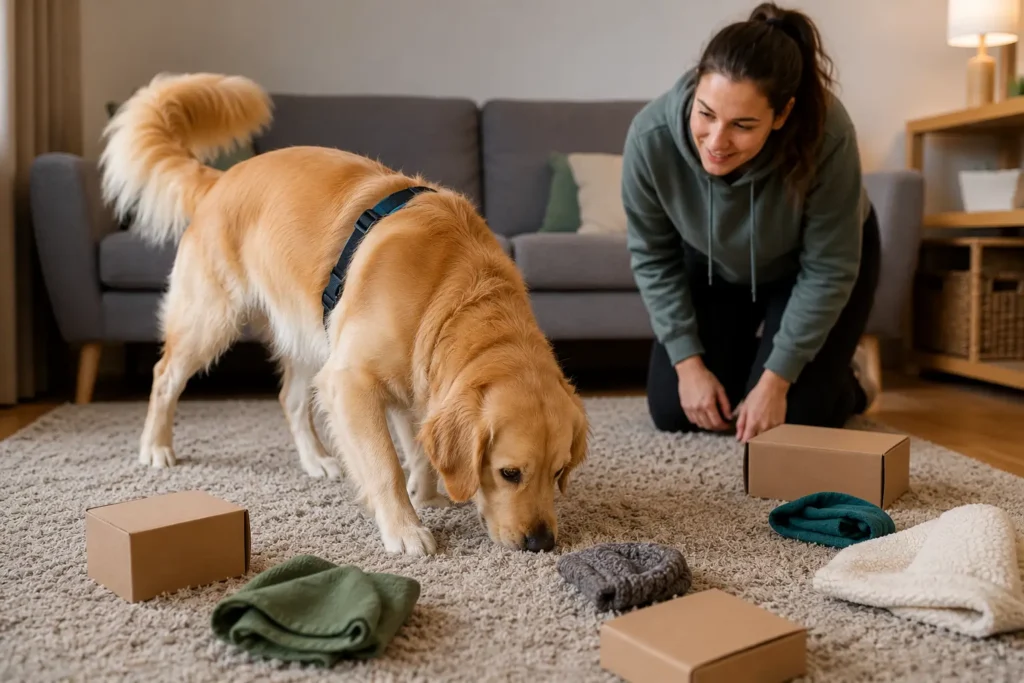
Cardboard box search is canine nose work where your dog checks boxes and finds the box that contains a food odor. It introduces object searching and odor pooling.
Use it for bored dogs and active dogs because boxes create a clear search field.
How to play:
- Place 3 open boxes on the floor.
- Put treats in 1 box.
- Release your dog with “find it.”
- Mark the correct box.
- Feed 2 extra treats inside the correct box.
Add more boxes only after your dog checks the boxes independently.
Beginner scent game 4: Muffin tin search
Muffin tin search is an indoor dog activity where treats sit under balls or soft covers in a muffin tray. The dog uses scent and light problem-solving.
Use it for dogs that enjoy food puzzles but keep supervision close.
How to play:
- Put treats in 3 muffin holes.
- Cover 1 or 2 holes with soft balls.
- Let the dog sniff and move the covers.
- Remove the tray when the dog starts chewing.
Do not use hard objects that can crack teeth or break into pieces.
Beginner scent game 5: Cup choice search
Cup choice search is a scent discrimination game where your dog finds food under 1 cup among 2 or 3 cups. It teaches careful sniffing and selection.
Use it for small spaces, apartments, short training breaks, and dogs that already understand “find it.”
How to play:
- Place 2 cups upside down.
- Hide 1 treat under 1 cup.
- Let your dog sniff both cups.
- Lift the correct cup when your dog targets it.
- Add a third cup after repeated success.
Use light cups and remove them after the game.
Beginner scent game 6: Find the toy
Find the toy is a scent game where your dog searches for a familiar toy instead of food. It suits dogs that value play more than treats.
Use one toy name at first, such as “ball,” “rope,” or “bear.”
How to play:
- Show the toy.
- Place it behind a chair while your dog watches.
- Say “find ball.”
- Reward the find with 10 to 20 seconds of play.
- Hide the toy partly out of sight next time.
Avoid using 5 toy names in one session. Name clarity matters.
Beginner scent game 7: Room edge search
Room edge search is a beginner canine nose work drill where food hides sit along wall edges, chair legs, or baseboards. It teaches search patterns across a defined space.
Use it for active dogs that rush into rooms. The task rewards nose-led movement rather than random running.
How to play:
- Put 3 treats along easy room edges.
- Keep your dog outside the room during setup.
- Release with “find it.”
- Let the dog work the perimeter.
- End after the last find.
Use a small zone first. A whole room can overwhelm beginner dogs.
Beginner scent game 8: Chair leg hide
Chair leg hide is a scent game where food sits near one chair leg so your dog searches for object details. It teaches precision.
Use this game for dogs moving from floor searches to object searches.
How to play:
- Place 1 treat beside 1 chair leg.
- Add 2 empty chairs later.
- Mark the correct chair leg.
- Reward at the source.
- Reset with the treat on a different leg.
Do not reward away from the source. Source reward keeps the odor location valuable.
Beginner scent game 9: Indoor trail search
Indoor trail search is a scent game where treats form a short trail that leads to a final reward. It adds movement while keeping the dog’s nose active.
Use it for active dogs, bored dogs, and dogs that enjoy searching across rooms.
How to play:
- Place 5 treats in a line.
- Keep 30 to 60 centimeters between treats.
- Add a larger reward at the end.
- Cue “find it.”
- Let the dog follow the trail.
Treats placed too close together become feeding, not searching. Space creates scent work.
How long does a nose work session take?
A beginner nose work session takes 3 to 10 minutes for most dogs. Puppies, anxious dogs, senior dogs, and recovering dogs often do better with shorter sessions.
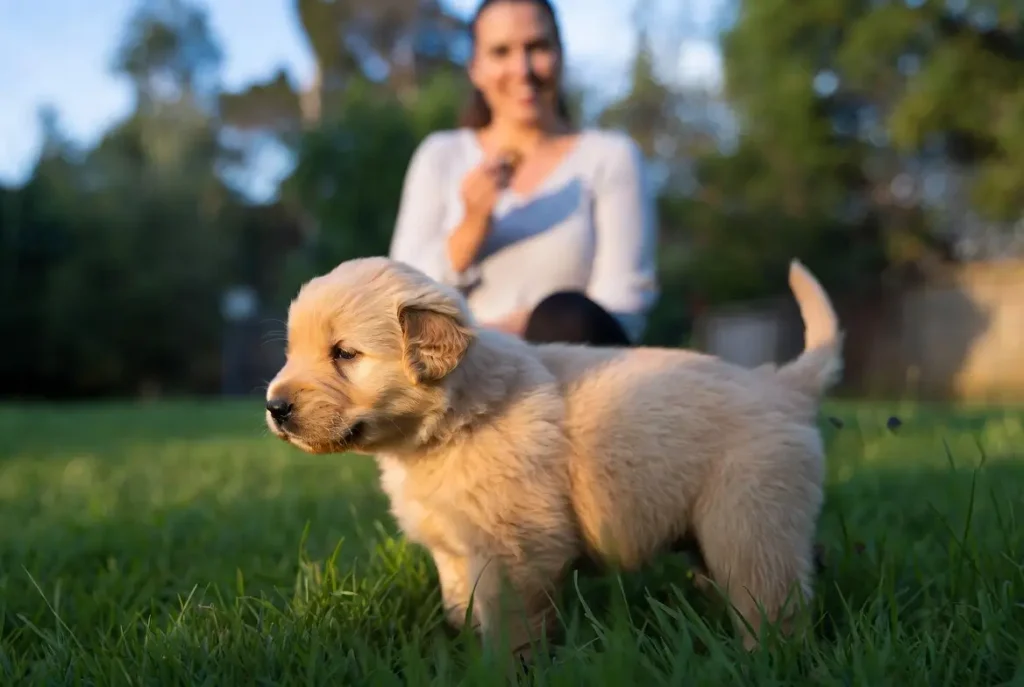
Puppies have short attention spans and benefit from short, frequent activity and training sessions. Dogs of all ages and physical abilities benefit from mental stimulation.
Use this time guide.
| Dog type | Session length | Best structure |
| Puppy | 1 to 3 minutes | 2 to 4 easy finds |
| Anxious dog | 2 to 5 minutes | Quiet room, visible treats |
| Senior dog | 3 to 5 minutes | Low hides, non-slip floor |
| Active dog | 5 to 10 minutes | Start-line control, larger area |
| Bored adult dog | 5 to 10 minutes | Rotating games and rooms |
End on a correct find. Do not wait for fatigue, barking, or frustration.
How do you adjust scent games for anxious dogs?
Adjust scent games for anxious dogs by lowering search difficulty, reducing noise, using familiar rooms, and rewarding independent investigation. The aim is confidence, not speed.
An anxious dog may sniff less when the environment feels unsafe. Keep the first search zone small. Use open boxes, visible treats, soft surfaces, and predictable routines.
Avoid strong scents, crowded rooms, visitor traffic, and pressure from repeated cues. Let the dog leave the search area if stress signs appear.
Trainers commonly viewed scent work and sniffing-oriented activities as useful for dogs with fearfulness, anxiety, and overexcitement. The authors also noted that direct evidence remains limited, so training claims need careful wording.
How do you adjust scent games for bored dogs?
Adjust scent games for bored dogs by changing the layout, search object, room, reward value, and scent route while keeping the cue consistent. Novelty matters more than difficulty.
Use 4 rotation variables:
- Change the object: Towel, box, cup, toy, tray.
- Change the room: Kitchen, hallway, bedroom, living room.
- Change the reward: Kibble, soft treat, toy.
- Change the pattern: Scatter, trail, edge, container.
Enrichment can reduce undesirable behaviors linked to boredom and frustration, while increasing problem-solving and positive social interactions.
Do not increase every variable at once. Change one feature per session.
How do you adjust scent games for active dogs?
Adjust scent games for active dogs by adding start-line control, longer search areas, calm reward delivery, and short repeated sessions. The activity channels energy without rewarding chaos.
Use this active-dog format:
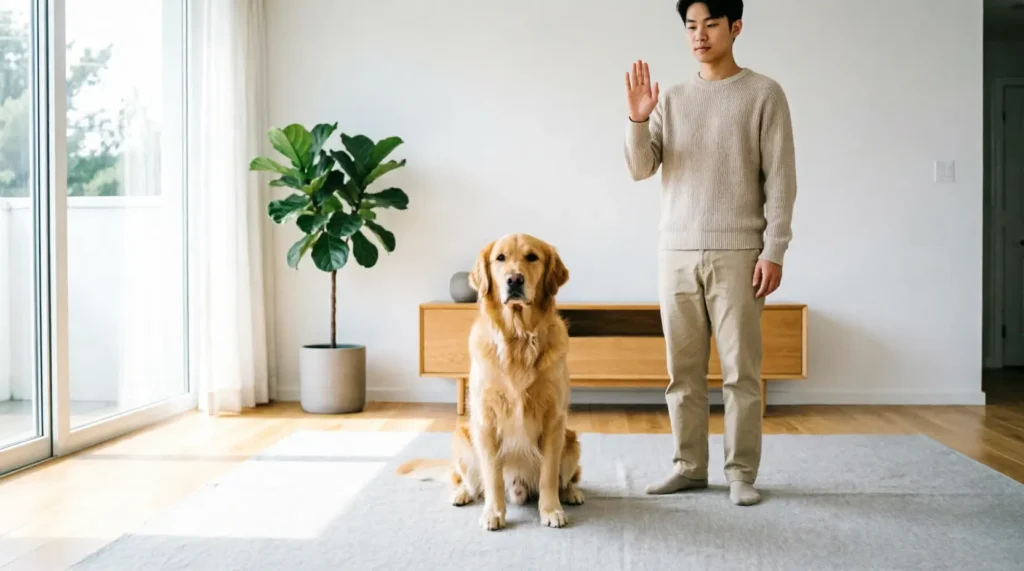
- Ask for a 2-second pause.
- Say “find it.”
- Release into the search area.
- Mark the source.
- Reward calmly.
- Reset before arousal rises.
Avoid exciting chase rewards after every find if your dog barks, jumps, or spins. Use food delivery at the source to reinforce calm accuracy.
What mistakes do slow nose work training dogs make?
The biggest mistakes are hiding food too hard, pointing too much, repeating cues, rewarding away from the source, and training too long. These mistakes make the dog dependent on the handler.
Avoid 7 common errors.
- Hiding too early makes the dog quit or ask for help.
- Repeating the cue turns “find it” into background noise.
- Pointing at the hide teaches the dog to follow your hand.
- Using unsafe scents exposes the dog to irritants or toxins.
- Changing rooms too fast increases environmental pressure.
- Rewarding away from the source weakens the value of the odor location.
- Training too long turns enrichment into frustration.
A clean session has one cue, one search area, one clear find, and one reward event. That structure gives your dog a repeatable learning pattern.
How do you measure progress in canine nose work?
Measure progress by accuracy, independence, search duration, recovery, and calmness after the find. Speed alone is not the main progress signal.
Track these 5 indicators:
| Progress indicator | What to observe | Beginner target |
| Accuracy | Finds the correct source | 4 correct finds from 5 easy hides |
| Independence | Searches without hand prompts | Fewer gestures per session |
| Duration | Stays engaged | 3 to 10 focused minutes |
| Recovery | Resets after each find | Calmly return to the start area |
| Calmness | Settles after the game | Less pacing or barking |
A slow, accurate dog can progress better than a fast dog that guesses. Nose work rewards decision-making.
Can nose work replace walks?
Nose work does not replace walks for healthy dogs, but it can complement walks when weather, age, injury, anxiety, or schedules limit outdoor activity. Dogs still benefit from movement, toileting, social information, and safe outdoor exposure.
Use nose work with walks in 3 ways:
- Before a walk: A 3-minute scatter search can lower frantic energy.
- After a walk: A 5-minute box search can support decompression.
- On indoor days: 3 short scent games can add mental work.
The better comparison is not nose work versus walks. The better comparison is physical exercise plus scent enrichment versus physical exercise alone.
Final thoughts: Nose work training dogs turns sniffing into structured enrichment
Nose work training dogs gives anxious, bored, and active dogs a practical way to search, solve, and settle. It works because scent is biologically important to dogs, and beginner games can fit small homes, short schedules, and different energy levels.
Start with visible food. Move to towels, boxes, cups, room edges, and short indoor trails. Adjust every game by age, confidence, health, food motivation, and arousal level.
The strongest beginner routine uses 3 rules: keep the search easy enough for success, reward at the source, and end before frustration. That structure turns everyday sniffing into a useful indoor dog activity.
Frequently Asked Questions
What is nose work training for dogs?
Nose work training dogs is scent-based training where dogs search for hidden food, toys, or target odors and receive a reward after finding the source.
Are scent games for dogs good for anxious dogs?
Scent games for dogs can support anxious dogs by creating predictable, low-pressure searches that reward independent investigation.
Can bored dogs benefit from canine nose work?
Bored dogs can benefit from canine nose work because scent searches add novelty, problem-solving, and structured food-based reinforcement.
How long is a beginner’s nose work session?
A beginner nose work session usually lasts 3 to 10 minutes, depending on the dog’s age, confidence, health, and attention span.
What is the easiest scent game for dogs?
Treat scatter search is the easiest beginner scent game because the food stays visible and the dog learns the “find it” cue quickly.
What is the biggest beginner mistake?
The biggest beginner mistake is making the hide too difficult before the dog understands the search cue and reward pattern.
Can nose work help active dogs settle?
Nose work can help active dogs settle by replacing random movement with focused sniffing, problem-solving, and calm reward delivery.
Can senior dogs play scent games?
Senior dogs can play scent games when hides stay low, floors stay non-slip, and sessions respect joint comfort and fatigue.