

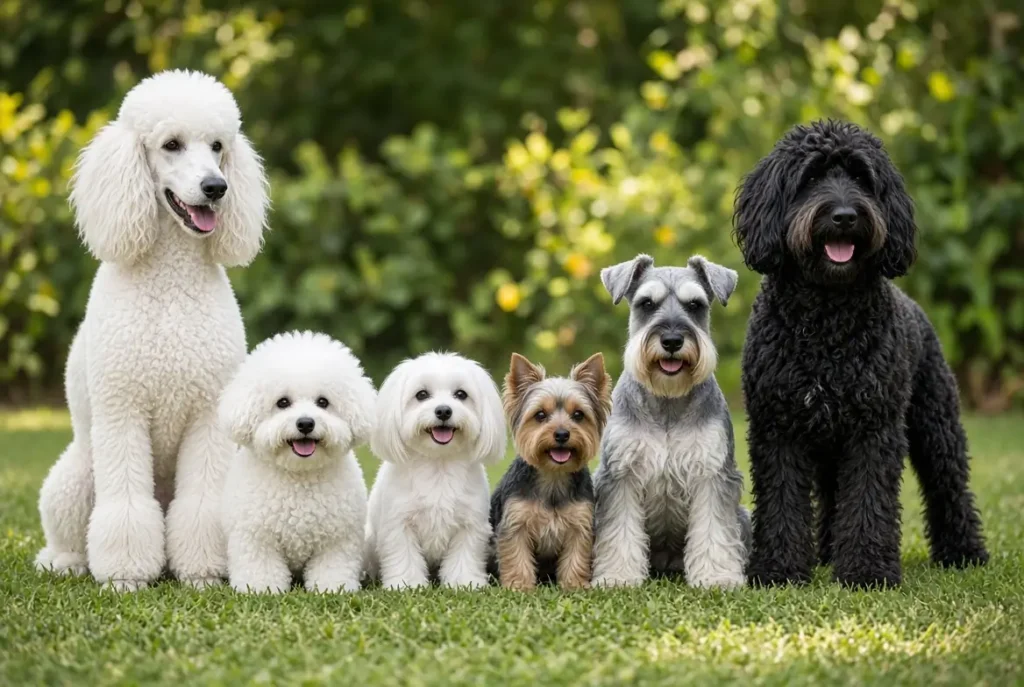
No dog sheds nothing at all. But some breeds, including Poodles, Maltese, Bichon Frises, Portuguese Water Dogs and Schnauzers, drop very little hair. “Low-shedding” does not mean “allergy-proof.” Pick on coat, grooming commitment and temperament, then spend time with the actual dog before committing.
Do any dogs truly not shed?
Almost none. All dogs shed to some degree; the difference is how often and how noticeably. The breeds people call “non-shedding” mostly have hair that grows long and stays put, rather than fur that sheds in cycles. The hair doesn’t vanish, though. It tends to get caught in the coat until you brush it out, which is why regular brushing and grooming matters so much with these breeds.
That’s why a Maltese can look like a floor-length curtain and still leave your sofa clean, while a short-coated breed can cover your trousers. What matters is how the coat behaves.
Low-shedding is not the same as hypoallergenic
This is the part most lists skip. Dog allergies are mainly triggered by proteins in dander (skin flakes), saliva and urine, while hair simply collects and carries other allergens. If allergies are your main worry, our guide to managing dog allergies at home goes deeper.
A widely cited Henry Ford Hospital study tested dust from 173 homes with 60 breeds, including 11 marketed as hypoallergenic. It found no significant difference in the main dog allergen, Can f 1. The researchers couldn’t test individual breeds, so the study doesn’t prove every breed is identical. It does mean nobody should buy a dog on the label alone.
Individual dogs vary, and some allergic people do tolerate certain dogs better. The only reliable test is time with the specific dog, ideally guided by an allergist.
Low-shedding breeds worth meeting
Maltese
The Maltese is a toy breed, generally under 7 pounds with a lifespan of 12 to 15 years. It has a single, silky coat with no woolly undercoat. That’s why it sheds so little, and also why it tangles so easily. Our full Maltese breed guide covers temperament, health and costs in detail.
Expect daily brushing if you keep the coat long. Most pet owners choose a short “puppy clip” to make life easier. Other points to know:
- Dental care matters. The breed is prone to periodontal problems.
- Very small puppies can be prone to low blood sugar.
- Most Maltese don’t tolerate cold weather well.
Goldendoodle (read this before you pay a deposit)
A Goldendoodle can be a lovely family dog, but “doesn’t shed” is not a promise. It depends on which parent’s coat genes the puppy gets. Goldendoodles are considered low-shedding, not no-shedding, and coats range from curly to wavy to straight. See our Goldendoodle guide for size, generations and what to ask a breeder.
Generation matters, though sources disagree on how reliably:
- F1 (Golden × Poodle) coats are unpredictable, with moderate shedding.
- F1b (F1 × Poodle) puppies are often lower-shedding because of more Poodle genes. But one popular guide says around half of F1b puppies are shedding types.
Puppy coats are hard to judge, so ask the breeder about the parents’ coats and shedding history. Be wary of anyone guaranteeing a non-shedding or hypoallergenic puppy.
Poodles (toy, miniature and standard)
Tight curls shed little, and poodles come in three sizes, so one breed can fit a studio flat or a large house. The trade-off is professional grooming on a regular schedule.
Bichon Frise, Havanese and Shih Tzu
These small companions are commonly listed as low shedders. The Bichon has hair rather than fur, and the Havanese rarely sheds but needs frequent combing to prevent tangles. Shih Tzus shed far less than many breeds. All of them need regular brushing and trimming.
Portuguese Water Dog and Schnauzer
For bigger, sturdier dogs, the Portuguese Water Dog has tight curls that shed very little. Schnauzers shed only a tiny amount. Both are active, clever breeds that need real exercise and training.
Best non-shedding dogs for kids
Shedding is only one factor with children. Temperament, size and energy matter more. For a wider look beyond coat type, see our guide to the best dog breeds for families.
- Very young children (under about 6): Very small toy dogs are fragile and can be hurt by rough handling. A sturdier small-to-medium dog, supervised, is often safer.
- Active, older kids: Standard Poodles and Portuguese Water Dogs have plenty of energy and suit busy households. Portuguese Water Dogs are described as easy to train and good family pets.
- Gentle, calmer homes: A Maltese can suit older, gentler children. One source notes the AKC rates them three out of five with small kids.
Temperament depends on training, socialization and the individual dog, not the breed label. Meet the dog with your children before deciding.
The real cost of a low-shedding coat
Less hair on the floor means more work on the dog. These coats mat and tangle, so budget for:
- Regular brushing at home.
- Professional grooming every few weeks.
- Time and money for the haircut routine.
If this is your first dog, our first-time dog owner guide helps you plan these ongoing costs before you commit.
How to choose: a quick checklist
- Does anyone in your home have confirmed dog allergies? Talk to an allergist first.
- How much daily brushing can you realistically do?
- Do you want a small dog, or a large, active one?
- Are there young children, and how old?
- Can you spend time with the individual dog (and its parents, for a puppy) before committing?
If allergies are a concern, practical steps help whichever breed you pick. An allergist quoted in one report suggests HEPA filters can remove almost all airborne animal dander. Other reported steps include keeping the dog out of the bedroom, vacuuming often and bathing regularly.
When to see a vet or an allergist
See a vet if your dog:
- Suddenly sheds much more than usual.
- Has bald patches or red, irritated skin.
- Scratches constantly or has a dull, greasy or foul-smelling coat.
These can point to skin conditions, parasites or other health problems that need professional diagnosis. Our overview of common dog skin problems explains what to watch for, but don’t treat anything at home with human products or guessed doses.
See an allergist if anyone in your household has wheezing, itchy eyes, a runny nose or breathing trouble around dogs. They can test and advise on your situation.
Frequently asked questions
What is the best dog that doesn’t shed?
There’s no single best. Small-space owners often like Maltese or Bichons. Active families may prefer Poodles or Portuguese Water Dogs. The best fit matches your grooming time, energy level and household.
Are there any dogs that don’t shed at all?
No dog with hair sheds literally nothing. Some breeds shed very little, but you’ll still find the occasional hair.
Are non-shedding dogs hypoallergenic?
No breed is proven hypoallergenic. Allergens come mostly from dander, saliva and urine, and testing found no meaningful difference between “hypoallergenic” and other breeds. Always test your own reaction around the specific dog.
Do Goldendoodles shed?
Some do. Coat type and generation affect shedding, but even within one litter results can differ. Ask the breeder about the parents and avoid guarantees. Read more in our Goldendoodle guide.
Is a Maltese a good dog for kids?
It can suit gentle, older children. Because Maltese are tiny and fragile, they’re less suited to very young or rough-handed kids. Supervise all interactions and meet the individual dog first.