

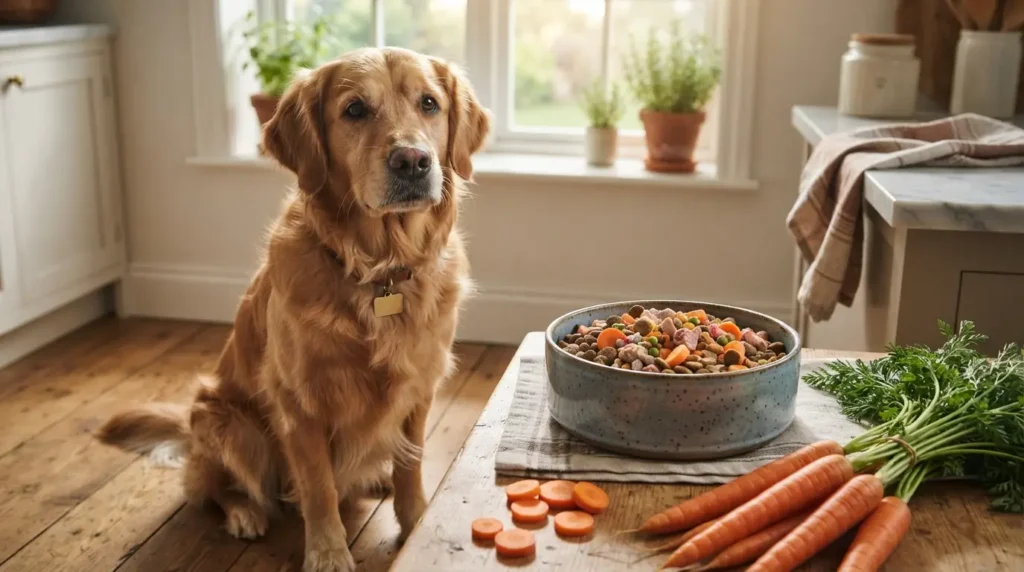
Dog food with carrots can provide dietary fiber, carotenoids, potassium, and other plant nutrients as part of a complete canine diet. Dogs can eat carrots raw, boiled, steamed, or incorporated into properly formulated commercial food.
Carrots are also relatively low in calories. VCA Animal Hospitals lists carrots among vegetables that can be offered to dogs in moderation and reports that a 50-gram portion of raw, boiled, or steamed carrots contains approximately 18–20 calories.
However, carrots do not make a dog food nutritionally complete by themselves. The quality of the entire formulation remains more important than the presence of one vegetable.
Are Carrots Good for Dogs?
Yes. Carrots are safe for most healthy dogs and can provide fiber, carotenoids, vitamins, minerals, and a low-calorie alternative to many commercial treats.
Carrots can be:
- Included in complete dog food
- Mixed into homemade diets
- Offered as occasional treats
- Cooked and added as a topper
- Used in small pieces during training
VCA Animal Hospitals includes carrots among fruits and vegetables suitable for dogs when offered in moderation. New foods still need to be introduced gradually because individual dogs can experience gastrointestinal upset after dietary changes.
The nutritional value of carrots depends on portion size and how they fit into the dog’s complete diet.
What Nutrients Do Carrots Provide for Dogs?
Carrots contribute fiber, carotenoids, potassium, and several vitamins and minerals while remaining relatively low in calories.
Important components include:
- Beta-carotene
- Dietary fiber
- Potassium
- Vitamin K
- Vitamin B6
- Small amounts of several other micronutrients
The most recognizable compound is beta-carotene, the orange pigment responsible for much of the vegetable’s color.
Dogs can convert beta-carotene into vitamin A, although complete dog foods are formulated to provide required nutrients independently of whether carrots appear in the ingredient list.
What Are the Main Benefits of Carrots for Dogs?
Carrots provide 5 practical nutritional benefits when they are included appropriately in a dog’s diet.
1. Carrots Provide Dietary Fiber
Carrots contribute dietary fiber that adds plant material to the diet and can support normal stool formation.
Fiber influences:
- Stool bulk
- Intestinal contents
- Gastrointestinal transit
- Satiety
- Interactions with the intestinal microbiota
However, more fiber is not always better.
Too much carrot or another high-fiber food can contribute to:
- Gas
- Loose stool
- Increased stool volume
- Reduced digestibility of the overall diet
Dogs with ongoing digestive problems require evaluation of the complete diet because dog gut health depends on multiple factors, including fiber type, digestibility, dietary consistency, microbiota, and underlying gastrointestinal health.
2. Carrots Provide Beta-Carotene
Carrots contain beta-carotene, a carotenoid pigment that dogs can convert into vitamin A.
Vitamin A participates in biological processes involving:
- Vision
- Immune function
- Cell differentiation
- Growth
- Skin and epithelial tissues
Beta-carotene itself is different from the concentrated preformed vitamin A found in liver.
This distinction matters because plant carotenoids and animal-derived vitamin A enter the diet in different forms.
A balanced commercial dog food does not require carrots specifically to meet its vitamin A requirement.
3. Carrots Are Relatively Low in Calories
Carrots provide relatively few calories compared with many biscuits, meat treats, and high-fat snacks.
VCA Animal Hospitals reports approximately 18–20 calories in 50 grams of carrots, depending on whether they are raw or cooked.
That makes small pieces of carrot useful when owners want a lower-calorie reward.
Calorie density still matters because several small snacks can accumulate throughout the day.
For dogs already gaining excess body fat, carrots can replace some calorie-dense treats, but successful weight management for dogs still depends on controlling total daily energy intake.
4. Carrots Can Add Texture and Variety
Raw and cooked carrots provide different textures without requiring added sugar, salt, or fat.
Raw carrots are firm and crunchy.
Cooked carrots become softer and may be easier for some dogs to chew.
Texture can be useful when choosing a treat according to:
- Dog size
- Age
- Dental condition
- Chewing behavior
- Individual preference
Large, hard pieces are not appropriate for every dog because poorly chewed food can create a choking risk.
5. Carrots Can Replace Higher-Calorie Treats
Small pieces of plain carrot can serve as training rewards or occasional snacks instead of higher-calorie treats.
VCA lists carrots among acceptable foods for dog training and advises keeping treats within approximately 10% of total daily calorie intake. For example, a dog consuming about 550 calories per day would receive approximately 495 calories from complete food and no more than about 55 calories from treats.
The remaining diet needs to supply complete and balanced nutrition.
Are Carrots Used in Commercial Dog Food?
Yes. Carrots are commonly included in dry, wet, fresh, and homemade-style dog foods as a vegetable ingredient.
Carrots may appear alongside ingredients such as:
- Chicken
- Beef
- Turkey
- Lamb
- Rice
- Potatoes
- Peas
- Sweet potatoes
- Green beans
- Pumpkin
The presence of recognizable vegetables does not prove that one dog food is nutritionally superior to another.
VCA notes that foods containing visible whole-food ingredients such as carrots, peas, or sweet potatoes are not automatically healthier if the overall recipe is improperly balanced.
This is why choosing the best dog food requires assessing the complete nutrient profile, life-stage suitability, calorie density, and feeding directions rather than judging the food by one ingredient.
Does Dog Food Need Carrots to Be Healthy?
No. Dogs do not need carrots specifically when their food already provides complete and balanced nutrition.
Carrots are one possible ingredient among many.
A healthy diet can be formulated with carrots or without carrots as long as the required nutrients are supplied in appropriate quantities and ratios.
AAFCO explains that complete pet food contains all required nutrients and balanced pet food provides those nutrients in appropriate proportions.
Carrots therefore add nutritional value, but they are not an essential ingredient in every dog food.
Are Raw Carrots Safe for Dogs?
Raw carrots are safe for most healthy dogs when they are washed and cut into appropriately sized pieces.
VCA recommends washing fruits and vegetables and removing portions that could contribute to choking or gastrointestinal obstruction.
Raw carrots can be:
- Sliced into thin rounds
- Cut into small sticks
- Diced
- Grated over food
The appropriate size depends on the dog.
A small dog requires much smaller pieces than a large breed.
Dogs that swallow food rapidly may need softer or more finely chopped carrots rather than large raw chunks.
Are Cooked Carrots Good for Dogs?
Yes. Plain cooked carrots are safe for most dogs and provide a softer alternative to raw carrots.
Suitable cooking methods include:
- Boiling
- Steaming
- Baking
Prepare carrots without:
- Butter
- Excess oil
- Salt
- Garlic
- Onion
- Sweet sauces
- Seasoning blends
Cooking softens the vegetable and can make chewing easier for puppies, senior dogs, and dogs with dental limitations.
The calorie difference between plain raw and plainly cooked carrots remains small. VCA lists 50 grams of raw, boiled, or steamed carrot at approximately 18–20 calories.
Are Raw or Cooked Carrots Better for Dogs?
Neither raw nor cooked carrots are universally better; the best form depends on the dog’s chewing ability, digestive tolerance, and how the carrots are being used.
| Feature | Raw carrots | Cooked carrots |
| Texture | Firm and crunchy | Soft |
| Preparation | Wash and cut | Cook without seasoning |
| Chewing effort | Higher | Lower |
| Suitable for training | Small pieces work well | Soft pieces also work |
| Suitable for dogs with dental problems | Sometimes difficult | Usually easier |
| Calories | Low | Low when cooked without added fat |
A dog that chews poorly may handle soft cooked carrots more safely.
A dog that enjoys crunchy vegetables may prefer small pieces of raw carrot.
Can Puppies Eat Carrots?
Yes. Puppies can eat small amounts of appropriately prepared carrots as treats, but carrots cannot replace complete puppy food.
Growing dogs require specific levels and ratios of:
- Protein
- Fat
- Calcium
- Phosphorus
- Vitamins
- Trace minerals
- Essential fatty acids
AAFCO recognizes growth as a separate nutritional life stage because puppies have different dietary requirements from adult dogs.
Carrot pieces need to be sized carefully for puppies because their mouths and chewing ability differ from those of adult dogs.
Soft cooked or finely chopped carrot may be easier for young puppies to manage.
Can Senior Dogs Eat Carrots?
Most healthy senior dogs can eat carrots, provided the texture and portion suit their dental health, calorie needs, and medical condition.
Cooked carrots may be easier than raw carrots for dogs with:
- Missing teeth
- Dental disease
- Reduced chewing ability
- Sensitive mouths
Senior dogs are also more likely to have medical conditions that affect diet selection.
A dog receiving therapeutic food should not receive frequent supplemental foods without considering whether those foods fit the prescribed nutritional plan.
Are Carrots Good for Overweight Dogs?
Carrots can be useful as low-calorie treats for overweight dogs when they replace higher-calorie snacks rather than being added on top of existing calories.
This distinction is important.
Adding carrots to an already excessive calorie intake does not produce weight loss.
Effective weight reduction depends on creating an appropriate calorie deficit while preserving essential nutrition.
VCA specifically lists vegetables such as carrots as alternatives to more calorie-dense commercial treats.
Dogs with excess body weight may require more structured nutritional management because obesity in dogs affects health beyond appearance and is associated with reduced mobility and several medical risks.
How Many Carrots Can a Dog Eat?
The appropriate amount of carrot depends on the dog’s size, daily calorie requirement, main diet, and the number of other treats provided.
Carrots given separately from complete food count as treats.
VCA recommends limiting all treats combined to approximately 10% of daily calories.
For example:
A dog requiring 500 kcal per day would receive approximately:
- 450 kcal from complete nutrition
- Up to 50 kcal from treats
A 50-gram serving of carrots contains only around 18–20 kcal, but that does not mean every dog needs 50 grams.
Small dogs may need only a few small pieces.
Daily feeding quantity becomes easier to control when the dog’s total energy requirement is known. A dog feeding calculator can provide a starting estimate, although body condition and veterinary guidance remain important when adjusting portions.
Can Dogs Eat Carrots Every Day?
Healthy dogs can eat modest amounts of plain carrot regularly when those calories fit within the complete diet.
Daily feeding becomes problematic when carrots:
- Replace too much complete food
- Produce digestive upset
- Add excessive treat calories
- Are prepared with unsuitable ingredients
- Interfere with a therapeutic diet
A few pieces used as treats are different from filling a substantial part of the dog’s bowl with vegetables.
Complete dog food needs to remain the primary nutrient source.
Can Dogs Eat Frozen Carrots?
Dogs can eat plain frozen carrots, but size and hardness require consideration because frozen vegetables can be difficult for some dogs to chew safely.
Small pieces may provide a cold snack.
However, very hard frozen carrots may be unsuitable for:
- Small dogs
- Puppies
- Senior dogs
- Dogs with dental disease
- Dogs that gulp food
- Dogs with damaged teeth
Allowing the carrot to soften slightly or using smaller pieces can reduce these concerns.
Can Dogs Eat Canned Carrots?
Plain canned carrots can be fed occasionally, but products containing large amounts of added sodium or seasoning are less suitable than plain fresh or frozen carrots.
Check the label for:
- Added salt
- Sugar
- Sauces
- Onion
- Garlic
- Seasoning
Low-sodium or no-salt-added products are preferable when canned carrots are used.
Dogs on medically restricted sodium diets require greater caution with processed foods because additional sodium can undermine the intended diet.
Can Dogs Eat Carrot Peels?
Clean carrot peels are generally edible for dogs, but washing the carrot thoroughly remains important.
Peeling is optional when the carrot is clean and prepared appropriately.
Remove:
- Dirt
- Damaged sections
- Moldy portions
- Tough or spoiled areas
The main safety issue is not the peel itself but overall food hygiene and appropriate piece size.
Can Dogs Eat Carrot Tops?
Carrot roots are the more commonly fed portion, while carrot greens are unnecessary for canine nutrition.
Dogs receive no essential benefit from carrot tops that cannot be obtained from a balanced diet.
When using carrots as treats, the simplest preparation is to wash the root, remove unwanted plant material, and serve the carrot itself in appropriately sized pieces.
Can Too Many Carrots Be Bad for Dogs?
Yes. Large quantities of carrots can add unnecessary calories and fiber and may cause gastrointestinal upset.
Possible effects of excessive intake include:
- Gas
- Loose stool
- Increased stool volume
- Abdominal discomfort
- Reduced appetite for complete food
Carrots also contain naturally occurring sugars.
That does not make carrots unhealthy, but large portions are unnecessary.
Moderation maintains their role as a supplemental food rather than allowing them to displace balanced nutrition.
Are Carrots Good for a Dog’s Teeth?
Crunching raw carrots can provide mechanical chewing activity, but carrots do not replace dental brushing or professional veterinary dental care.
Hard vegetables are sometimes described as natural tooth cleaners, but this claim can be overstated.
Chewing may remove some loose food material from tooth surfaces. It does not reliably prevent:
- Plaque formation
- Tartar accumulation
- Gingivitis
- Periodontal disease
Dogs still require an appropriate dental-care routine.
Large or very hard carrot pieces can also be unsuitable for dogs with weak or damaged teeth.
Can Dogs With Diabetes Eat Carrots?
Dogs with diabetes require individualized dietary management, so supplemental carrots need to fit the veterinarian’s prescribed calorie and carbohydrate plan.
Carrots contain natural carbohydrate and sugar but are also low in calorie density.
The relevant question is not whether carrots contain sugar. It is how the portion affects the dog’s complete therapeutic diet and glucose-management plan.
Do not make repeated changes to a diabetic dog’s diet without veterinary guidance.
Can Dogs With Food Allergies Eat Carrots?
Most dietary allergies in dogs involve proteins, but an individual dog can react adversely to almost any dietary ingredient.
Carrots may therefore be tolerated by many dogs with food sensitivities, but they are not automatically suitable during a veterinary elimination trial.
A controlled food trial requires strict avoidance of unapproved ingredients.
Adding carrots independently during the trial could interfere with interpretation unless they are included in the prescribed diet.
What Should You Check in Dog Food With Carrots?
Choose dog food with carrots according to the entire nutritional profile rather than the position or appearance of carrots alone.
Evaluate 5 areas.
1. Nutritional Adequacy
Check whether the food is complete and balanced for the dog’s life stage.
AAFCO describes the nutritional adequacy statement as a key part of the pet-food label.
Understanding what AAFCO is and what it does also helps distinguish established nutritional standards from claims based mainly on ingredient marketing.
2. Protein Sources
Identify the primary animal and plant protein sources rather than focusing only on vegetables.
Protein contributes essential amino acids and remains an important part of a complete canine diet.
Carrots do not replace appropriate protein sources.
3. Calorie Content
Check calories per cup, can, tray, or other familiar serving unit.
AAFCO requires calorie content on applicable pet-food labels to be expressed both per kilogram and per familiar household unit.
Calorie density becomes particularly important for dogs that gain weight easily.
4. Life Stage
Match the food to growth, adult maintenance, gestation/lactation, or another appropriate nutritional category.
Puppies and adult dogs do not require identical nutrient concentrations or feeding quantities.
5. Feeding Purpose
Determine whether the product is complete food, a topper, or a treat.
AAFCO states that treats generally do not need to meet complete-and-balanced nutritional requirements and are intended for supplemental feeding.
A carrot-containing topper therefore cannot automatically replace a complete meal.
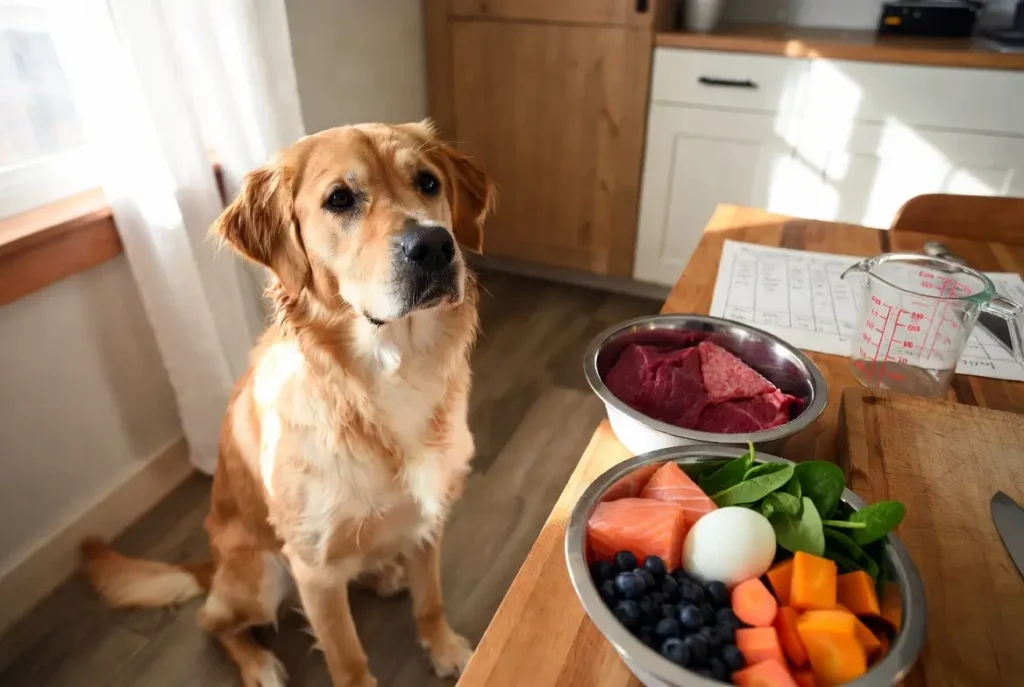
Is Homemade Dog Food With Carrots Healthy?
Homemade food containing carrots can be nutritionally adequate only when the entire recipe supplies the dog’s required nutrients in appropriate amounts and ratios.
A bowl containing meat, rice, and carrots may look balanced to a person but can still be nutritionally incomplete for a dog.
VCA specifically warns that whole-food or homemade meals containing recognizable ingredients such as carrots, peas, and sweet potatoes are not necessarily healthy when the formula is not correctly balanced.
This is particularly important with long-term homemade feeding.
Carrots can contribute useful nutrients, but they cannot correct deficiencies involving calcium, essential fatty acids, trace minerals, or other required nutrients.
Frequently Asked Questions About Carrots for Dogs
Can dogs eat carrots?
Yes. Most healthy dogs can eat raw or plain cooked carrots in moderation. Wash carrots and cut them into pieces appropriate for the dog’s size.
Are carrots healthy for dogs?
Carrots can provide fiber, beta-carotene, potassium, and other nutrients while contributing relatively few calories. They remain supplemental unless incorporated into a complete formulated food.
Can dogs eat raw carrots?
Yes. Raw carrots are safe for most dogs when cleaned and cut appropriately. Large hard pieces may be unsuitable for dogs that gulp food or have dental problems.
Can dogs eat cooked carrots?
Yes. Plain boiled, steamed, or baked carrots are suitable for most healthy dogs. Avoid butter, salt, onion, garlic, and heavily seasoned preparations.
How many carrots can a dog eat?
The amount depends on body size and total daily calorie needs rather than a fixed number of carrots. All treats combined should generally stay within about 10% of total daily calories.
Can dogs eat carrots with skin?
Yes. Clean carrot skin is generally edible. Wash the vegetable thoroughly before feeding.
Final Takeaway
Dog food with carrots can provide useful plant nutrients, including fiber and carotenoids, while carrots themselves offer a relatively low-calorie treat option for many healthy dogs.
Carrots can be served raw, boiled, steamed, or incorporated into complete commercial food. Cooked carrots may suit dogs that have difficulty chewing, while small raw pieces can provide a crunchy treat.
Their nutritional value should still be viewed within the complete diet.
Carrots do not make an otherwise unbalanced food complete, and dogs do not require carrots specifically when their diet already meets recognized nutritional standards. Treat portions also need to remain limited so they do not displace nutritionally complete food or contribute unnecessary calories.
For most healthy dogs, plain carrots are best used as a nutritious ingredient or modest supplemental treat rather than as a major part of the daily diet.