
The Neapolitan Mastiff is not the kind of dog you simply own. It is the type of dog you look up to, like, and become very much attached to, in part due to its presence and in part due to the undeniably adorable look of the droopy face. The ancient breed is reputed to be wrinkled, huge in skeleton, serious in expression, and unchangeably loyal, and this has appealed to dog enthusiasts over the ages.
If you’ve ever seen a Neapolitan Mastiff lumbering across a yard or lounging like a gentle giant in a living room, you understand why this breed stands in a category all its own. Everything about the Neapolitan Mastiff—from its history to its physical power to its soft-hearted loyalty—makes it a breed worth learning about in depth. This article takes you through everything you need to know, whether you’re considering bringing one home, already have one, or simply admire the breed from afar.
A Glorious History based on the Ancient Civilizations
Even his looks tell a story of a very ancient past, and that assumption is entirely valid. These dogs are the descendants of the powerful war mastiffs of thousands of years ago.
Origins in the Ancient World
The Neapolitan Mastiff Mastiffs that are found in modern times are descendants of the Molossus dogs of ancient Greece and war mastiffs of the Roman Empire. These were not merely pets; they were military participants, estate guardians, and symbols of power.
The mastiff-like dogs in Roman times were frequently heavily armored and used in wars, to guard camps, and even to be released in the arenas. Their size and strength made them natural discouraging factors to the invaders and intruders. Throughout the years, with the rise and fall of empires, these mastiff lines spread to other parts of Europe, where they evolved to suit the climate and the intended use.
Refinement in Southern Italy
The contemporary Neapolitan Mastiff, or Mastino Napoletano, evolved in the area near Naples in Italy. The presence of property and livestock guarding without undue aggression was appreciated by the rural farmers. Mastinos were bred for:
- Size
- Loose, protective skin
- Strength and stamina
- Stealth rather than loud barking
This union resulted in an unexpectedly composed and considered guardian of an impressive temper.
A Hidden Treasure Rediscovered
The Neapolitan Mastiff did not know much about other countries except Italy, and it did not do so until centuries passed. Only in the middle of the 20th century did the breed start attracting worldwide attention, thanks to the efforts of Italian artist and dog lover Piero Scanziani, who assisted in the standardization of the breed and also introduced it in international dog competitions.
The Neapolitan Mastiff is nowadays accepted by large international kennel clubs, but it is a rather rare breed, partly because of its special needs and enormous size.
Understanding the Neapolitan Mastiff’s Appearance
The first thing anyone notices about a Neapolitan Mastiff is its extraordinary appearance. There is no confusing this breed with any other.
A Truly Massive Dog
Adult males typically weigh between 150 and 200 pounds, with females slightly smaller. Their frame is strong and very muscled, which makes the dog appear too heavy to ignore. They appear huge even when they are still puppies, and they have huge paws that give speculations of the adult they are going to be.
Wrinkles, Folds, and Jowls
Among the main characteristic traits of the breed, one may distinguish its excessive amount of loose skin. This includes:
- Wrinkles around the neck and face
- When they walk, their jowls are heavy
- The droopy lips lead to constant drooling
- Sunken lines on the forehead and on the cheeks
Such traits are not just aesthetic peculiarities but offer protection in the ancient battles, as it becomes more difficult to be harmed by predators or invaders.
The Signature Neapolitan Gait
The gait of the Neos is a more lumbering, rolling gait and is more reminiscent of a bear than a regular dog. Despite their mass, they are remarkably maneuverable over a short range. It is a peculiar movement of theirs, mindful, solemn, and assured.
Color Variations
Neapolitan Mastiffs traditionally come in:
- Blue (the most iconic)
- Black
- Mahogany
- Tawny
Some may have white patches on the chest or toes, though large amounts of white are disfavored in show standards.
Temperament: Gentle Giant or Fierce Guardian?
It is essential to know the personality of a Neapolitan Mastiff for those willing to own it. They are even sensitive and loving, as they are natural guardians.
Calm, Steady, and Watchful
Mastiffs of the Neapolitan breed are not hyperactive or excitable. These have a quiet manner, characterized by:
- Slow, careful movement
- A relaxed attitude indoors
- Quiet confidence
Neos do not act before they are viewed as some guardian breeds. They seldom yell, but when they do, the booming voice makes it clear.
Devoted Protectors
The breed is very attached and protective of the family. They are not keen on attack but deterrence. Their overwhelming presence and commanding look are quite sufficient to attract attention to thieves.
Affectionate and Emotional
Behind their imposing appearance lies a sweet, even sensitive dog. Neapolitan Mastiffs are known to be:
- Affectionate with family
- Gentle with children (with supervision due to size)
- Emotionally attuned to their owners
- Surprisingly cuddly
Many owners describe them as “giant lap dogs,” even though they weigh more than a person.
Natural Territorial Instincts
Neos are sometimes cautious of strangers due to their good guarding instincts. Socialization plays a vital role in making them know what is and is not a threat.
Is a Neapolitan Mastiff Good for First-Time Dog Owners?
No, a Neapolitan Mastiff is not the dog breed that should be offered to a first-time owner. Although the breed is affectionate and kind at home, its dimensions, power, and special care demand experience. Dqealing with a dog that weighs more than an adult human is not a light matter for beginners.
This is not to say that a first-time owner cannot own one, but it would take an extreme amount of commitment, trainer help, and a lifestyle befitting of enormous dogs.
Are Neapolitan Mastiffs friendly to children and other pets?
Yes, Neapolitan Mastiffs usually go well with children and other pets, but with correct socialization. They are also mild-mannered, tolerant, and patient with children, even though they look giant. However, supervision is necessary, not because of aggression, but because of the dog’s size and bulk.
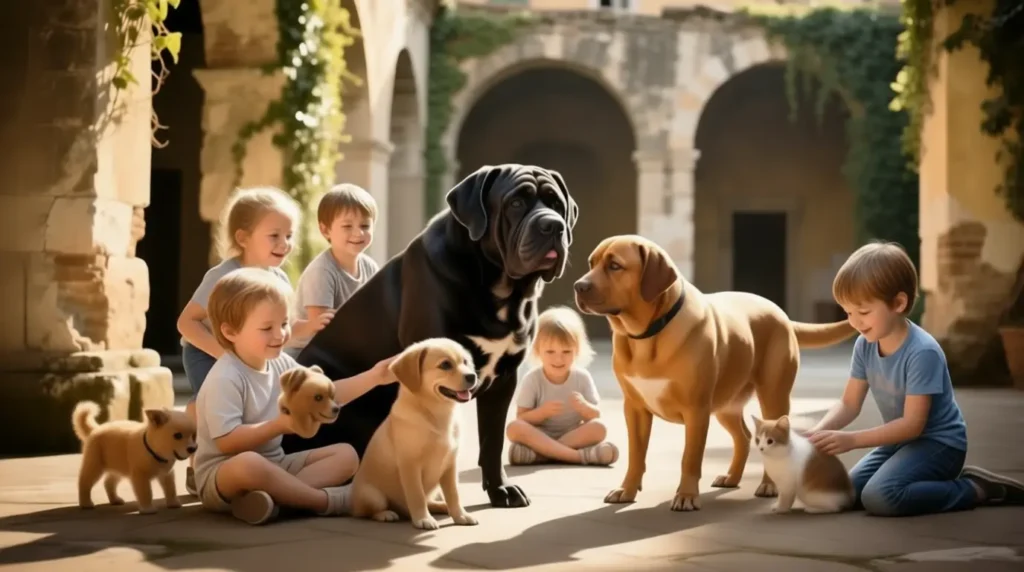
When it comes to other pets, Neos can coexist peacefully, especially when raised together. They’re not naturally dog-aggressive, though same-sex aggression can occur in some lines. Early training and controlled introductions help greatly.
Neapolitan Mastiff Care: What You Need to Know
Taking care of a Neapolitan Mastiff isn’t complicated, but it’s very different from caring for a typical dog. Their size and wrinkles alone create their own unique routines.
Exercise Needs
Neos are not high-energy dogs. They prefer:
- Short, steady walks
- Time to explore the yard
- Opportunities to stay mentally stimulated
Over-exercising puppies can damage their growing joints. Adults benefit from low-impact activities rather than intense running or jumping.
Feeding Requirements
Large breeds like the Neapolitan Mastiff need:
- High-quality large-breed dog food
- Meals are divided throughout the day to reduce bloat risk
- Food formulated for slow, steady growth in puppies
Neos grow rapidly, so feeding must be carefully managed to support healthy bone and joint development.
Grooming Needs
Grooming a Neapolitan Mastiff involves more than brushing:
Cleaning Skin Folds
The wrinkles and folds must be cleaned regularly to prevent:
- Moisture buildup
- Yeast infections
- Skin irritation
Dealing with Drool
Neos are famously drooly. Owners often keep:
- Towels in multiple rooms
- Wipes near feeding areas
- Waterproof covers for furniture
Brushing
A weekly brushing helps reduce shedding and keep the coat shiny.
Health and Lifespan
Neapolitan Mastiffs are prone to specific health issues, largely due to their size and loose skin.
Common Health Concerns
- Hip and Elbow Dysplasia
Large breeds often suffer joint problems, and Neos are no exception. - Cherry Eye
The breed’s loose skin makes them prone to prolapsed third eyelids. - Heart Disease
Dilated cardiomyopathy can occur. - Bloat (Gastric Torsion)
A life-threatening emergency is more common in deep-chested breeds.
- Skin Infections
Folds must be kept clean.
Lifespan
Neapolitan Mastiffs typically live between 7 and 9 years. While this may seem short, it’s common for giant breeds.
Neapolitan Mastiff Obedience Training
Various breeds such as this one take time to train, and this involves patience, consistency, and understanding.
Intelligent but Stubborn
Neos are intelligent and possess an independent streak. They respond best to:
- Positive reinforcement
- Calm, confident leadership
- Brief training programs.
Punitive methods of training are worse than good.
Socialization Is Critical
Early exposure to:
- People
- Animals
- Noises
- Environments
Assists in making a well-rounded adult.
Guarding Instincts Must Be Managed
Training assists in directing the instincts of the dog to appropriate behaviors.
Neapolitan Mastiff: Is It a Good Apartment Dog?
No, a Neapolitan Mastiff is not often the best family member to live in the apartment. The breed is big and moves, but it is not hyperactive; however, it needs enough space due to its calmness. They can adjust to the apartment life in case there is a need, but it requires:
- Consistent exercise
- Access to outdoor areas
- A tolerant landlord
The breeders and owners prescribe at least one medium-sized yard.
Do Mastiffs of Neapolitan Breeds Have a Special Type of Owner?
Yes, Neapolitan Mastiffs must have a special kind of owner, a patient and calm one who is physically fit to handle that huge breed. These dogs do well when they have confident owners who know their instincts on guarding and who are willing to train, socialize, and take proper care of them.
An ideal owner would be:
- Experienced with large breeds
- Home often
- Economically stable to spend on large breeds
- Dedicated to regular training
Neapolitan Mastiff, a Dog of the Day: What to Expect
If you are trying to imagine a day in the life of a Mastino, it is a good idea to think about a kind of guardian and a huge, loving shadow.
Morning Routine
Expect slow, gentle waking. They like stretching and might be wandering around the house, checking on the family members.
Their morning needs usually include:
- A short walk
- Breakfast
- A wrinkle and face cleaning session
Quiet Companionship
Neos waste most of their days napping around their subjects. They do not insist on attention and still like being close.
Guarding the Home
They are on the alert even when they are lounging. They may position themselves near windows or doors to monitor activity.
Evening Relaxation
Many Neos love spending evenings lying across their owner’s feet or snuggling on a couch if allowed. Their affectionate nature really shines at night.
Does the Neapolitan Mastiff qualify as a high-maintenance dog?
Yes, the Neapolitan Mastiff is indeed a high-maintenance animal due to its size, health-related issues, tendency to drool, and grooming needs. They are easy-going and do not raise much emotion, even when they are calm; however, the physical maintenance of the breed requires devoted attention.
Estimated Price of Neapolitan Mastiff
The Neapolitan Mastiffs are quite costly to own. Costs include:
- Adoption or purchase price: usually $2,500–$5,500
- Food: Large breeds consume much food
- Vet bills: More for giant breeds
- Grooming supplies: towels, wipes, shampoos
- Insurance: should have, because health problems are also expensive
Neapolitan Mastiff: Should You Have One?
The Neapolitan Mastiff is not the pet every person has, but when it comes to the right individual, it is a wonderful pet.
You ought to think about getting a Neapolitan Mastiff.
- A loyal, loving guardian
- A calm, quiet companion
- A dog that has a very rich history and looks
You should reconsider if you:
- Don’t have enough space
- Choose breeds that have low maintenance
- Spend long hours out of the home
- Unready to drool and to skin care
Concluding Remarks: The Perennial Greatness of the Neapolitan Mastiff
That is why people fall in love with this breed at first sight. The Neapolitan Mastiff is a great, fearful beast, which has a long history and a deeper loving heart.
They are parents, friends, guardians, and tender giants. The relationship is memorable to the people who realize and value their individuality.
You love them for their strength, maybe their feelings, and their faithful bond, but in any case, you know that the Neapolitan Mastiff is a breed of its own.