


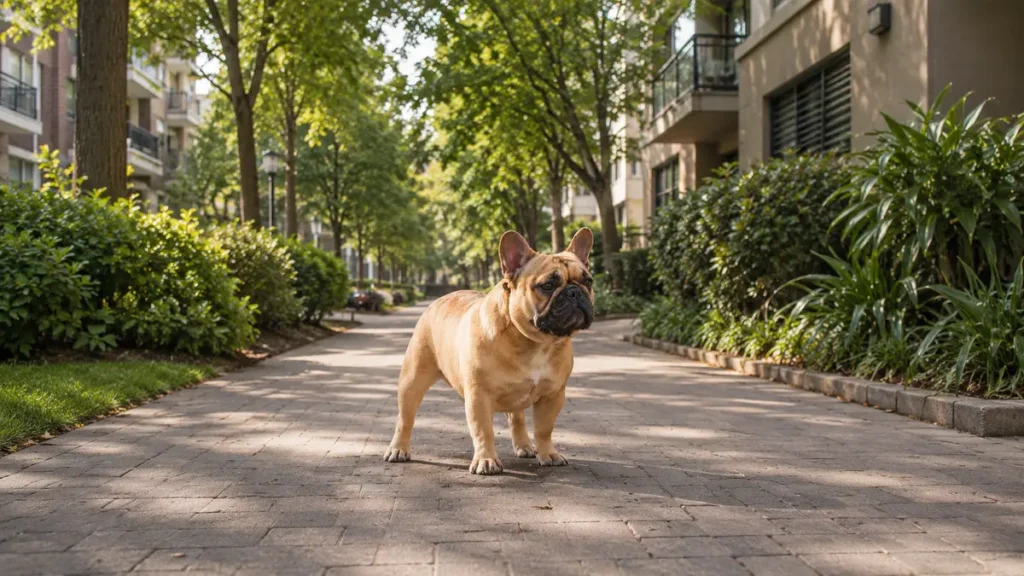
A French Bulldog can look like the ideal apartment dog at first glance. The breed is small, affectionate, and easy to picture in a city flat. The real question is whether a French bulldog’s apartment lifestyle works beyond the cute photos.
The answer depends on more than size. The French Bulldog is a compact breed under 28 pounds, which supports small-space living. At the same time, Royal Veterinary College research found that 72.4% of French Bulldogs had at least one recorded disorder in a single year of veterinary care.
This guide explains the full picture. You’ll learn how Frenchie personality, exercise needs, heat sensitivity, barking, costs, health risks, and lease rules affect city dog living. You’ll also see how French Bulldogs compare with the best small dogs for apartments, so you can decide with facts instead of assumptions.
This article answers these search intents:
- Is a French Bulldog a good apartment companion?
- Is a French bulldog’s apartment lifestyle safe?
- What is the Frenchie personality like indoors?
- Are French Bulldogs among the best small dogs for apartments?
- What health risks affect French Bulldogs living in cities?
- How much exercise does a French Bulldog require?
- What costs affect French Bulldog apartment owners?
- How does a French Bulldog compare with other small apartment dogs?
- What apartment setup works best for a French Bulldog?
1. Is a French Bulldog’s apartment lifestyle practical?
Yes, a French Bulldog apartment lifestyle is practical when the home stays cool, calm, and structured. The breed’s small size fits apartment space, but its health profile requires careful routines.
The French Bulldog’s adult size creates the first apartment advantage. Many sources place the breed under 28 pounds, which makes daily handling easier in lifts, stairwells, shared entrances, and narrow corridors.
A small dog also creates fewer space conflicts. A French Bulldog can rest near a desk, sleep beside a sofa, and move through tight layouts without needing a yard. This matters for city dog living, where owners often manage work calls, couriers, neighbors, and limited outdoor space.
The constraint is airflow. The University of Cambridge explains that brachycephalic obstructive airway syndrome (BOAS) affects short-muzzled dogs and can cause noisy breathing, exercise intolerance, sleep disturbance, and heat intolerance. That makes cooling and walk timing part of basic apartment care.
2. What makes the Frenchie’s personality apartment-friendly?
Frenchie’s personality is usually social, playful, alert, and people-focused. That profile suits apartments because the dog often prefers owner contact over long, independent outdoor activity.
French Bulldog temperament involves traits such as being adaptable, playful, and smart. These traits help in apartments where routines repeat every day.
A Frenchie personality supports apartment life through 5 practical behaviors:
- Follows household routines
- Enjoys short play sessions
- Bonds closely with owners
- Responds to food-based training
- Settles indoors after activity
The same closeness can create separation stress. A French Bulldog left alone for long hours may bark, chew, or pace. This risk grows in apartments because hallway noise and neighbor movement create repeated triggers.
For many owners, the best French bulldog apartment routine includes short morning contact, a midday check-in, evening walking, and quiet enrichment. This structure fits remote workers, couples, and city residents with predictable schedules.
3. How popular is the French Bulldog among small breeds?
The French Bulldog is one of the most visible small companion breeds in modern pet ownership. Popularity reflects demand, but it does not remove the breed’s care limits.
AKC-linked 2024 reporting showed the French Bulldog ranked as America’s most popular registered dog breed for the third straight year. That ranking shows strong owner interest in compact companion dogs.
The United Kingdom shows a more cautious trend. The Guardian reported that French Bulldog registrations fell from a 2021 peak of 54,074 to 7,750 in 2025, with about 1,400 registrations in the first 3 months of 2026. That trend connects popularity with health awareness.
This matters for apartment owners. A breed can look ideal online and still require advanced planning. The French Bulldog suits owners who value companionship, not owners who want a low-maintenance dog with minimal medical risk.
4. How much exercise does a French Bulldog need?
A French Bulldog usually needs short, controlled exercise rather than long runs.
Variation in activity levels amongst dogs
- Small dogs up to 1 h per day or up to 30 min per day
- Medium dogs require more than 2 h per day or up to 1 h per day
- Large dogs are recommended to have more than 2 h per day or up to 1 h per day
Apartment owners can divide that time into smaller blocks. This protects breathing, reduces boredom, and helps Potty training.
A practical French bulldog apartment schedule:
- Walk 10 to 15 minutes in the morning.
- Add 5 minutes of reward-based training.
- Use a short scent game indoors.
- Walk 10 to 15 minutes in the evening.
- Add quiet chewing or mat work before sleep.
This structure fits a city dog living better than one long walk. Short outings reduce heat exposure, elevator stress, and pavement fatigue.
Exercise also affects weight. French Bulldogs can gain weight when owners replace movement with treats. Weight gain adds pressure to breathing, joints, and heat tolerance. Portion control matters as much as walk length.
5. What health statistics matter most for apartment owners?
The strongest health statistics show that French Bulldogs carry measurable risks for breathing, skin, ears, eyes, and digestive problems. These risks shape apartment suitability because the dog spends most of its time indoors.
Royal Veterinary College researchers reviewed 2,228 French Bulldogs under veterinary care. They found that 72.4% had at least one recorded disorder in a single year. The most common specific problems included otitis externa at 14%, diarrhea at 7.5%, conjunctivitis at 3.2%, overlong nails at 3.1%, and skin fold dermatitis at 3.0%.
A later Royal Veterinary College study compared French Bulldogs with non-French Bulldogs. French Bulldogs had 42.14 times the odds of stenotic nares and 30.89 times the odds of brachycephalic obstructive airway syndrome.
These figures affect apartment routines directly.
| Health risk | Key figure | Apartment relevance |
| Any recorded disorder | 72.4% | Vet planning matters before adoption |
| Ear infection | 14.0% | Weekly ear checks help in indoor homes |
| Diarrhea | 7.5% | Food consistency matters in small spaces |
| Conjunctivitis | 3.2% | Dust and airflow affect eye comfort |
| Overlong nails | 3.1% | Low outdoor abrasion increases nail care |
| Skin fold dermatitis | 3.0% | Moisture control supports skin health |
| Stenotic nares odds | 42.14 times higher | Breathing checks matter before heavy activity |
| BOAS odds | 30.89 times higher | Cooling and short walks matter |
The table shows why a French Bulldog can fit in an apartment space but still demands serious health planning. The best small dogs for apartments are not always the lowest-risk dogs.
6. Can a French Bulldog handle hot city dog living?
A French Bulldog can handle hot city dog living only with strict cooling and low-exertion routines. Heat control is not optional for this breed.
Brachycephalic obstructive airway syndrome is associated with heat intolerance and exercise intolerance in affected dogs. That risk matters in apartments because owners often walk dogs on concrete, asphalt, lifts, and crowded streets.
Hot city routines create 6 common stress points:
- Warm pavements
- Delayed elevators
- Long lobby waits
- Poor hallway airflow
- Outdoor dining areas
- Summer car travel
A safe French bulldog apartment plan uses shaded routes, early walks, indoor cooling, and water access. Owners also watch breathing noise, gum color, pace changes, and recovery time.
The apartment itself can become an advantage. A climate-controlled apartment often protects a French Bulldog better than a yard during hot hours. The trade-off is clear: indoor comfort must replace outdoor freedom.
7. Is a French Bulldog quiet enough for apartment neighbors?
A French Bulldog can stay quiet enough for apartment neighbors when training starts early. Noise risk comes from alert barking, separation stress, and repeated hallway triggers.
French Bulldogs often notice doors, lifts, footsteps, delivery riders, and neighboring dogs. This alertness fits the Frenchie personality, but apartment walls magnify the result.
Train these 5 noise controls:
- Reward silence after door sounds
- Practice calm greetings
- Block hallway views
- Use mat training during deliveries
- Add a predictable alone-time practice
The goal is not to silence the dog completely. The goal is to reduce repeated barking patterns. One bark at a noise rarely creates a complaint. Ten barking bursts each evening can create a tenancy problem.
Renters also need written pet approval. Many buildings allow small dogs but restrict noise, balcony access, lift use, and common-area behavior. A French Bulldog apartment plan works better when lease rules match daily routines.
8. What does a French Bulldog cost in apartment life?
A French Bulldog apartment budget includes more than food and toys. Owners also plan for veterinary care, insurance, grooming supplies, cleaning, cooling, training, and possible pet rent.
Health statistics explain the cost risk. French Bulldogs had elevated odds for several disorders, including airway, skin fold, and ear conditions. These conditions can increase vet visits and long-term care costs.
Apartment-specific costs often include:
- Pet deposit
- Monthly pet rent
- Dog walker support
- Professional cleaning
- Cooling costs in summer
- Non-slip rugs
- Harnesses and cooling mats
- Pet camera or monitoring app
- Insurance or emergency savings
Longevity also affects cost planning. A 2024 Scientific Reports study estimated the French Bulldog’s median lifespan at 9.8 years, compared with 12.7 years for purebred dogs overall in the dataset. Lifespan data does not predict one dog’s future, but it helps owners plan realistic long-term care.
A French Bulldog can be one of the best small dogs for apartments from a companionship perspective. From a cost perspective, the breed requires more caution than many small breeds.
9. How does a French Bulldog compare with other apartment dogs?
A French Bulldog compares strongly on size, affection, and indoor companionship. It compares less strongly on heat tolerance, airway resilience, and some medical risks.
This comparison focuses on apartment attributes, not breed rankings.
| Breed | Apartment strengths | Apartment cautions |
| French Bulldog | Compact, affectionate, moderate exercise | Heat risk, airway risk, skin folds |
| Pug | Small, social, indoor-friendly | Airway risk, weight gain, heat sensitivity |
| Boston Terrier | Compact, playful, trainable | Energy bursts, airway concerns |
| Cavalier King Charles Spaniel | Gentle, affectionate, quiet | Separation stress, heart concerns |
| Miniature Poodle | Trainable, low-shedding, active | Grooming cost, high mental stimulation |
This comparison shows the real decision. A French Bulldog is not the universal winner among the best small dogs for apartments. It suits owners who want a close indoor companion and accept breed-specific care.
For active owners who jog daily, a French Bulldog is a poor match. For owners who work from home, prefer short walks, and manage cooling well, the match can work.
What apartment setup works best for a French Bulldog?
The best apartment setup for a French Bulldog reduces heat, slipping, overstimulation, and breathing strain. A good setup turns a small apartment into a safer routine.
Use this French bulldog apartment checklist:
- Keep the bed away from direct sunlight
- Use air conditioning during warm weather
- Place water in 2 locations
- Add non-slip rugs on tile floors
- Use a harness for walks
- Block unsafe balcony gaps
- Store treats in measured portions
- Create a quiet mat-training area
- Keep grooming wipes near the door
- Schedule nail checks every few weeks
The harness point matters. A neck collar can add pressure near the airway. Ask a veterinarian about equipment, especially if the dog snorts, coughs, overheats, or tires quickly.
Floor traction also matters. Many apartments use tile, laminate, or polished concrete. Slipping can affect confidence, movement, and joint comfort.
Who is a French Bulldog apartment best for?
A French Bulldog apartment match works best for owners who can manage health, schedule, and indoor comfort. The breed suits companionship-focused homes.
Good matches include:
- Remote workers
- Apartment renters with written pet approval
- City residents with cooling
- Owners who prefer short walks
- Adults who can monitor breathing
- Families with gentle child supervision
Poor matches include:
- Owners away for long workdays
- Joggers seeking a running dog
- Homes without reliable cooling
- Renters with strict pet rules
- Owners avoiding vet costs
- Households that prefer very independent dogs
This decision framework keeps the topic realistic. French Bulldog apartment ownership is not only about charm. It is about daily management.
What happens if you ignore French Bulldog apartment risks?
Ignoring French Bulldog apartment risks can create heat stress, barking complaints, weight gain, breathing distress, and avoidable veterinary costs. Most problems start as small patterns.
A dog that pants heavily after stairs sends an early signal. A dog that barks at each hallway sound sends another signal. A dog that gains weight after fewer walks sends a third signal.
Use this response framework:
- Reduce heat exposure.
- Shorten exercise blocks.
- Measure food portions.
- Add indoor enrichment.
- Train the hallway to be calm.
- Book a veterinary airway check.
- Confirm building pet rules.
French Bulldogs show higher odds of airway and conformational disorders than non-French Bulldogs. Apartment owners benefit from early action, not late repair.
Final verdict: Choose the Frenchie for companionship, not convenience
A French Bulldog can be a good apartment companion when the home matches the breed’s real needs. Small size helps. A warm Frenchie personality helps. Short walks, indoor play, and close human contact also fit many city homes.
The decision becomes harder when health enters the picture. The American Kennel Club lists the French Bulldog as a compact breed under 28 pounds, but Royal Veterinary College research also links the breed with higher risks for breathing, skin, ear, and conformational disorders. That means a French bulldog apartment lifestyle works best with cooling, weight control, vet planning, noise training, and clear rental permission.
Choose a French Bulldog if you want a loyal indoor companion and can manage the care behind the charm. Look at another breed if you want a jogging partner, a heat-tolerant dog, or a low-maintenance pet. Among the best small dogs for apartments, the French Bulldog stands out for affection, but responsible ownership makes the difference between a cute choice and a sustainable one.
Frequently Asked Questions
What apartment feature matters most for a French Bulldog?
Reliable cooling matters most because French Bulldogs can struggle with heat and heavy exertion.
Can a French Bulldog live in a studio apartment?
Yes, a French Bulldog can live in a studio apartment if it gets short walks, enrichment, cooling, and quiet rest.
Is an elevator building better for a French Bulldog?
An elevator building can help because it reduces stair strain, especially in hot weather or after exercise.
What daily habit helps a French Bulldog settle indoors?
A fixed walk, meal, training, and rest routine helps a French Bulldog feel secure in an apartment.
How can you tell if a walk is too much for a Frenchie?
Heavy panting, slowing down, noisy breathing, or refusing to move can signal that the walk is too much.
Do French Bulldogs suit renters?
French Bulldogs suit renters when the lease allows pets and the owner controls barking, cleanliness, and hallway behavior.
What indoor item helps French Bulldogs the most?
A cool, non-slip resting area helps because it supports comfort, traction, and safe movement indoors.