

Potty training a dog means teaching a dog where to eliminate, when to eliminate, and how to repeat that choice every day. The fastest results come from a single fixed routine, a single toilet area, immediate rewards, and tight indoor supervision.
Accidents on the floor, confusion about timing, and inconsistent routines are the main reasons potty training fails. Potty training a dog works when timing, location, and reward stay consistent. Most puppies need 8 to 10 bathroom trips daily in the early weeks, yet many owners underestimate this need.
This guide explains how to potty-train a dog using a clear, step-by-step routine, a realistic timeline, and data-backed methods. You will learn how often to take your dog out, how long training takes, and why common mistakes delay results. You will also see practical schedules, warning signs, and proven techniques used by veterinary experts.
What is the fastest way to potty train a dog?
The fastest way to potty train a dog is to control three variables at once: timing, location, and reinforcement. Take your dog to the same potty spot on a schedule, watch closely indoors, and reward outdoor elimination immediately with praise and a high-value treat.
Your dog learns faster when the cue, the place, and the reward stay stable. Dogs tend to eliminate where they have eliminated before, so a repeated location builds both a visual and an odor association. The reward must come immediately after elimination, not minutes later, or the association weakens.
This is why random walks do less than a planned potty routine. If you walk, play, and greet neighbors, and only later notice that your dog peed, your dog has not learned a clean-potty rule. Your dog has learned that outside is interesting. Potty training works when you separate bathroom time from play time, then reward the exact moment your dog finishes in the right place.
What supplies make potty training easier?
You need 5 basics:
- A leash for every potty trip
- A fixed outdoor toilet area
- Small, high-value treats
- An enzymatic cleaner
- A crate or small confinement area for unsupervised time
Those tools solve different parts of the problem: access, repetition, timing, and scent control.
Each item solves a different training problem.
- A leash controls distraction and lets you reward fast.
- A fixed toilet area creates visual and odor-based learning. Dogs often prefer places where they have eliminated before.
- High-value treats strengthen the right choice. Evidence supports reward-based methods for all canine training.
- An enzymatic cleaner removes residual odor that can pull a dog back to the same spot.
- A crate or pen prevents hidden accidents when you cannot supervise.
What step-by-step routine works for potty training a dog?
A working potty training routine has 6 steps. Each step solves one training problem.
Set one potty spot
Take your dog to one specific outdoor area every time. Repetition helps your dog connect the location with elimination. Dogs often prefer places that already carry the right odor signal.
Take your dog out on trigger times, not random guesses
The main trigger times are predictable:
- First thing in the morning
- After eating
- After drinking
- After naps
- After play
- After any major activity change
- Last thing at night
This matters because puppies do not fail potty training randomly. Most accidents happen after owners miss a biological trigger window.
Wait quietly in the potty area
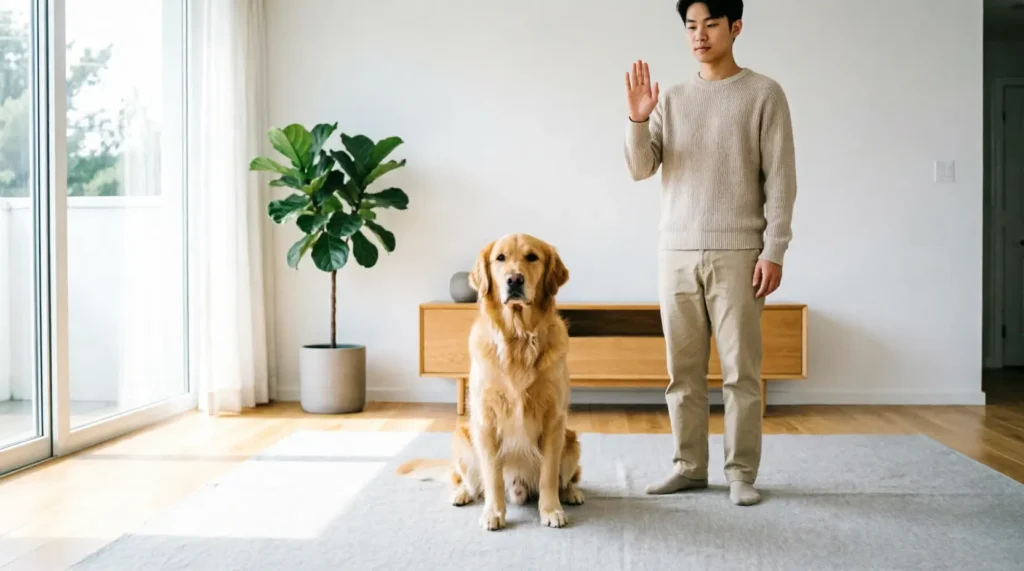
Do not turn the potty trip into a walk, a game, or a social break. You should not play with or excite a puppy until elimination happens. The toilet trip comes first. Play comes second.
Reward the exact behavior
Reward after the dog finishes, not during elimination, and not after returning inside. Puppies may stop midway if interrupted too early.
Confine when you cannot supervise
If you cannot watch your dog, use a crate or a small gated area. Humane World describes crate training as a reliable, humane confinement method. If your dog has been confined for several hours, take your dog straight to the potty spot when you return.
Clean accidents thoroughly and move on
Do not punish. Physical or verbal punishment is ineffective and may lead to more serious behavior problems. Cleaning quietly rather than punishing after the fact.
How often should you take a puppy out to potty?
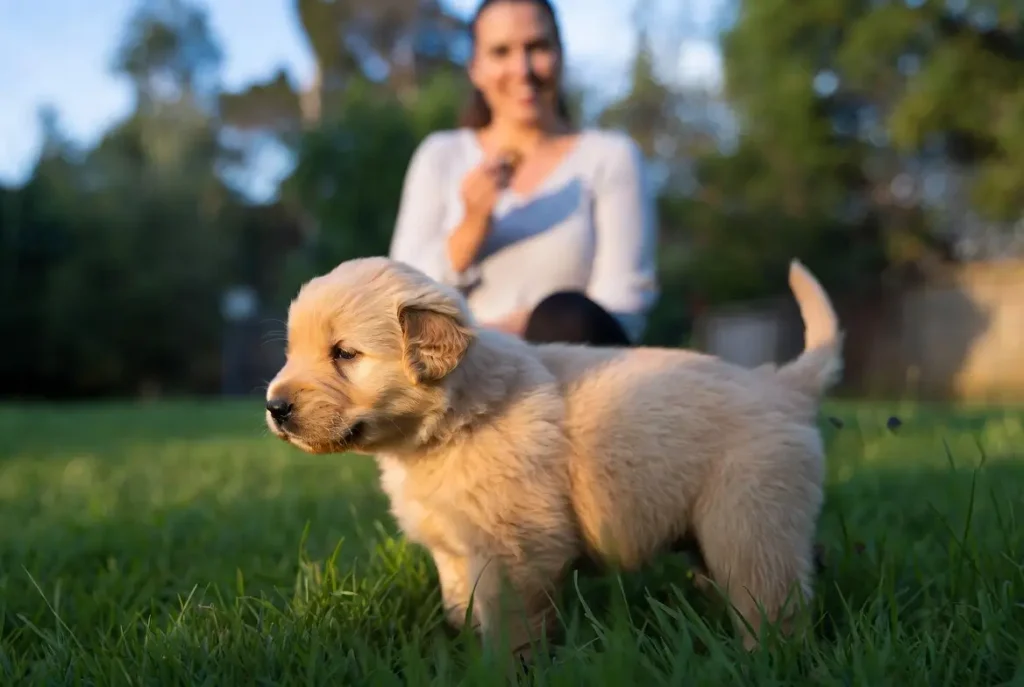
You should take a puppy out more often than most owners expect. At least every two hours, after waking, eating, drinking, and playing.
Here is a table of schedules with context. Use the table as a planning tool, not as permission to stretch intervals. Trigger times still override the clock.
| Puppy age | Elimination breaks per day | Practical daytime interval |
| 6 to 14 weeks | 8 to 10 | About every 2 hours, sometimes sooner |
| 14 to 20 weeks | 6 to 8 | About every 2 to 3 hours |
| 20 to 30 weeks | 4 to 6 | About every 3 to 4 hours |
| 30 weeks and older | 3 to 4 | About every 4 hours |
During waking hours, a puppy can often hold urine for about one hour per month of age, give or take an hour. A 3-month-old puppy may resist urination for about 3 to 4 hours, but trigger times such as naps, meals, and play still shorten the interval.
For crate planning, a puppy can comfortably hold it between potty breaks in the crate. That is a rule of thumb, not a license to stretch the day. A 3-month-old puppy may manage about 4 hours in a crate, but active daytime training still requires more frequent trips outside.
How long does it take to potty train a dog?
Most puppies show early progress within weeks, but full reliability often takes 4 to 6 months. House training usually takes a few weeks when you start early and stay consistent. Humane World states that housetraining typically takes 4 to 6 months, with variation based on size, age, and previous habits.
That range exists because potty training is not one skill. Your dog has to develop bladder and bowel control, learn a location preference, understand the household routine, and repeat the right choice under distraction. Small dogs often need more frequent breaks because smaller bodies hold less. Rescue dogs may also need a reset period because prior living conditions may have taught a different elimination pattern.
A practical timeline looks like this:
- Days 1 to 7: Build the schedule, the toilet area, and the reward loop. Expect close supervision and frequent trips outside.
- Weeks 2 to 4: Accidents usually drop if the schedule is tight. Your dog begins to move faster to the same potty area and may start showing clearer pre-potty signals.
- Months 2 to 4: Bladder control improves with age. You can begin testing slightly longer intervals and slightly more indoor freedom, but only if accidents stay rare.
- Months 4 to 6: Most dogs reach stable house-training in this range if the routine has stayed consistent. Humane World specifically states that housetraining typically takes 4 to 6 months.
One recent longitudinal study adds a useful warning. In the Generation Pup study, puppies whose house-training was still ongoing at 16 weeks or younger, with 4 or more accidents per week, had higher odds of exhibiting separation-related behaviors at 6 months compared with puppies with 0 to 3 accidents per week. That does not mean every accident causes anxiety. It does show that persistent early accidents deserve a tighter plan.
What signs show that your dog needs to go out?
The main signals are observable. Barking or scratching at the door, circling, sniffing the floor, restlessness, and sudden squatting. Sniffing, circling, and stiff-legged movement are common pre-potty behaviors.
Do not wait for a perfect signal. Not all dogs naturally learn to signal the need to eliminate in a way owners understand. A good schedule beats a vague hope that your dog will “ask” in time.
What common mistakes delay potty training?
There are 7 common mistakes that slow down dog potty training. Each one breaks the learning chain.
Mistake 1: Waiting too long between potty breaks
Young puppies do not have adult bladder control. Age strongly affects how long a puppy can wait. If you miss the timing window, your dog will practice the wrong behavior indoors.
Mistake 2: Rewarding too late
A delayed reward teaches little. The reward has to come immediately after elimination, so the dog links the treat to the act, not to walking back inside or sitting at the door.
Mistake 3: Giving too much freedom too early
Close supervision indoors and confinement when you cannot supervise. Free roaming before reliability usually creates hidden accidents, and hidden accidents create a stronger habit.
Mistake 4: Punishing accidents
Punishment makes dogs scared and confused. Scolding or rubbing a puppy’s nose in the mess makes puppies fearful and slows progress. Punishment may stop elimination in front of you, but it does not teach the correct place.
Mistake 5: Cleaning poorly
Residual odor acts like a location marker. Incomplete cleaning can attract the dog back to the same area.
Mistake 6: Turning the potty trip into an immediate return indoors
Walking or playing briefly after your dog finishes outside. That prevents the dog from learning that elimination ends outdoor access. Some dogs start holding urine to keep outside time going.
Mistake 7: Expecting a dog to “tell you” clearly
Not all dogs automatically learn to signal the need to eliminate in a way owners understand. Waiting for a perfect bark or scratch signal is a poor primary strategy. Build the schedule first. Let signaling emerge later.
What does a realistic daily potty schedule look like?
A strong schedule follows biology. The example below is not a rigid formula. It is a practical pattern based on veterinary and animal welfare guidance.
Daytime schedule for a young puppy
- Wake up, then go straight outside
- Eat breakfast, then go out again
- Finish playing, then go out again
- Wake from a nap, then go out again
- Drink heavily, then go out again
- Eat lunch, then go out again
- Finish afternoon play, then go out again
- Eat dinner, then go out again
- Take a final pre-bed potty trip
- Add one overnight trip if age or accidents require it
This is why many puppies need 8 to 10 outdoor trips per day in the 6 to 14 week period. The number sounds high until you map meals, naps, play, and wake-ups across a full day.
When is an accident a medical problem, not a training problem?
A sudden change in a previously trained dog is a medical question first. Urinary tract infection, weak sphincter control, hormone-related issues after spay surgery, bladder stones, diabetes, kidney disease, Cushing’s disease, neurologic problems, and genital abnormalities are potential causes of urinary incontinence or house soiling. Behavior problems can also have medical and behavioral causes at the same time.
This table gives context for the most important red flags.
| Pattern you notice | Why it matters | Next step |
| Sudden accidents after months of reliability | Training did not suddenly disappear without a reason | Book a veterinary exam |
| Urinating while asleep | Can point to incontinence rather than poor training | Book a veterinary exam |
| Straining, pain, or blood | Can point to urinary disease | Seek veterinary care promptly |
| Increased thirst and larger urine volume | Can occur with diabetes, kidney disease, or Cushing’s disease | Book a veterinary exam |
| Accidents only occur when left alone | May fit separation-related distress | Rule out medical causes, then assess behavior |
| Dribbling in an older dog | Can point to age-related or neurologic causes | Book a veterinary exam |
The purpose of this table is simple. Training changes behavior. Training does not fix infection, stones, hormonal leakage, neurologic disease, or incontinence.
Should you use pee pads, a crate, or outdoor grass?
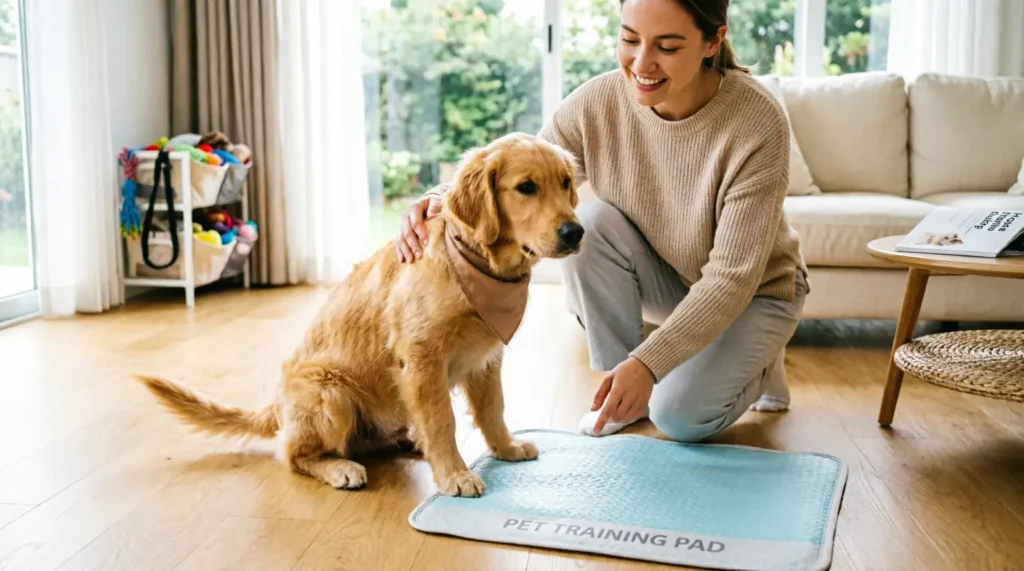
Outdoor grass is the cleanest long-term choice if your goal is a dog that toilets outside. Pee pads help some homes, but they can delay full outdoor house training because they create a second legal toilet surface indoors. Humane World says indoor potty options are possible, but outdoor consistency remains the cleaner long-term pattern.
A crate is a management tool, not a toilet solution. Humane World states that puppies under 6 months should not stay in a crate for more than 3 to 4 hours at a time, and the crate should never be used for punishment. The crate should be large enough for the dog to stand up and turn around.
If you live in a high-rise or face long elevator delays, a temporary indoor station may be practical during the earliest stage. The cleaner strategy is to move toward one target surface and one target routine as soon as your schedule allows. Mixed toilet rules often slow learning.
How do you potty-train an adult dog or a rescue dog?
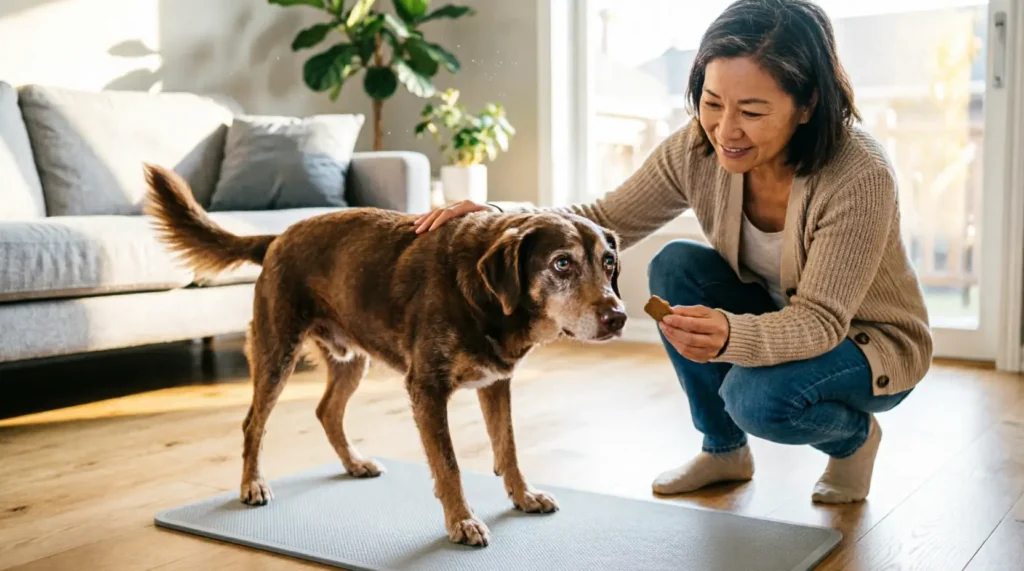
You potty train an adult dog by using the same structure you use for a puppy. Start from zero. Use a schedule, a fixed toilet area, immediate rewards, and supervised freedom. Adult dogs may hold urine longer than puppies. UPenn states that adult dogs should get an opportunity to go out about every 4 hours when possible, though many can physically hold urine for 8 hours or longer. That physical capacity does not replace the training routine.
Adult dogs can also arrive with different causes of house soiling. Fear, anxiety, frustration, separation-related distress, and territorial behavior can all contribute. That is why the same accident pattern does not always have the same cause.
How do you know potty training is working?
Potty training is working when three things happen together:
- Accidents drop week by week
- Your dog uses the same toilet area faster
- Your dog stays dry longer between planned breaks without stress
Do not measure success by one good day. Measure success by a stable pattern over 1 to 2 weeks. Once that pattern holds, expand freedom slowly. Move from one room to two rooms. Move from full supervision to short supervised distance. If accidents return, shrink freedom and tighten the schedule again.
Final verdict: Potty training works when patterns stay stable
Potty training works when your dog sees the same pattern every day. A fixed potty spot, a clear schedule, immediate rewards, and close supervision turn accidents from a daily frustration into a predictable training phase. The biggest mistake is not one accident. The biggest mistake is inconsistency. Most puppies need 8 to 10 potty trips a day in the early stage, and many dogs take 4 to 6 months to become fully reliable, so progress depends on routine, not luck .
Stay patient. Track patterns. Tighten the schedule when accidents increase. Expand freedom only after 1 to 2 stable weeks. If accidents appear suddenly in a previously trained dog, treat it as a medical question first. Potty training gets easier when you stop guessing and start following a system. That system is timing, location, reward, and repetition.
Frequently Asked Questions
How long does it take to potty train a dog?
Most dogs show progress within weeks, but full reliability often takes 4 to 6 months.
How often should a puppy go outside to potty ?
Young puppies often need potty breaks every 2 hours, plus after naps, meals, drinks, and play.
What is the fastest way to potty train a dog?
The fastest method is a fixed routine, one potty spot, immediate rewards, and constant supervision indoors .
Should I punish my dog for peeing in the house ?
No, punishment delays learning and can create fear or confusion.
What are the signs that my dog needs to go out?
Common signs include circling, sniffing, scratching at the door, barking, restlessness, and sudden squatting.
Can an adult dog still be potty trained?
Yes, adult dogs can be potty trained with the same schedule, supervision, and reward system used for puppies .
Are pee pads good for potty training?
Pee pads help in some homes, but they can slow full outdoor potty training by creating an indoor toilet habit.
How long can a 3-month-old puppy hold its pee ?
A 3-month-old puppy may manage about 3 to 4 hours during waking hours, but often needs to go sooner after activity triggers
When should I worry that accidents are a medical problem?
You should worry when accidents start suddenly, happen during sleep, include pain or blood, or come with increased thirst or larger urine volume.
How do I know potty training is working?
Potty training is working when accidents decrease, your dog uses the same spot faster, and dry periods get longer without stress .