

Your dog’s been fine forever. Then one day she starts scratching at the door constantly. She goes out and barely pees. You see her pee and it’s got color. Your first thought—is this a dog UTI? Maybe. Could also be stones. Could be her bladder’s just irritated from something else. The problem is that most urinary issues look identical from the outside.
We’re going to break down what dog UTI symptoms actually look like, what they don’t look like, why testing matters, and when you stop waiting around and call an emergency.
Your Dog’s Bathroom Routine Just Changed
Here’s how it usually starts. Your dog goes out for her normal walk. Pees like she always does. You get halfway down the block and she’s squatting again. Produces barely anything. Do it again three more times before you get home.
That pattern’s different. That’s what makes you wonder.
Now here’s what separates an actual urinary problem from a dog who just drank too much water: what you actually see come out.
A dog who chugged water? You’re dealing with real puddles. Big volumes each time. You notice because you’re mopping. A dog with bladder irritation? She stops constantly but produces drops. Her bladder’s sending full signals when there’s barely anything in there. The urgency comes before the volume.
That urgency could come from bacteria. Could come from stones. Could come from inflammation that has nothing to do with infection. You can’t tell by watching what comes out. That’s why your vet needs to test.
If you’re paying attention and most people don’t write down how many times and how much each time. Your vet will actually use that. “She pees a lot” means nothing to them.
What Actually Tipped You Off That Something’s Wrong
Changes show up before anything else. Something about the routine just feels off.
What you’ll start noticing:
She’s stopping multiple times now instead of once. The amount each time? Tiny. She’s having accidents inside when she never did. She’s licking down there constantly. Her pee smells stronger. Maybe it looks pinkish or darker than normal. She seems restless. She’s not eating right.
One sign by itself means nothing. Several happening at once? Something’s bothering her bladder. That’s when you know to pay attention.
When She’s Straining And It’s Obviously Uncomfortable
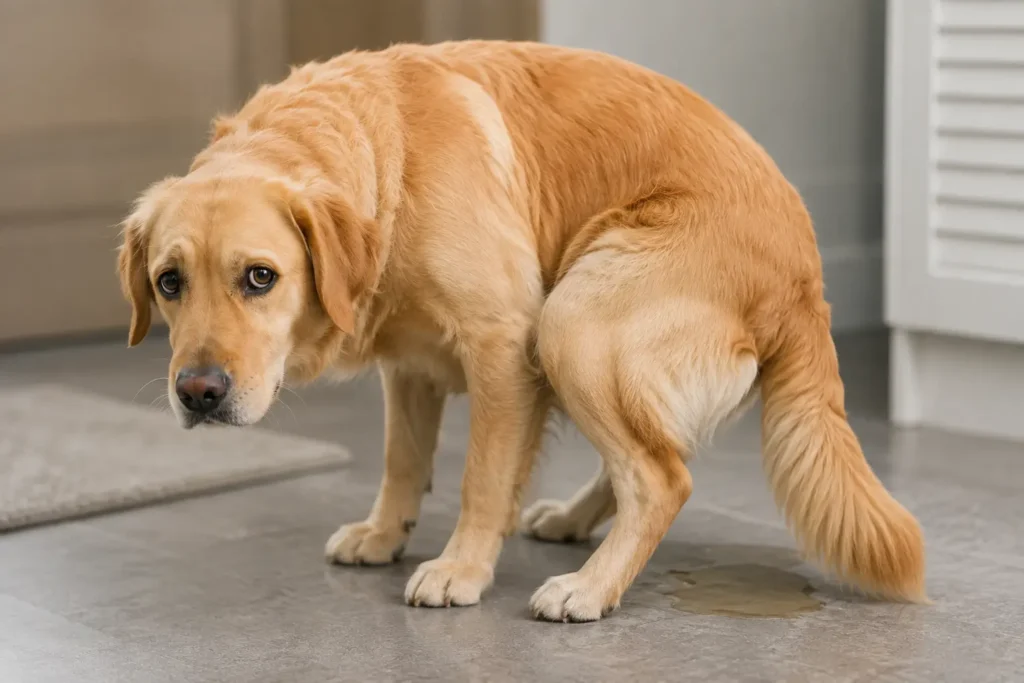
Your dog’s squatting for way longer than normal. Or she starts, stops, moves a few feet, tries again. Repeatedly. That’s straining and it means it hurts or feels wrong to pee.
Here’s what matters: Is anything actually coming out?
If she’s straining multiple times and literally nothing’s coming out, that’s potential blockage. That’s the emergency. Call your vet immediately. If she’s in pain or starts vomiting, you’re calling the emergency clinic today.
If she’s straining but still producing pee, even just drops get her checked. But it’s not the rush scenario.
Blood in Her Pee Freaks You Out (And Should)
You see red or pink tinted urine and yeah, you’re going to panic. That’s a normal reaction.
Blood means something’s bleeding up there. Infection causes it. Stones scraping around cause it. Obstruction causes it. Disease causes it. The color of the blood in urine dogs experience doesn’t tell you which one.
You might see a faint pink tint. You might see bright red streaks. The puddle might just look darker. Some people see it once and think she seems fine so probably nothing. That’s wrong. Get it checked.
If it keeps happening? Definitely get checked. If it’s alongside straining or if she’s producing less pee than normal? That changes things.
She’s Having Accidents Inside (She’s Not Regressing)
She pees beside the back door. She wets her bed. You’re thinking her training just fell apart and she’s going backward.
She’s not. Her body’s just screaming “go NOW” and she can’t hold it. That’s medical. Not behavioral. Not laziness. Her bladder’s urgency just overrode her training.
Diabetes causes accidents. Kidney disease does. Incontinence, bad joints, stress—tons of stuff does. But if those accidents are happening alongside straining or repeated tiny bathroom trips? Getting her checked makes sense instead of assuming she regressed.
That Pee Smell Doesn’t Automatically Mean Infection
Concentrated urine naturally stinks. What she eats changes the smell. A pee sample sitting in a container for hours? Smells different from fresh pee.
The smell only matters when it’s paired with something else. Strong smell plus constant trips outside tells you more than just the smell. Context changes everything.
The Constant Licking (And What It Actually Means)
Urine irritates tissue around her vulva or butt. So she licks. Some dogs do it right after peeing. Some just keep at it while resting.
Licking doesn’t automatically mean infection. Skin irritation, allergies, discharge, urine leakage all look the same from outside. Check if there’s redness. Check if fur’s damp. Tell your vet what’s actually happening.
Is She Actually Sick or Just Uncomfortable
A mild infection might barely slow her down between bathroom trips. She’s annoying about needing out but otherwise normal.
A dog that gets weak, stops eating, throws up, or acts like her belly hurts? That’s different. If infection hit her kidneys she’s going to seem generally unwell. Not interested in anything. Just off.
Watch her when she’s not trying to pee. That tells you how sick she actually is versus just uncomfortable.
Your Vet Needs Lab Work, Not Your Guess
Symptoms overlap too much. Your vet can’t tell you anything without testing.
- Urinalysis shows blood
- White blood cells
- Concentration
- Glucose
If bacteria seems likely, culture testing proves it. That quantitative aerobic culture? That’s the gold standard that confirms it.
How they get the sample matters. Most vets use cystocentesis for culture. That needle in the bladder, pee pulled straight out. Avoids contamination from bacteria on her skin.
Your vet moves from “she’s uncomfortable” to “lab confirmed bacteria.” That’s when treatment actually happens.
What dog UTI Symptoms, Treatment Actually Looks Like
Your vet says it’s bacteria. Treatment usually means antibiotics. Three to five days typically. Specific medication depends on your dog and what testing showed.
Infections keep coming back? Your vet might do culture and sensitivity first. Figure out which antibiotic actually works.
Sometimes the real issue is why it came back. A stone keeps causing problems. Her bladder doesn’t empty right. Until you fix that, infection just returns.
Don’t use leftover antibiotics from another pet. Don’t grab human UTI medicine for dog uti symptoms. The wrong drug makes it worse and complicates your vet’s next decision.
Hydration And Diet Do They Actually Help
More water means less concentrated urine. That can help prevent some problems as part of a plan. Diet matters more when stones or urine chemistry are involved.
Neither replaces getting diagnosed and treated for infection. Food might support overall urinary health. But infection needs testing and medication.
When Infections Keep Coming Back
One infection that clears and never happens again? Fine. A dog showing up at the clinic every few months? That’s a problem.
Your vet calls it recurrent at 3+ episodes in a year, 2+ in six months, or another within three months. They might recommend culture, imaging, and blood work. The question changes from “does she have infection” to “why does this keep happening.”
Stones could be it. Poor bladder emptying. Structural issues. Or she’s getting reinfected repeatedly. Figuring it out takes detective work.
The Emergency Line
Pay attention to what comes out.
Straining repeatedly but still producing pee—even drops—is different from blockage where nothing comes out.
Call emergency if:
- Your dog strains multiple times with zero output
- Blood shows up with straining
- She’s clearly getting worse
- She’s vomiting
Don’t schedule regular appointments for these.
What Your Vet Actually Needs To Hear
Write stuff down on your phone. Keep it simple.
How many times she’s going. What comes out each time a normal stream or drops. Did you see blood? Is she drinking more? Any previous infections and what antibiotics she’s had before.
Fresh samples are way better than old ones. If they ask you to bring a sample, ask exactly how they want it collected.
The Questions People Actually Ask About This
What’s the first sign that something’s wrong?
Usually just a change in routine. She’s asking out more. Stopping multiple times on walks. Having accidents. Whatever her normal is, it’s different. That’s what tips people off usually.
Can frequent urination dogs clear this up on their own without antibiotics?
Depends what’s causing it. Not everything’s bacterial. Stones or inflammation look the same but need different handling. Once your vet confirms bacteria, they’ll say whether antibiotics fit your specific dog.
Is blood in urine dogs always an emergency?
Get it checked, but it depends what else is happening. The dog is still peeing normally but there’s blood? Different than one straining repeatedly with nothing coming out. Severe distress changes the timeline.
How do you know if it’s a dog UTI symptoms or stones without going to the vet?
You don’t. Both cause pain. Both cause frequent tiny urinations. Both can have blood. You need urinalysis, culture, X-rays, or ultrasound. That’s the only way to know.
Do female dogs get this more often than males?
Yeah. Female anatomy just makes it easier for bacteria to travel into the urinary system. But don’t assume every female with urinary signs has infection without testing.
What test actually proves it’s bacterial?
Quantitative aerobic culture from the lab. That’s real proof. They pull samples directly from the bladder with a needle that’s cystocentesis. Make it clean and reliable.
Can diet fix a bacterial infection by itself?
No. Diet helps with urinary health in some situations, but it won’t treat bacterial infection. Treatment depends on what testing shows.
When do repeat infections mean something bigger’s happening?
Once your vet says it’s recurrent, they need to investigate. Could be stones. Could be poor bladder emptying. Could be other issues allowing infections. They need to find the root cause and fix it.
What To Actually Do Right Now
Track what’s happening for a few days. How often. How much. Any blood. That info matters to your vet.
See blood, accidents, straining with pain, or repeated failed attempts to pee? Call your vet. Get her evaluated.
Repeated straining with zero output? That’s an emergency. Don’t wait.
Once your vet clears the infection, check out our guide on dog food and urinary health for feeding approaches that help prevent this from coming back again.
If you’re trying to understand what else might be going on with her, browse our complete dog diseases section to see what other conditions look similar and how they’re different.