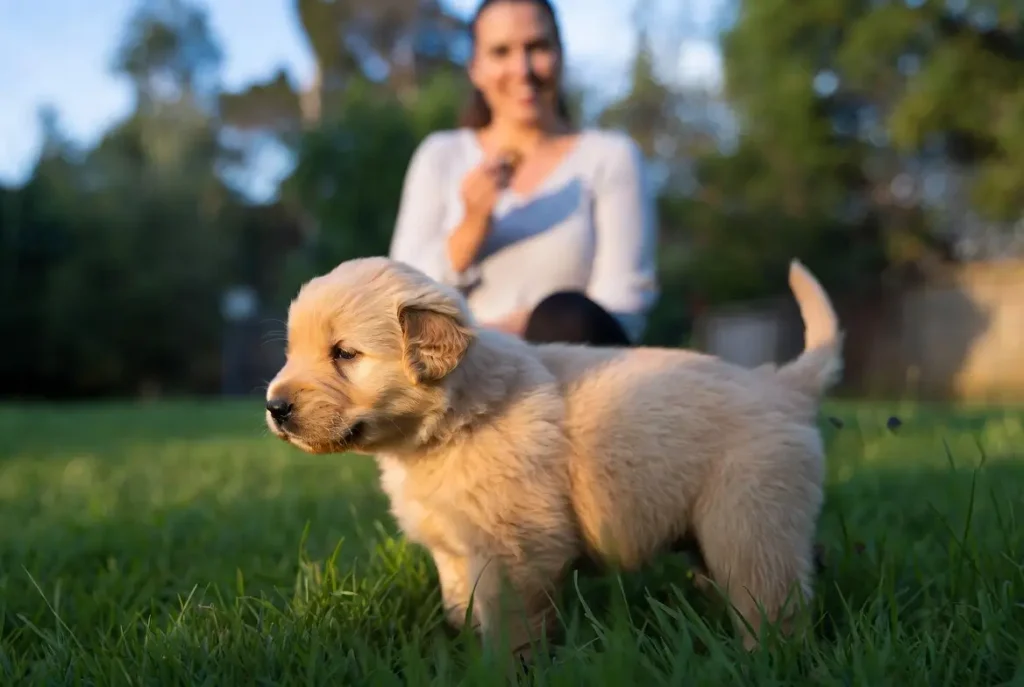


A dog that pulls, jumps, barks, or ignores cues is not always being stubborn. In many cases, the dog is reacting to unclear signals, strong distractions, low-value rewards, or a training setup that is too difficult for the current skill level.
Force-free dog training is a humane training approach that teaches behavior through rewards, clear cues, safe setup, and calm repetition instead of fear, pain, intimidation, or physical correction. It gives new dog owners a structured way to build cooperation without using punishment-based methods.
This guide explains what force-free dog training means, how it differs from punishment-based training, which rewards work best, and how to start at home. It also covers practical plans for leash pulling, barking, dog biting, jumping, trainer selection, common mistakes, and cases that need professional help.
What is force-free dog training?
Force-free dog training teaches dogs through rewards, clear cues, safe setup, and calm repetition instead of pain, fear, intimidation, or physical correction. New dog owners use force-free dog training to teach behavior without damaging trust.
Force-free dog training is not “anything goes” training. You still manage doors, leashes, food bowls, jumping, barking, chewing, and greetings. You also teach the dog what behavior earns access to food, toys, sniffing, play, praise, space, and social contact.
What makes force-free dog training different from punishment-based training?
Force-free dog training increases wanted behavior with rewards and safe management, while punishment-based training tries to suppress behavior through discomfort, fear, pain, or intimidation.
Humane force-free training is training or caring for an animal without pain, fear, or physical or verbal intimidation. Punishment-based techniques may alter behavior but can fail to address the underlying cause and can lead to anxiety, fear, distress, pain, or injury.
A punishment-based response may stop barking for a moment. It does not automatically teach the dog to look at you, move to a mat, relax near a window, or recover after a trigger. Force-free dog training teaches that replacement behavior directly.
Simple comparison:
| Training question | Force-free dog training answer | Punishment-based answer |
| The dog jumps on the guests | Reward 4 paws on the floor | Correct the jump |
| The dog pulls on the leash | Reward slack leash and check-ins | Jerk the leash |
| The dog barks at the window | Block view and reward calm noticing | Yell, spray, or startle |
| The dog grabs items | Teach drop it and trade | Chase, pry, or intimidate |
| The dog fears handling | Pair touch with rewards | Restrain harder |
This table shows the practical difference. Force-free dog training asks, “What can the dog do instead?” Punishment-based training often asks, “How do I stop this now?”
What are the 5 core principles of force-free dog training?
The 5 core principles are reward wanted behavior, prevent unsafe rehearsal, reduce difficulty, protect emotional state, and teach replacement skills. These principles keep the punishment-free dog training structured.
- Reward wanted behavior: Give food, play, praise, sniffing, distance, or access after the dog makes the right choice.
- Prevent unsafe rehearsal: Use gates, leashes, doors, window film, distance, crates, pens, and planned routines.
- Reduce difficulty: Lower noise, distance, speed, duration, or distraction when the dog struggles.
- Protect emotional state: Watch body tension, food interest, recovery time, breathing, tail position, and startle response.
- Teach replacement skills: Train sit, hand target, mat settle, recall, loose leash, drop it, leave it, and calm greetings.
These 5 principles help new owners avoid one common mistake. The goal is not to wait for unwanted behavior and react. The goal is to arrange the next repetition so the dog can succeed.
How do dogs learn in positive reinforcement training?
Dogs learn in positive reinforcement training when a behavior produces a valued outcome and then becomes more likely in the future. The reward must match the dog, context, and difficulty level.
Reward based training gives dogs something they like, such as food, toys, or praise, when they show a particular behavior. That makes the behavior more likely to happen again.
Rewards are not only treats. Reward-based methods include:
- Food rewards: Kibble, soft treats, chicken, cheese, or dog-safe food
- Toy rewards: Tug, ball, squeaky toy, flirt pole, or fetch
- Life rewards: Sniffing, greeting, moving forward, going outside, or entering the car
- Social rewards: Praise, touch, play, or attention
- Distance rewards: Moving away from something scary or overwhelming
Food often works well at the start because it is fast, repeatable, and easy to measure. A pea-sized treat allows 20 to 30 repetitions in a short session. A large biscuit slows the lesson and adds calories without adding clarity.
How do you start force-free dog training at home?
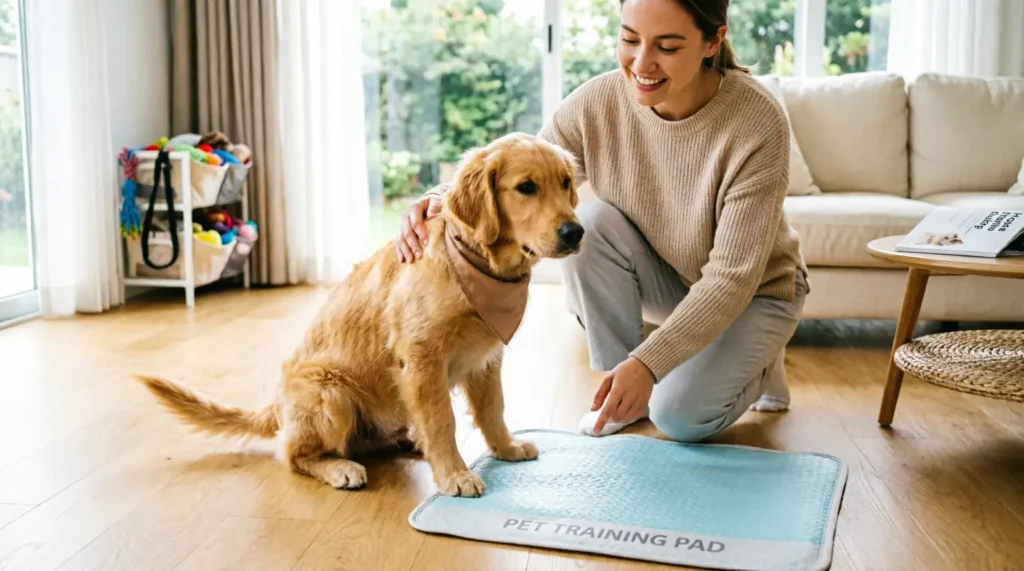
Start force-free dog training at home with one marker, one reward pouch, one quiet room, and one 5-minute session. New owners get cleaner behavior when the first sessions feel simple.
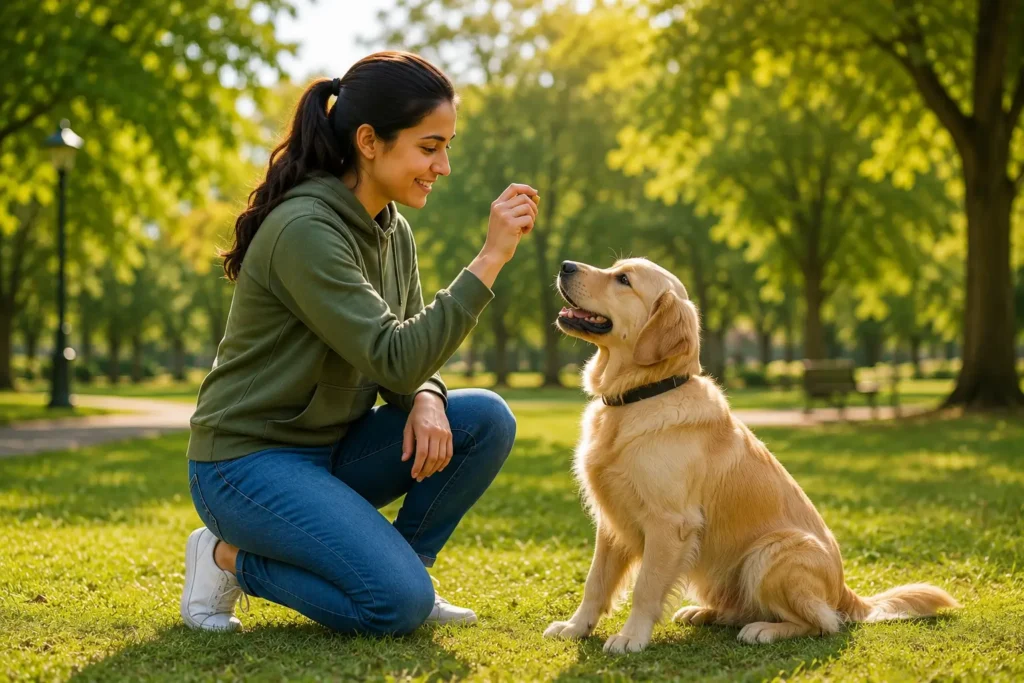
Choose one marker word, such as “yes”. Say the marker once and then give a treat. Repeat this 10 times. The marker becomes useful when the dog learns that the word predicts a reward.
Next, teach one behavior. Sitting works for many dogs, but ‘hand target’ often works better for shy or busy dogs. Hold your hand near the dog’s nose. Mark and reward when the dog touches your palm.
Keep the first session short. Use 10 to 15 treats. Stop before the dog loses focus. End with a simple success, such as eye contact, a hand target, or a calm sit.
Step 1: Set up the training space
Set up the training space by reducing distractions before you ask for behavior. A quiet space gives the dog fewer choices and gives you better timing.
Choose a room with a non-slip floor. Keep shoes, children’s toys, food scraps, other pets, and open doors out of the training area. Put treats in a pouch or bowl before the dog arrives.
Use 3 first-session rules:
- Train indoors first
- Use 10 to 15 treats
- Stop before the dog loses focus
Do not start at a park. Parks contain moving dogs, smells, children, cyclists, food wrappers, birds, and traffic. That environment turns beginner learning into advanced learning.
Step 2: Choose the right reward
Choose the right reward by testing what your dog wants in that situation. Reward value changes with hunger, stress, location, age, and distraction level.
Use kibble for easy indoor work. Use soft treats for new skills. Use higher-value food for recall, vet handling, grooming, and outdoor distractions.
| Difficulty level | Reward examples | Best use |
| Easy | Kibble, dry treats, praise | Kitchen, bedroom, quiet hallway |
| Medium | Soft treats, tug, a ball, and a sniff break | Yard, driveway, quiet street |
| Hard | Chicken, cheese, liver, sardine paste | Recall, handling, dogs, traffic, vet practice |
This table prevents a common error. A dog that ignores kibble outside is not “stubborn”. The environment may simply pay better than the owner.
Step 3: Mark the exact behavior
Mark the exact behavior at the moment the dog does it. Good timing turns reward-based methods into clear communication.
Say “yes” when the dog’s rear touches the floor during sit. Say “yes” when the dog looks at you after hearing the name. Say “yes” when the leash becomes loose.
Step 4: Add the cue after the behavior appears
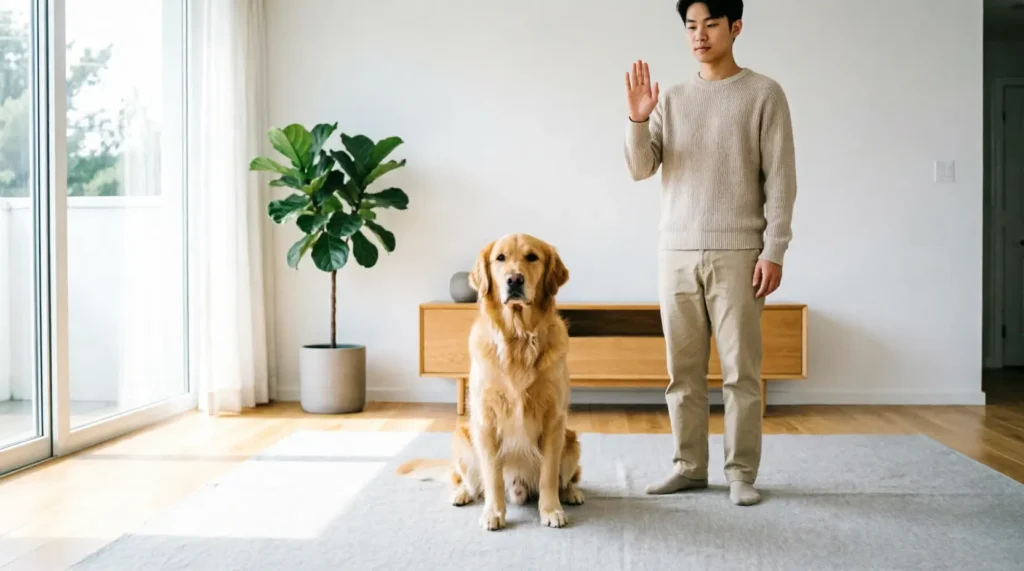
Add the cue after the dog can perform the behavior reliably. A cue names the behavior; the cue does not create understanding by itself.
For ‘sit’, wait until the dog starts to sit. Say “sit” once. Mark when the rear touches the floor. Reward. Repeat across several short sessions.
Do not repeat “sit, sit, sit”. Repetition teaches the dog that the cue includes delay or background noise. Say the cue once, then make the setup easier if the dog struggles.
Step 5: Build duration, distance, and distraction separately
Build duration, distance, and distraction one at a time. Training fails when new owners raise all 3 criteria in one session.
Use this sequence:
- Duration: Sit for 1 second, then 2 seconds, then 3 seconds.
- Distance: Take 1 step away, then 2 steps, then 3 steps.
- Distraction: Add a toy on the floor, then a person moving, then a low-level outdoor sound.
Raise only one criterion. Lower the other two criteria when you add a new challenge.
How do you handle jumping without punishment?
Stop jumping by rewarding 4 paws on the floor before the jump happens. New owners need this plan during greetings, door arrivals, feeding, and play.
Prepare treats before opening the door. Ask the guest to wait outside. Open the door 2 inches. Mark and reward when the dog keeps its paws on the floor.
Close the door calmly when the dog jumps. Open again when the dog can stand or sit. The door becomes part of the consequence system.
Use this order:
- Reward calm standing.
- The reward sits near the door.
- Add the guest’s movement.
- Add the guest’s voice.
- Add brief petting.
Skipping this setup teaches the dog that jumping starts social contact. A guest who pets a jumping dog rewards jumping, even with friendly intent.
How do you stop leash pulling with reward-based methods?
Stop leash pulling by rewarding movement beside you and pausing forward motion when the leash tightens. New owners need this skill before busy streets, parks, and school areas.
Start indoors. Walk 5 steps. Mark and reward the dog when it stays near your legs. Add 5 more steps. Move to the driveway after indoor success.
Use sniffing as a reward. Walk 5 loose-leash steps. Say “go sniff”. Let the dog sniff for 5 to 10 seconds.
Use this simple rule:
- Loose leash earns movement.
- Tight leash pauses movement.
- Check-in earns a reward.
Do not pull the dog backward. Pulling creates opposition and tension. Reward the leash position you want before the dog reaches the end of the leash.
How do you reduce barking with no punishment dog training?
Reduce barking by identifying the trigger and rewarding calm noticing before the dog erupts. Barking plans change by trigger, such as windows, doorbells, dogs, sounds, or visitors.
For window barking, block visual access with curtains, film, or room management. Reward the dog for turning away from the window. Practice when the trigger is far enough away.
For doorbell barking, record the sound. Play it at low volume. Mark and reward quiet orientation. Raise the volume only when the dog stays calm.
For barking at dogs, increase distance. Reward the dog for looking at the dog and then back at you. End the session before lunging starts.
Skipping trigger control creates hundreds of barking repetitions. Repetition strengthens the barking routine and slows later behavior change.
How do you reduce puppy biting without punishment?
Reduce puppy biting by giving legal chew items, rewarding calm mouth choices, and stopping play before the puppy becomes frantic. Puppy biting often increases during tired evenings.
Use 3 to 5 safe chew options, such as rubber toys, stuffed food toys, rope toys, and puppy-safe chews. Rotate the options across the day.
When teeth touch skin, pause play for 10 to 20 seconds. Offer a toy. Resume when the puppy bites the toy instead of the skin.
Track these 4 biting triggers:
- Tiredness
- Hunger
- Overexcited play
- Too little chewing or enrichment
The plan works better when puppies sleep enough. A tired puppy often bites harder and learns less.
When does a dog need professional help?
A dog needs professional help when fear, aggression, panic, pain, or repeated behavior failure appear. Force-free dog training still includes veterinarians and qualified behavior professionals.
Serious behavior problems, including fear, aggression, separation anxiety, noise phobia, and compulsive disorders, require veterinary evaluation so medical factors can be excluded and an accurate plan can be made.
Get help early when you see:
- Growling, snapping, or biting
- Freezing during handling
- Panic when left alone
- Lunging at dogs or people
- Sudden behavior change
- Guarding food, toys, beds, or people
- Refusal to eat during training
- Pain signs, limping, or touch sensitivity
Aggression does not create an exception for harsh training. Animals with challenging behavior disorders deserve effective, compassionate, humane methods rather than a heavy hand.
How do you choose a force-free dog trainer?
Choose a force-free dog trainer by asking exactly what happens when your dog gets behavior right and wrong. Clear answers reveal the method faster than marketing terms.
Ask these 8 questions:
- What rewards do you use for training?
- What happens when my dog gets it right?
- What happens when my dog gets it wrong?
- Do you use shock collars, prong collars, choke chains, leash corrections, yelling, or physical pressure?
- How do you handle fear, aggression, or reactivity?
- Do you write training plans and progress notes?
- When do you refer to a veterinarian or veterinary behaviorist?
- Can I watch a class before enrolling?
Avoid vague language. Terms such as “balanced” or “leadership” can mean different things. Ask for the exact tools and consequences.
Is force-free dog training enough for aggressive or reactive dogs?
Force-free dog training is the correct ethical base for aggressive or reactive dogs, but these dogs often need veterinary assessment and a specialized behavior plan. Safety and welfare come first.
Aggression can involve fear, pain, frustration, territorial behavior, predatory behavior, resource guarding, or learned defensive patterns. A single obedience command does not solve those causes.
Use distance before cues. Use barriers before exposure. Use muzzle training before risk. Use professional support before the dog rehearses another unsafe incident.
Aggression cases do not create an exception for harsh handling. The statement says challenging behavior disorders require effective, compassionate, and humane methods.
A realistic plan may include desensitization, counterconditioning, enrichment, predictable routines, safety equipment, medication evaluation, and owner coaching. That is still force-free dog training. It is not casual training.
What are the main benefits of force-free dog training?
The 6 main benefits are safer learning, clearer communication, lower stress risk, better owner timing, stronger cooperation, and better behavior prevention. These benefits come from the method, not the branding.
- Safer learning: The dog learns without pain or intimidation.
- Clearer communication: A marker identifies the exact behavior.
- Lower stress risk: The owner watches body language and adjusts the difficulty.
- Better owner timing: Short repetitions sharpen feedback.
- Stronger cooperation: The dog learns how to earn the desired outcomes.
- Better prevention: Management reduces rehearsal of unwanted behavior.
The PLOS ONE study found more stress-related behavior and higher cortisol increases in dogs trained with aversive-based methods compared with reward-based methods.
The benefit for new owners is practical. A dog that understands how to earn rewards gets more chances to repeat safe behavior.
What are the limits of force-free dog training?
Force-free dog training has limits when owners lack timing, rewards, management, medical input, or safety planning. The method works best when the plan matches the dog’s age, health, history, and environment.
A reward-based plan can fail when the reward is too weak. It can also fail when the dog is too close to a trigger. It can fail when pain, fear, or illness blocks learning.
Force-free does not mean “let the dog do anything”. It means the owner controls access, prevents danger, and teaches replacement skills without coercion. A leash, gate, closed door, distance, and muzzle can all belong in humane training.
A skilled trainer changes the setup before blaming the dog. That shift protects both welfare and results.
What mistakes make force-free dog training less effective?
The 7 common mistakes are late marking, repeated cues, weak rewards, hard locations, unclear criteria, long sessions, and missing medical checks.
| Mistake | What the dog may learn | Better force-free choice |
| Late marker | Wrong movement earned a reward | Mark the exact second |
| Repeated cue | Delay is part of the cue | Say cue once |
| Weak reward | The environment pays better | Raise reward value |
| Hard location | Cue fails around distractions | Train indoors first |
| Fast criteria change | The dog guesses randomly | Change one criterion |
| Long session | Fatigue reduces learning | Use 3 to 5 minutes |
| No vet check | Pain blocks behavior | Ask a veterinarian |
This table gives owners a repair plan. Most “training failure” is a setup problem, not a character problem in the dog.
What should new owners remember first?
New owners remember this first: reward the behavior you want, manage the behavior you cannot train yet, and get help early for fear, aggression, pain, or panic. Force-free dog training works through clarity.
Start small. Pick one marker. Pick one reward. Pick one behavior. Practice in one quiet place. Add difficulty only after the dog succeeds.
Use positive reinforcement training for foundation skills. Use no punishment dog training for mistakes. Use reward-based methods for real-life behavior, including greetings, walking, recall, handling, and settling.
The first week is not about perfection. The first week teaches the dog that you are predictable, safe, and worth listening to.
Final thoughts
Force-free dog training gives new dog owners a clear way to teach behavior without fear, pain, intimidation, or physical correction. It does not remove rules. It makes the rules easier for the dog to understand.
The real strength of this method is its structure. You reward the behavior you want. You manage the behavior that your dog cannot handle. You reduce distractions before frustration builds. You use positive reinforcement training to turn small correct choices into reliable habits.
For a new dog owner, the first goal is not perfect obedience. The first goal is clear communication. A dog that understands cues, rewards, timing, and safe routines has fewer reasons to guess, panic, pull, bark, or jump.
Start with one quiet space, one marker word, one useful reward, and one simple behavior. Then build slowly. Add duration, distance, and distraction in separate steps. Track what works. Change the setup when your dog struggles.
Force-free dog training works best when kindness has a plan behind it. That plan helps your dog learn what to do next, and it helps you become a calmer, more consistent guide.
Frequently Asked Questions
Can force-free dog training work for a dog that already has bad habits?
Yes, force-free dog training can change existing habits by blocking rehearsal and rewarding a clear replacement behavior.
What is the first skill to teach with force-free dog training?
A marker word is the first useful skill because it tells your dog the exact behavior that earned a reward.
How long should a force-free dog training session last?
A beginner session usually works best at 3 to 5 minutes because short practice keeps timing clear and frustration low.
Why does my dog listen indoors but ignore me outside?
Your dog ignores cues outside because smells, movement, noise, distance, and other dogs make the environment harder.
When should I contact a professional dog trainer?
Contact a qualified force-free trainer when your dog shows fear, aggression, panic, guarding, repeated failure, or sudden behavior change.
Is force-free dog training suitable for rescue dogs?
Yes, force-free dog training suits rescue dogs because it builds safety, predictability, and trust during new routines.
What should I do when my dog makes a mistake?
Reset the situation, make the next repetition easier, and reward the correct behavior when your dog succeeds.