Toy Poodle intelligence describes how efficiently the Toy Poodle dog breed learns commands, solves tasks, and performs in formal working tests. The Toy Poodle shares the same working intelligence ranking as all Poodles, which sit second among about 130 breeds in Stanley Coren’s survey.
Toy Poodles often surprise new owners. A dog that weighs only a few kilograms can score like a seasoned working dog when trainers measure learning speed and obedience. In Stanley Coren’s survey of 130 breeds, the Poodle, including the Toy variety, ranks second overall among the brightest dogs. These top-tier breeds typically learn a new command in fewer than 5 repetitions and obey on the first cue about 95 % of the time, which sits far above averages reported for typical family dogs. Research that reports a Toy Poodle life expectancy close to 10-18 years suggests that this mental sharpness can remain useful across a long companion life.
This article explores why Toy Poodle intelligence stands out in working tests and in everyday homes.
How Do Researchers Measure Toy Poodle Intelligence In Working Tests?
Researchers measure Toy Poodle intelligence through working and obedience scores that compare many dog breeds under the same test conditions. The 1995 edition of Coren’s book lists 130 dog breeds for trainability.
Key measurement dimensions
- Understanding of new commands
- Obedience to the first command
- Ability to repeat accurate performance across trials
In this framework, the Poodle, including the Toy Poodle, belongs to the top tier called the brightest dogs.
Where does Toy Poodle Intelligence Rank?
| Metric | Poodle (all sizes, including Toy Poodle) | Average dog in the Coren study |
| Intelligence tier | Brightest dogs | Average working dogs |
| Rank among 130 breeds | 2 | Not specified |
| Repetitions to learn a new command | Fewer than 5 | 25 to 40 |
| First command obedience rate | About 95 % or higher | About 50 % or higher |
This table shows why Toy Poodle intelligence is considered markedly above the general dog population in formal working tests.
Why Do Toy Poodles Score High In Working And Obedience Tests?
Toy Poodles score high in working tests because the Poodle group demonstrates rapid command learning with very high obedience reliability under Coren’s criteria. Top-tier breeds, including Poodles, understand new commands in fewer than 5 repetitions and obey on the first command about 95 % of the time.
Evidence from trial records
- The Poodle Club of America national obedience events regularly record Toy Poodles in high combined positions in Open and Utility classes.
- Agility and obedience statistics collated by training organisations describe Poodles of all sizes as frequent title winners due to sequence memory and response precision.
These data sets show Toy Poodle intelligence as a practical working trait, not only a theoretical label.
How Does Toy Poodle Intelligence Compare With Other Small Dog Breeds?
Toy Poodle intelligence compares favourably with other small dog breeds because Poodles rank second overall, while many small companion dogs sit in lower tiers that require more repetitions and show lower first command obedience rates.
Toy Poodle Intelligence Compared With Selected Small Breeds
| Breed | Intelligence tier | Repetitions for the new command | First command obedience rate |
| Toy Poodle | Brightest dogs | Fewer than 5 | About 95 % or higher |
| Papillon | Brightest dogs | Fewer than 5 | About 95 % or higher |
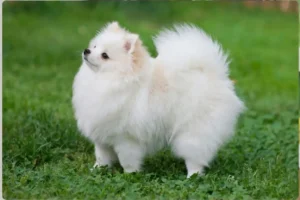
| Pomeranian | May not be considered one of the brightest dogs | Fewer than 5 | About 95 % or higher |
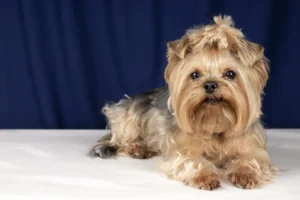
| Yorkshire Terrier | Above-average working | 15 to 25 | About 70 % or higher |
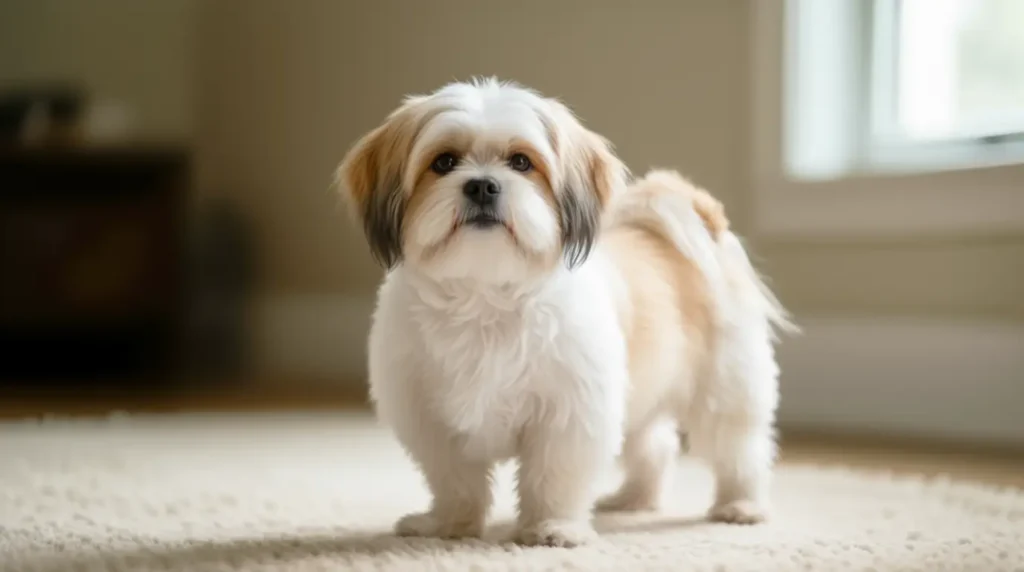
| Shih Tzu | Lowest working category | 80 to 100 or more | About 25 % or lower |
These comparisons show that Toy Poodle intelligence places this small dog breed in the highest performance band among small dogs tested with similar methods.
What Types Of Intelligence Does A Toy Poodle Show In Everyday Situations?
A Toy Poodle shows instinctive, adaptive, and working intelligence in everyday situations, the three categories defined in Coren’s model of dog cognition.
Three intelligence types in Toy Poodles
1. Instinctive intelligence
- Originates from the Poodle’s history as a water retriever in Germany and France.
- Appears as strong retrieval interest, confident swimming, and focus on thrown objects.
2. Adaptive intelligence
- Appears when a Toy Poodle learns new solutions, such as finding alternate paths around barriers or locating stored toys after long intervals.
- Adaptive intelligence is observed informally by owners and supported by problem-solving research in general dog studies.
3. Working and obedience intelligence
- Demonstrated during structured tasks such as heelwork, recalls, and stays in group classes and competition rings.
- Measured quantitatively in obedience scores and title progression.
These three dimensions together explain why Toy Poodle intelligence remains visible both in the home and in formal working tests.
What Do Kennel Clubs And Veterinary Sources Report About Toy Poodle Intelligence?
Kennel clubs and veterinary sources report Toy Poodle intelligence as exceptionally high, with emphasis on rapid learning and strong response to positive training methods.
Kennel club statements
- The American Kennel Club describes the Toy Poodle as extremely intelligent, easily trained, agile, and suited for a variety of canine sports, including obedience and agility.
- The Westminster Kennel Club lists a separate Toy Poodle variety within Toy Group events, which indicates sustained demand for precision performance at major shows.
Veterinary and breed guide statements
- PetMD notes that Toy Poodles are exceptionally intelligent and eager to please, which makes training comparatively straightforward when owners use reward-based methods.
- Recent breed overviews from specialist websites describe Toy Poodles as highly intelligent and responsive, with mental exercise needs that exceed their modest physical exercise needs.
These authority descriptions align with the high working test scores observed in formal obedience and agility environments.
How Do Toy Poodle Lifespan And Health Support Long-Term Cognitive Performance?
Toy Poodle lifespan and health support long-term cognitive performance because this small dog breed often lives into the mid to late teens, which provides many years of training and mental activity.
Lifespan data
- A Japanese study reported an average Toy Poodle life expectancy of about 12.7 years.
- A 2024 United Kingdom analysis found a Toy Poodle life expectancy of about 14 years, higher than the average of 12.7 years for pure breeds in the study.
- Popular veterinary and media sources list the Toy Poodle’s lifespan as ranging between 14 and 18 years, placing them among the longest living dog breeds.
Implications for Toy Poodle intelligence
- Longer lifespan permits extended obedience and agility careers compared with many larger breeds.
- Owners can maintain Toy Poodle intelligence through ongoing advanced training, scent work, and problem-solving games from youth into senior years.
These lifespan figures support the practical value of Toy Poodle intelligence over many years of companion life.
What Training Methods Use Toy Poodle Intelligence Most Efficiently?
Training methods that use Toy Poodle intelligence most efficiently combine clear markers, reward-based reinforcement, and frequent mental challenges. Veterinary behaviour guidance consistently recommends positive reinforcement systems for Toy Poodles.
Core training principles for Toy Poodle intelligence
1. Short, focused sessions
- Duration about 5 to 10 minutes, two or three times per day.
- Focus on one new behaviour or proofing of one known cue.
2. High rate of reinforcement
- Frequent small food rewards or toy access for correct responses.
- Immediate delivery after the marker word or click.
3. Varied mental tasks
- Mix obedience drills, nose work games, and object naming tasks.
- Rotate exercises so ToyPoodle’s intelligence engages new patterns instead of repeating one simple routine.
4. Structured progression toward working tests
- Start with domestic obedience, then progress to local obedience classes.
- When scores remain stable, consider entry into formal working tests sanctioned by national kennel clubs.
These methods reflect the same logic used in competition obedience, adjusted to the daily schedule of a household.
How Can Owners Informally Test Toy Poodle Intelligence At Home?
Owners can informally test Toy Poodle intelligence at home using simple tasks that mirror core components of working tests: learning speed, discrimination, and memory.
Three-step Toy Poodle home intelligence check
1. Command learning count
- Introduce a new cue, such as a nose touch to a target.
- Count repetitions until the Toy Poodle responds correctly on four trials out of five.
- Compare the result with the fewer than five repetitions reported for top-tier breeds.
2. Object discrimination
- Present three toys with different textures.
- Name one and reward only correct selections.
- Record how many trials are needed for a consistent correct choice.
3. Delayed recall memory
- Ask the Toy Poodle to wait in another room.
- Hide a familiar object.
- Call the dog and time how long it takes to locate the object.
These home tasks do not replace certified working tests but provide structured insight into Toy Poodle intelligence in a domestic environment.
What Common Owner Mistakes Can Limit Toy Poodle Intelligence Development?
Common owner mistakes can limit Toy Poodle intelligence development when they reduce mental stimulation or introduce confusing signals.
Frequent limiting factors
- Irregular training schedules that allow learned cues to degrade between sessions.
- Multiple verbal cues for one behaviour, which conflicts with the clear signal requirement in working tests.
- Punitive handling is linked to increased anxiety and reduced learning efficiency in dogs in general.
- Lack of enrichment when Toy Poodles receive only basic walks without puzzle feeders, scent games, or training drills, despite veterinary guidance that emphasises mental exercise for this breed.
Reducing these mistakes allows Toy Poodle intelligence to appear fully and to translate into behaviour that aligns with high working test performance.
How Does Toy Poodle Intelligence Influence Daily Family And Urban Life?
Toy Poodle intelligence influences daily family and urban life through rapid adaptation to routines, efficient house training, and flexible responses in compact spaces.
Observed benefits in households
- Toy Poodles learn house training routines, including crate rules and balcony or garden access, comparatively quickly when owners apply consistent schedules.
- Breed profiles describe Toy Poodles as suitable for apartments due to their small size and high trainability, provided they receive daily walks and mental tasks.
- Early socialisation and structured experiences can make Toy Poodle reactions to children and older adults more predictable, which supports shared living environments.
These everyday outcomes show how Toy Poodle intelligence extends beyond competition fields into routine family management.
Toy Poodle Intelligence Mini Quiz
Use this short quiz to reflect on Toy Poodle intelligence in your household.
1. How many different cues does your Toy Poodle respond to reliably?
- A. Fewer than 5
- B. About 5 to 10
- C. More than 10
2. How often does your Toy Poodle obey the first command indoors?
- A. Fewer than 60 % of the time
- B. About 60 to 80 % of the time
- C. More than 80 % of the time
3. How many distinct mental tasks do you provide each week?
- A. Only basic walks
- B. Walks plus one game, such as treat search
- C. Walks plus several games, puzzle feeders, and short training sessions
More answers in the C range suggest that Toy Poodle intelligence receives appropriate support through structured enrichment.
Bringing It All Together: Why Toy Poodle Intelligence Stays Remarkable
When you live with a Toy Poodle, you discover that intelligence is not an abstract score in a book. It is the way a small dog watches your routines, guesses your next move, and pours that focus into the next training game or family walk. Working tests and obedience rankings simply confirm what many owners feel every day. This breed learns new rules in just a few sessions and remembers them months later when visitors arrive, or city life gets busy. At the same time, a Toy Poodle still wants affection, clear guidance, and plenty of rest, not constant perfection. When you give that balance of structure, play, and calm, the famous Toy Poodle brain becomes a real partner in daily life rather than a trick machine. That blend of quick learning, emotional connection, and long shared years is why many people never choose another breed again.
Frequently Asked Questions
Are Toy Poodles really as intelligent as larger Poodles?
Yes, Toy Poodles share the same working intelligence ranking as Standard and Miniature Poodles in Coren-style surveys.
How fast can a Toy Poodle learn a new command?
Well-trained Toy Poodles often learn a simple new cue in just a few short sessions of five to ten minutes.
Are Toy Poodles easier to train than most small companion dogs?
In many homes, they are, because they usually respond quickly to clear cues and reward-based training.
Do Toy Poodles need a lot of mental exercise every day?
Yes, they stay happiest with daily training games, puzzle feeders, and short problem-solving tasks.
Is Toy Poodle intelligence good for first-time dog owners?
It can be, provided new owners are ready to be consistent and give regular structure, not only affection.
Can Toy Poodles get bored if training is too simple or too rare?
Yes, many Toy Poodles become restless or noisy when they have very little mental challenge.
Does high intelligence make Toy Poodles more stubborn?
They are usually willing rather than stubborn, but they can exploit unclear rules or mixed messages.
Are Toy Poodles suitable for apartment or city living?
Yes, their small size and easy trainability suit flats and city life as long as walks and play are regular.
How does lifespan affect Toy Poodle learning and skills?
Their long average lifespan means owners can keep building new skills well into the senior years.
Can I test my Toy Poodle’s intelligence at home without formal trials?
Yes, you can use simple games like object searches, new trick learning, and recall tests to see how they think.