
Looking for a dog that’s small in size but big on personality? The Patterdale Terrier might be just what you need! Known for their intelligence, energy, and unwavering loyalty, these little dogs pack a lot of punch. But are they the right pet for you?
In this guide, we’ll dive into everything you need to know about the Patterdale Terrier, including their temperament, exercise needs, health, and care requirements. Whether you’re thinking about adopting one or just curious about this breed, this article will help you understand what makes the Patterdale Terrier a great companion. Get ready to discover why this small but mighty dog might be the perfect fit for your home!
What Makes the Patterdale Terrier Unique?
The Patterdale Terrier is a breed of working terrier that originated in the Lake District of England. Originally bred for hunting small game, particularly foxes and rabbits, the Patterdale Terrier is known for its determination, strength, and agility. Here’s a breakdown of the breed’s unique qualities:
1. Size and Appearance
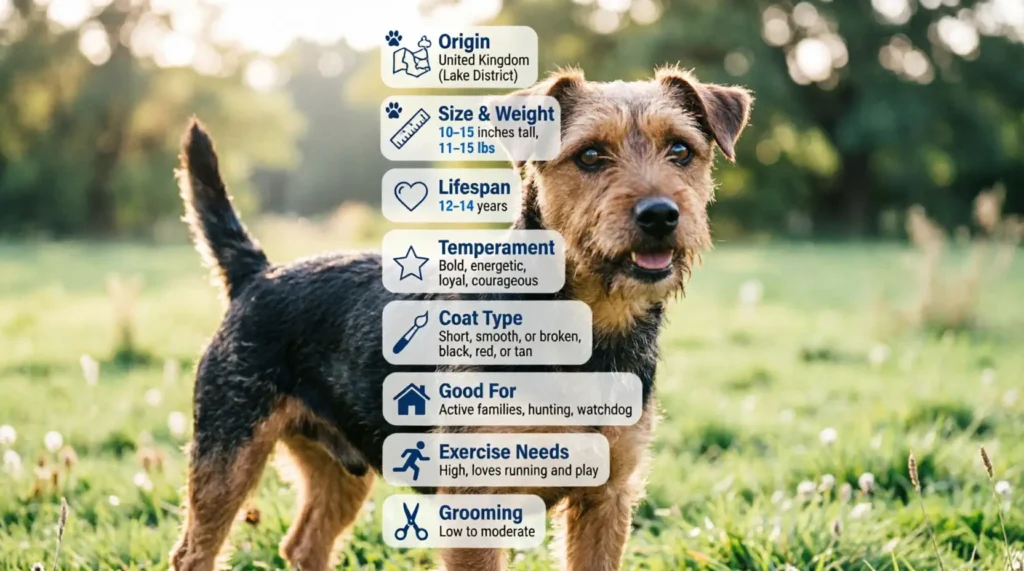
- Height: Patterdales typically measure 25–38 cm (10–15 inches) at the shoulder.
- Weight: They are a compact breed, with an average weight of 5–8 kg (10–15 pounds).
- Lifespan: The typical lifespan of a Patterdale Terrier is between 10-12 years, which is longer than most other small dog breeds due to their hardy nature.
Their size allows them to be agile in both urban and rural settings. According to the American Kennel Club (AKC), smaller breeds tend to live longer than their larger counterparts, contributing to the breed’s longevity.
2. Coat and Colors
- Coat Type: Their coats are dense, wiry, and weather-resistant, suited to outdoor work in harsh conditions.
- Colors: Patterdales come in black, tan, brown, and grizzle, with some also exhibiting white markings on the chest and feet.
Understanding these Patterdale Terrier dog breed facts will help you decide if this breed is the right fit for your lifestyle.
| Attribute | Measurement |
| Height | 10–15 inches (25–40 cm) |
| Weight | 10–15 pounds (4.5–7 kg) |
| Lifespan | 10–15 years |
| Coat Type | Rough, wiry, dense |
| Color | Black, Tan, Brown, Grizzle, with possible white markings on the chest |
3. Origin & History
- The Patterdale Terrier was originally bred in England during the 18th century. This breed was specifically developed to hunt small game, like foxes and rabbits, and has strong ties to the working terrier family.
- The Patterdale’s keen instinct for small prey, combined with its size and stamina, makes it a great companion for hunters, but it is also adaptable as a house pet when given the right care.
Patterdale Terrier Temperament: What to Expect?
Known for being energetic, determined, and highly intelligent, Patterdale Terriers are often described as fearless little dogs. Despite their small stature, they have a big personality and can be very independent.
Key Traits of a Patterdale Terrier
Here’s a breakdown of their key temperament traits:
- Affectionate: Despite their independent nature, Patterdales form strong bonds with their owners. They are affectionate and will enjoy sitting on your lap after a play session.
- Bold and energetic: These dogs were bred for hunting and are naturally very active.
Fact: Research from the American Veterinary Medical Association (AVMA) shows that active dogs, like the Patterdale, experience improved cardiovascular health, lower anxiety levels, and increased lifespan when provided with adequate exercise.
- Protective: Patterdales can be protective and make excellent watchdogs. They may display territorial behavior, but are typically friendly once properly socialized.
- Social & Alert: While Patterdales are generally friendly with people and other pets, they can be territorial and wary of strangers. Their alert nature makes them excellent watchdogs.
- Intelligent and independent: Known for their intelligence, Patterdales are quick learners, but their independent streak means they may not always follow commands as eagerly as other breeds. Firm, consistent training is necessary to ensure they follow commands reliably.
With the right training and socialization, Patterdale Terriers can be wonderful pets for active families or individuals who can meet their exercise needs and provide consistent mental stimulation.
Are Patterdale Terriers Good Pets?
If you are considering adopting a Patterdale Terrier, you might wonder, “Are Patterdale Terriers good pets?” The answer depends largely on your lifestyle and what you’re looking for in a dog. Let’s break it down with some key benefits and drawbacks based on their characteristics.
Pros of Owning a Patterdale Terrier
- Energetic Companions: If you enjoy hiking, running, or spending time outdoors, a Patterdale Terrier will be the perfect companion. Their high energy level makes them ideal for active families.
Fact: Active dogs experience better physical and mental health, which contributes to their longer lifespan.
- Low grooming needs: Patterdale Terriers have a rough coat that requires minimal grooming. Regular brushing and occasional baths are usually enough to keep them looking sharp.
- Intelligent & Trainable: Patterdales are highly intelligent, which means they can excel in obedience training when given the right approach. Their natural curiosity and eagerness to please make them responsive to reward-based training.
- Small Size: At only 10–15 pounds, the Patterdale Terrier is small enough to live comfortably in apartments or small homes, making them great for urban dwellers who still want an energetic dog.
Cons of Owning a Patterdale Terrier
- High energy: While their energy is a benefit for active owners, it can be a downside for people looking for a low-maintenance, calm dog.
- High Exercise Requirements: They need a lot of activity to stay healthy and happy.
- Can be stubborn: Due to their independence, they may require firm training. A lack of consistent training may lead to behavior issues.
- Not Ideal for First-Time Owners: Due to their intelligence and independence, they can be a challenge for new dog owners who aren’t prepared for firm training.
In general, Patterdale Terriers make excellent pets for the right person. If you are active, dedicated, and patient with training, a Patterdale Terrier can be an incredibly loyal companion.
Patterdale Terrier Exercise Needs: How Much Is Enough?
As a highly energetic dog breed, Patterdale Terrier exercise needs are substantial. This breed thrives on daily physical activity to stay healthy and mentally stimulated.
Daily Exercise Recommendations
Here’s a breakdown of their exercise needs:
- Daily Walks: At least 60 minutes of exercise is essential to keep them mentally and physically fit. This includes daily walks and playtime.
Fact: Studies from the Centers for Disease Control and Prevention (CDC) show that regular exercise contributes to a longer, healthier life for dogs and helps prevent obesity, a common issue in small dog breeds.
- Mental Stimulation: Patterdales need activities that challenge their intellect, such as interactive toys, puzzle games, and training sessions. They love working for treats, which makes them excellent candidates for obedience training.
- Outdoor Activities: They excel at outdoor activities like hiking, running, and even dog sports such as agility and flyball. This is why they are a great companion for active people who want a dog that can keep up with their lifestyle.
Patterdale Terriers require an owner who can provide sufficient daily activity to keep them happy and healthy.
Patterdale Terrier Health Issues: What to Watch For?
Like many dog breeds, the Patterdale Terrier is prone to certain health issues. While they are generally a healthy breed, it’s important to be aware of the following common conditions:
1. Hip Dysplasia
- Prevalence: Like many small dog breeds, Patterdales can suffer from hip dysplasia, a malformation of the hip joint leading to arthritis and mobility issues.
- Treatment: Early detection through regular veterinary check-ups is essential. Keeping your Patterdale active but not overweight can help prevent joint issues.
2. Patellar Luxation
- Issue: This occurs when the knee joint moves out of place. Patterdales can experience this due to their active lifestyle.
- Treatment: Keeping your dog at a healthy weight can reduce the risk. Surgery may be required in severe cases.
4. Ear Infections
- Risk: Their floppy ears can trap moisture, which may lead to ear infections.
- Prevention: Regular ear cleaning and proper hygiene can prevent this.
5. Skin Allergies
Patterdales can be prone to skin allergies, especially if exposed to environmental triggers such as pollen or mold. Regular grooming and a high-quality diet can reduce the risk.
Common Health Problems
| Health Issue | Prevalence in Patterdale Terriers | Preventive Measures |
| Hip Dysplasia | Moderate, especially in larger dogs | Regular exercise, weight control |
| Patellar Luxation | Common in active small breeds | Avoid excessive jumping, surgery |
| Ear Infections | Common in dogs with floppy ears | Regular ear cleaning and hygiene |
| Allergies | Occasionally, particularly the skin | Consult a vet, allergy testing |
Regular vet checkups, a proper diet, and keeping them active can help prevent many of these issues. Be sure to choose a reputable breeder who conducts health screenings for their breeding stock.
Patterdale Terrier Care: Tips for New Owners
Caring for a Patterdale Terrier involves more than just meeting their exercise needs. To ensure your dog lives a long, healthy life, here are some important care tips:
1. Training and Socialization
- Start Early: Introduce your Patterdale to different people, environments, and other pets from a young age. This early socialization helps them become well-rounded, well-behaved adults.
- Use Positive Reinforcement: Due to their intelligence, Patterdales respond well to reward-based training methods. Be patient and consistent with commands, and always reward good behavior.
2. Diet and Nutrition
- High-Quality Food: Patterdales need a nutritious diet to fuel their active lifestyle. Look for dog foods that offer balanced proteins and healthy fats, as they are highly energetic. Look for dog foods that are high in protein and healthy fats.
3. Grooming
- Brush regularly: While their coat requires minimal grooming, brushing 2-3 times per week will help keep it clean and free of mats.
- Ear care: Clean your Patterdale’s ears regularly to avoid infections, especially if they are frequently outdoors.
Providing consistent care and attention to your Patterdale will help them thrive and form a strong bond with you.
Myths vs. Reality: Debunking Common Patterdale Terrier Misconceptions
There are several misconceptions about Patterdale Terriers, and it’s important to separate fact from fiction. Here are some common myths:
- Myth 1: Patterdales are only good for hunting.
Reality: While they were originally bred for hunting, Patterdales make excellent pets for active families and individuals.
- Myth 2: Patterdales are not good with children.
Reality: With proper socialization, Patterdales can be great with children. Their energetic nature makes them fun playmates.
- Myth 3: Patterdales are difficult to train.
Reality: Patterdales are intelligent but independent. With consistent training, they can be well-behaved and obedient.
- Myth 4: Patterdales are aggressive with other pets.
Reality: Early socialization and training help Patterdales coexist well with other animals.
Summary: Patterdale Terriers Offer Loyalty, Fun, and Strong Companionship
In conclusion, the Patterdale Terrier is a breed that combines intelligence, energy, and loyalty in a small, compact package. Their dynamic personalities, along with their affectionate nature, make them great companions for active individuals or families. However, their high energy and exercise requirements do mean that they need owners who can provide them with the attention and training they deserve. If you’re ready to invest time in training, exercise, and proper care, the Patterdale Terrier can be a loving and loyal companion for many years to come. If you’re still unsure about whether this breed is right for you, the key lies in understanding their unique needs and determining if your lifestyle aligns with their energetic spirit.
Frequently Asked Questions
Are Patterdale Terriers good pets for families?
Yes, they are affectionate and energetic, making them great companions for active families.
Do Patterdale Terriers need a lot of exercise?
Yes, they require at least 90 minutes of daily exercise to stay healthy and happy.
Are Patterdale Terriers easy to train?
While intelligent, they can be independent and may require firm, consistent training.
What size are Patterdale Terriers?
They typically stand 10-15 inches tall and weigh 10-15 pounds.
Do Patterdale Terriers get along with other pets?
Yes, they can get along with other pets, especially with early socialization and training.
Are Patterdale Terriers good watchdogs?
Yes, their protective nature and alertness make them excellent watchdogs.