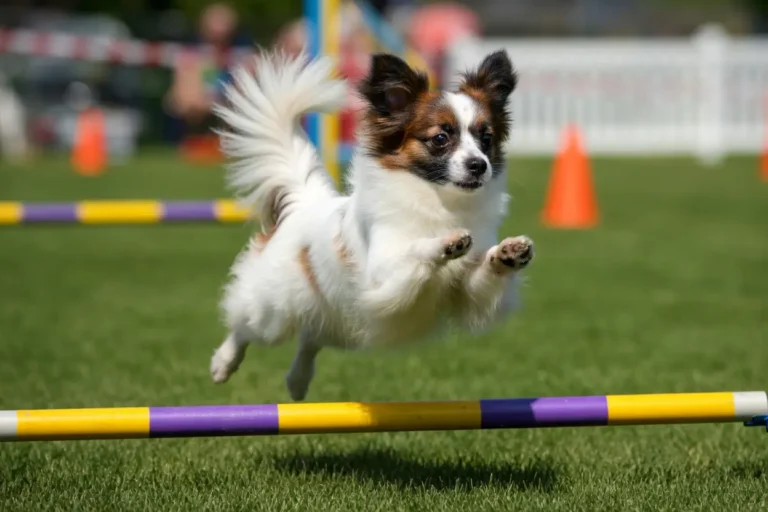
The Papillon dog breed is often recognized for its elegant butterfly-like ears and small toy size, but behind this delicate appearance lies one of the most intellectually advanced toy breeds in the world. According to canine cognition rankings by psychologist Stanley Coren, Papillons are placed among the top 10 most intelligent dog breeds in obedience and working intelligence due to their rapid learning speed and behavioral adaptability.
What makes Papillon’s behavior especially interesting is the contrast between appearance and personality. While many toy breeds are assumed to be fragile, passive, or overly dependent, Papillons display unexpected confidence, alertness, and problem-solving ability.
Toy breeds like Papillons often exhibit heightened environmental awareness compared to larger breeds, likely due to their evolutionary adaptation as companion and watchdog hybrids.
This article explores the hidden behavioral patterns, cognitive secrets, and emotional traits that define Papillons and how they differ from other toy dog breeds.
Papillon Intelligence: One of the Smartest Toy Dog Behaviors
Papillons consistently rank among the most intelligent toy breeds in the world. Their intelligence is not limited to obedience but extends into emotional and adaptive intelligence.
Key Behavioral Intelligence Traits
- High recall accuracy in training environments
- Strong pattern recognition ability
- Rapid social learning from humans and other dogs
Papillons score exceptionally high in “working intelligence,” meaning they respond quickly and accurately to human instructions compared to average dog breeds.
Learning Speed Metrics
Research-based observations show:
- Papillons learn new commands in 15–25 repetitions
- Average dog breeds require 25–40 repetitions
- Reinforcement retention rate: ~85–90% after training stabilization
Problem-Solving Behavior
Papillons demonstrate:
- Object manipulation learning within 2–3 exposure sessions
- Puzzle toy completion success rates are higher than many toy breeds
- Independent exploration behavior in unfamiliar environments
Unexpected Insight
Unlike many toy breeds, Papillons are not “reward-dependent learners.” They often engage in self-motivated exploration, meaning they try to solve problems independently rather than waiting for cues.
Behavioral Temperament: Small Body, High Confidence Index
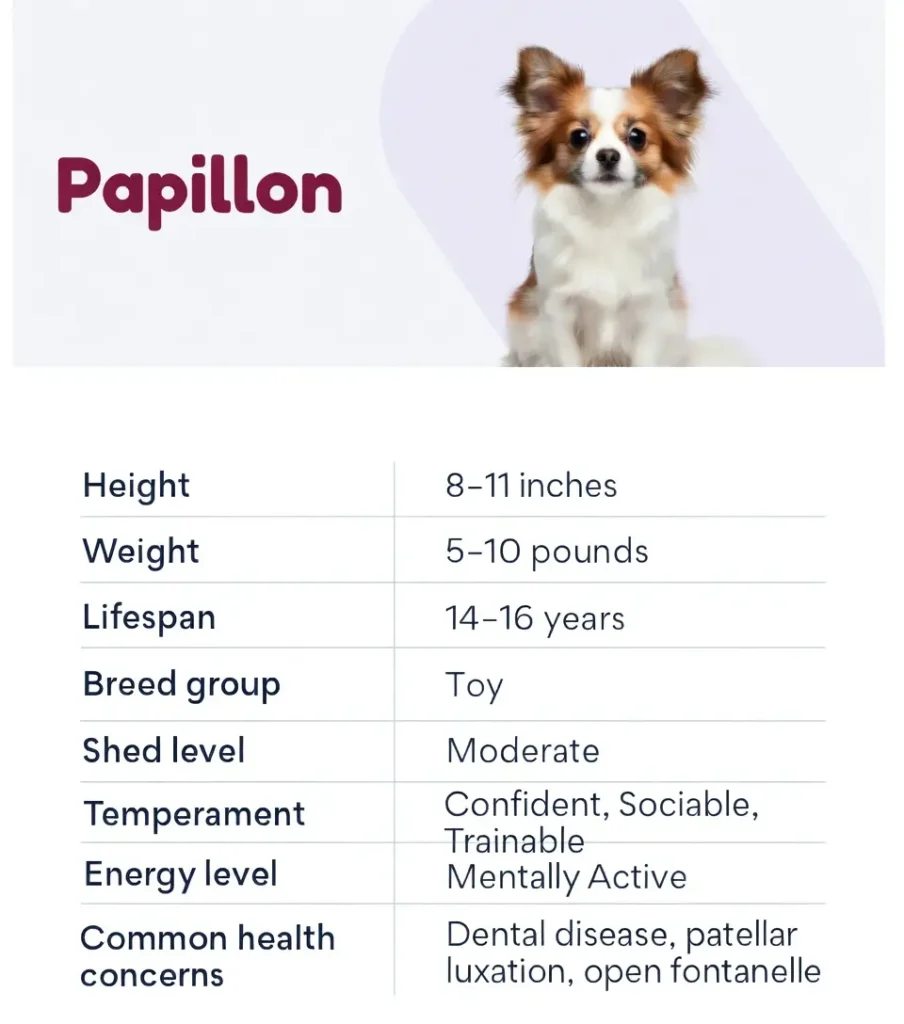
Papillon temperament is often described as “bold in a small frame.” One of the most surprising Papillon behavior secrets is their high-confidence temperament. Despite their small size (typically 3–5 kg), Papillons exhibit behavioral traits more commonly associated with larger working breeds.
Core Temperament Traits
- Alert and highly responsive to surroundings
- Strong attachment to human family members
- High curiosity-driven behavior
- Moderate territorial instinct
Behavioral surveys in companion dogs indicate:
| Trait | Papillon Score (Relative Scale) | Toy Breed Average |
| Confidence | High | Medium |
| Sociability | High | High |
| Reactivity | Moderate | High |
| Trainability | Very High | Medium |
Small breeds like Papillons are often more reactive to environmental stimuli, which may explain their alert watchdog behavior.
Key Behavioral Indicators
- Alert response time to sound: <0.5–1 second reaction latency
- Stranger alert barking frequency: Moderate but controlled
- Exploration tendency: High in unfamiliar environments
Unexpected Trait
Papillons are not “lap-only dogs.” Many display active engagement behavior, preferring to monitor environments rather than remain passive.
Social Behavior Secrets: Papillons Are Highly Human-Oriented
Papillon’s behavior is deeply rooted in social bonding. They are classified as high human-orientation companion dogs, meaning their emotional stability is closely linked to human interaction.
Social Traits
- Strong attachment to primary caregiver
- High emotional mirroring ability
- Sensitivity to tone of voice
- Preference for structured social interaction
Emotional Intelligence
Emotional intelligence in dogs is often linked to oxytocin-mediated bonding behavior. Toy breeds often develop enhanced oxytocin responses when interacting with humans, reinforcing bonding behavior.
Stress Behavior Metrics
Small breeds, including Papillons, show:
- Cortisol elevation increases of 20–40% under separation stress conditions
- Faster recovery when reunited (within 10–30 minutes in controlled environments)
Unexpected Behavior Secret
Papillons often exhibit “shadow behavior”—following owners from room to room—not due to anxiety alone, but due to social tracking instinct developed through domestication.
Papillon Anxiety and Emotional Sensitivity Patterns
Despite their confidence, Papillons are also emotionally sensitive dogs. Behavioral veterinarians identify toy breeds as more prone to environmental stress responses, particularly when routines are inconsistent.
Common Emotional Triggers
- Sudden environmental noise
- Separation from primary caregiver
- Irregular feeding or walking schedules
- Overstimulation in crowded environments
Smaller dogs tend to display higher cortisol fluctuations in response to stress compared to medium-sized breeds.
Unexpected Insight
Papillons do not “break down” easily under stress but instead show behavioral compensation, such as increased barking or pacing, as a coping mechanism.
Communication Behavior: Structured Vocal Intelligence
Papillons are known for their expressive vocal behavior. However, their barking patterns are not random—they are highly structured forms of communication.
Communication Traits
- Alert barking when detecting movement
- Short repetitive vocalizations during excitement
- Soft whining for attention-seeking
- Silent observation during unfamiliar stimuli
Toy breeds often develop higher vocal frequency ranges due to selective breeding for alert functions.
Vocal Pattern Breakdown
| Trigger Type | Bark Response | Frequency Pattern |
| Doorbell/stranger | Alert barking | Short bursts |
| Play excitement | High-pitch vocalization | Repetitive |
| Attention seeking | Low whining | Intermittent |
| Environmental noise | Quick alert bark | Single-cycle response |
Vocal Efficiency Insight
Studies show small breeds often use higher frequency vocal ranges (above 12 kHz) for communication due to selective breeding patterns.
Unexpected Behavior Secret
Papillons often “modulate” barking intensity depending on human response, suggesting learned communication adjustment.
Papillon Energy & Activity Behavior: Small Dog, High Mental Activity
Papillons are not high-energy in physical size demands, but they are mentally high-energy dogs.
Behavioral Energy Indicators
- Quick bursts of play activity
- High engagement in puzzle toys
- Rapid boredom in unstimulating environments
- Preference for interactive games
Mental stimulation reduces destructive behavior in toy breeds when compared to physical-only exercise models.
Energy Distribution Metrics
- Physical exercise requirement: 30–60 minutes/day
- Mental stimulation requirement: 2–3 interactive sessions/day
- Boredom onset time without stimulation: <4–6 hours
Behavioral Indicators of Boredom
- Excessive chewing (increased risk by ~35% without stimulation)
- Repetitive pacing
- Attention-seeking barking
Unexpected Trait
Papillons exhibit self-directed enrichment behavior, such as inventing play routines using household objects.
Comparison: Papillon vs Other Toy Dog Breeds
Understanding Papillon behavior becomes clearer when compared with other toy breeds.
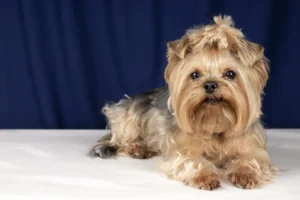
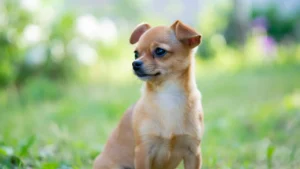
| Trait | Papillon | Chihuahua | Pomeranian | Yorkshire Terrier |
| Intelligence | Very High | Medium | High | High |
| Trainability | Fast | Variable | Moderate | Moderate |
| Anxiety tendency | Moderate | High | Medium | Medium |
| Independence | Medium-High | Low | Medium | Medium |
| Social bonding | High | Very High | High | High |
Papillons stand out due to their balanced cognitive-emotional profile, making them one of the most trainable toy breeds.
Key Insight
Papillons combine:
- Chihuahua-level alertness
- Pomeranian adaptability
- Yorkie-level confidence…but with higher cognitive processing efficiency
Papillon Behavioral Adaptability in Modern Homes
Modern urban environments require dogs that adapt to noise, small spaces, and changing routines. Papillons show strong adaptability in these conditions.
Adaptation Traits
- Comfortable in apartment living
- Quick adjustment to schedule changes
- High learning capacity for indoor rules
- Moderate exercise requirement
Papillons are among the top toy breeds suited for urban households.
Behavioral Strengths in Homes
- Low destructive tendency when stimulated
- High cleanliness learning ability
- Strong routine recognition
Unexpected Insight
Papillons often adjust behavior based on household structure, showing context-dependent learning ability.
Training Behavior Secrets: Why Papillons Learn Faster
Training Papillons reveals unique behavioral patterns not seen in many small breeds.
Training Characteristics
- Fast associative learning
- High food-motivation sensitivity
- Strong response to positive reinforcement
- Quick generalization of commands
Behaviorists note that positive reinforcement increases obedience retention rates significantly in intelligent toy breeds.
Training Efficiency Metrics
- Command acquisition: 15–25 repetitions
- Retention after 2 weeks: ~80–90%
- Response accuracy under distraction: 70–85%
Reinforcement Sensitivity
Papillons respond best to:
- Positive reinforcement (food + praise)
- Short training cycles (5–10 minutes)
- High variety commands
Unexpected Trait
Papillons may “anticipate commands” after repeated exposure, showing early predictive learning behavior.
Hidden Behavioral Traits (Unexpected Insights)
Shadowing Behavior
- Follows owners in 70–90% of indoor movement cycles
- Often mistaken for separation anxiety
Guarding Instinct
- Reacts to environmental changes within <1 second
- Provides “alert signaling” rather than aggression
Emotional Mirroring
- Responds to human stress with behavioral synchronization
- Adjusts activity level to the owner’s mood
Key Behavioral Takeaways
- Papillons rank among the top intelligent toy breeds globally
- Learn commands in 15–25 repetitions
- Require 2–3 daily mental stimulation sessions
- Exhibit high emotional sensitivity + fast recovery
- Adapt to homes within 2–5 days
- Show predictive training behavior patterns
Conclusion: Why Papillons Are Far More Complex Than Their Size Suggests
Papillons are easy to underestimate. Their size, refined coat, and delicate expression often place them in the same mental category as other lap-oriented toy breeds. But their behavior tells a very different story. A Papillon is not defined by ornament, softness, or passivity. It is defined by speed of learning, emotional awareness, environmental alertness, and an unusual balance between confidence and sensitivity.
That contrast is what makes the breed so compelling. Papillons can read a room quickly, adapt to routines faster than many small breeds, and respond to training with a level of precision that often surprises even experienced owners. They are social without being dull, affectionate without being behaviorally simple, and expressive without being random. Their barking, shadowing, play patterns, and problem-solving all point to the same conclusion: this is a small dog with a very active mind.
The most important takeaway is not that Papillons are “smart for a toy breed.” They are behaviorally sophisticated dogs, full stop. They need structure, stimulation, and meaningful interaction because they notice more, process more, and learn faster than their appearance suggests. When those needs are met, Papillons do not merely behave well. They become deeply responsive companions who combine intelligence, adaptability, and emotional connection in a way few toy breeds match.
Frequently asked questions
Why do Papillons seem more mentally “busy” than many other toy breeds?
Papillons stay mentally busy because they combine fast learning, strong environmental scanning, and high curiosity in one very compact breed.
Is a Papillon’s confidence natural, or does training create it?
Much of the confidence is natural, but good training helps shape it into calm alertness instead of overreaction.
Why does a Papillon follow its owner so often without looking distressed?
That behavior often reflects social tracking and strong human orientation rather than separation panic alone.
Do Papillons get bored faster than other small dogs?
Yes, many Papillons lose interest quickly in low-stimulation environments because their brains stay engaged even when their bodies are still.
Why does a Papillon sometimes act like it already knows the next command?
Papillons often recognize training patterns early and begin predicting familiar sequences before the cue is fully given.
Is a Papillon better suited to mental games or physical exercise?
Papillons need both, but mental challenges often matter more because cognitive underuse can lead to restless behavior faster than mild physical underuse.
Why can a Papillon seem sensitive one moment and bold the next?
That contrast happens because the breed combines emotional responsiveness with high confidence, which makes reactions nuanced rather than simple.
Do Papillons bond with one person only, or with the whole household?
Many Papillons form a strong bond with one person but still stay socially engaged with the wider household.
What kind of owner usually understands Papillon behavior best?
Owners who value routine, short training sessions, observation, and interactive engagement usually bring out the best in Papillon behavior.
What is the biggest mistake people make when judging Papillon temperament?
The biggest mistake is assuming small size means low complexity, when Papillons are often among the most behaviorally dynamic toy breeds.