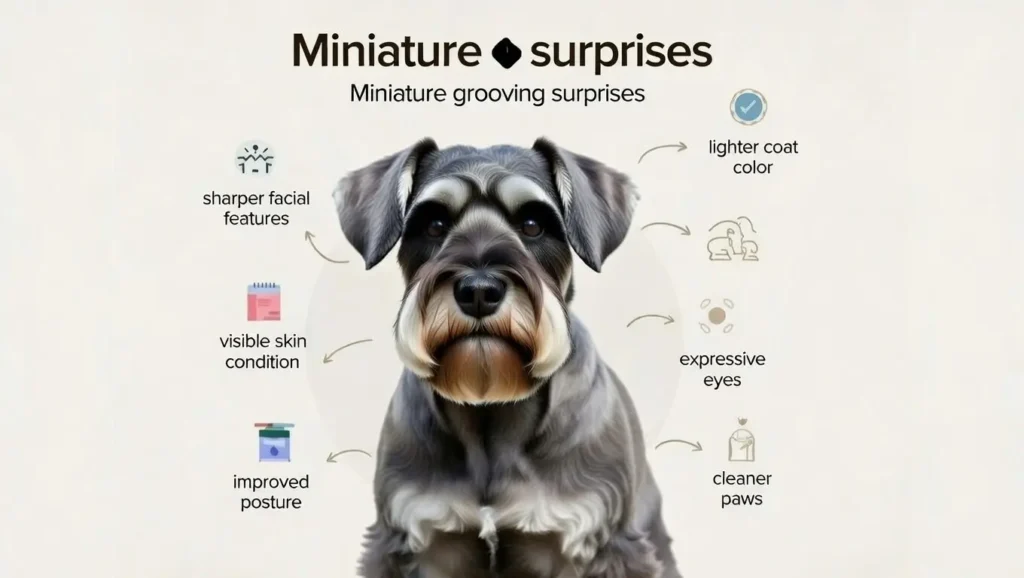
Grooming week often feels like a clean reset for the Miniature Schnauzer dog breed. The coat looks sharper. The beard looks tidy. The nails look shorter. Then, unexpected issues appear within days. Fast mat return at friction zones. New itching on clipped skin. Ear odor that was previously masked. Beard staining that looks stronger after a trim. Breath odor that becomes obvious once the furnishings are shortened. These surprises create repeat salon visits, avoidable vet checks, and cost drift.
This article explains what changes after grooming week and why it happens in Miniature Schnauzers with a wiry outer coat and softer undercoat. It covers coat texture shifts, mat recurrence timelines, skin and ear signals, dental visibility, behavior changes, and a post-groom inspection checklist built around measurable risk drivers.
Benefits of reading this article
- Lower repeat grooming problems using a post-groom inspection workflow linked to the most common Miniature Schnauzer disorder signals (ears, teeth, anal sacs, obesity).
- Reduce cost variance by mapping grooming method and frequency to measurable drivers such as mat recurrence, ear flare-ups, and dental disease detection.
What surprises appear after grooming week in the Miniature Schnauzer dog breed?
6 surprise clusters appear most often:
- Coat texture shift
- Fast mat return
- Post-groom itch
- Ear odor visibility
- Beard staining contrast
- Dental odor detection
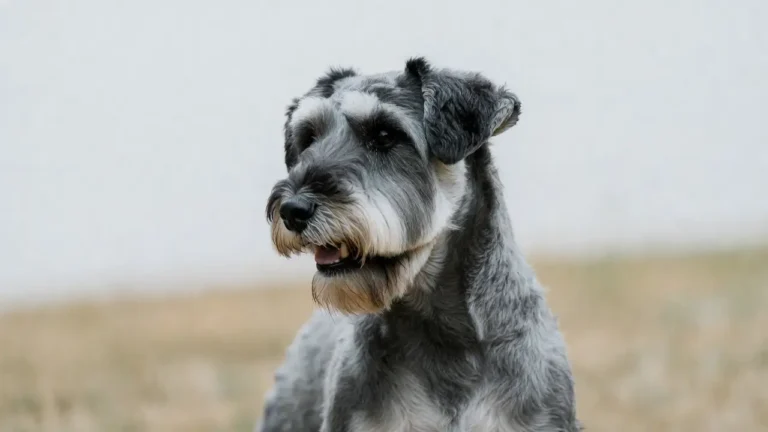
The Miniature Schnauzer carries a double coat, with a wiry outer coat and a softer undercoat, so technique and aftercare change what becomes visible.
Quick baseline: What problems are common in Miniature Schnauzers in primary care records?
A UK VetCompass study reported these recorded prevalences in Miniature Schnauzers: periodontal disease 17.4%, obesity or overweight 8.3%, anal sac impaction 5.8%, vomiting 5.1%, and otitis externa 5.0%. These numbers explain why grooming week often reveals teeth, weight, anal sac, and ear signals.
What changes become visible right after grooming week?
Grooming week increases the visibility of the skin, ear canal area, and coat density pattern. Shorter coat length exposes redness, bumps, dandruff, odor sources, and mat “roots” near friction zones such as armpits and collar lines.
Which body zones reveal problems first?
The first zones to reveal issues are the beard and lips, armpits, groin, ear opening, paw pads, and the base of the tail. These zones combine moisture, friction, and skin folds, so grooming acts like an inspection window.
What is the “fresh groom masking” effect?
A fresh groom can hide structural issues for 24 to 72 hours. Shampoo fragrance, coat fluffing, and shorter hair can delay detection of itch, yeast odor, clipper rash, or re-matting until normal oils return.
Which coat surprises happen after clipping or trimming?
The top surprise is the coat texture change. Many owners expect the wiry feel to remain stable. In wire-coated dogs, clipping can shift the surface feel and the way the coat lies, because cutting alters the hair shaft presentation while undercoat dynamics continue.
What is the coat structure of the Miniature Schnauzer dog breed?
The Miniature Schnauzer dog breed has a double coat with a wiry outer coat and a softer undercoat. This structure drives brushing frequency and grooming method decisions.
What surprises show up when the undercoat is dense?
A dense undercoat increases fast re-tangling. Owners often feel “cottony” clumps at the roots in friction zones within 3 to 10 days.
High-frequency friction zones
- Behind ears
- Collar line
- Harness chest strap line
- Armpits
- Inner thighs
What surprises show up when the coat is very short?
Very short trims can reveal sensitive skin reactions. “Clipper burns” and clipper rash are described by veterinary and grooming education sources as irritation that can appear after the appointment and then worsen if the dog licks or scratches.
What surprises show up when the coat is kept longer?
Longer “skirt and furnishings” increase the mat risk in moisture zones. Beard and leg hair trap water, saliva, and food residue, which increases staining visibility and mat recurrence.
What mat and tangle surprises appear after grooming week?
The main surprise is speed. Owners often expect mats to “reset” after a groom. Many mats begin as undercoat compression at the skin level, so they return quickly without comb through.
What mat zones appear first in the Miniature Schnauzer dog breed?
High-frequency mat zones include armpits, behind ears, inner thighs, beard, and collar line. These zones combine friction and moisture exposure.
Why do mats feel worse after a groom?
A groom can reveal mat roots that were previously hidden. When the coat is shortened, the remaining compressed undercoat is easier to feel with a comb.
Which measurable signals predict the risk of recurrent mat?
Three signals predict repeat matting: moisture exposure, friction exposure, and undercoat density.
Examples after grooming week:
- Wet beard after drinking several times daily
- Harness friction across the chest and armpits
- Coat blow-dried but not fully combed at the root
Mat recurrence timeline by zone
| Zone | Typical trigger | Common reappearance window |
| Behind ears | collar rub, ear moisture | 3 to 7 days |
| Armpits | harness friction | 3 to 10 days |
| Beard | water, saliva, food | 1 to 5 days |
| Inner thighs | friction, moisture | 5 to 14 days |
What skin and itch surprises show up after grooming week?
Post-groom itch is a common surprise. It is often linked to skin barrier sensitivity, mechanical irritation, product residue, or clipper rash in short-coat zones. Veterinary sources describe clipper or razor burn as irritation that can occur even when equipment is clean, especially in sensitive skin.
What does clipper rash look like?
Localized redness, tiny bumps, warmth, and focused itching in clipped areas are commonly described features in grooming and veterinary guidance on clipper irritation.
Why can itching increase after grooming week?
Shorter hair increases direct skin exposure. If the dog already has a tendency for allergic skin disease, grooming can reveal the underlying itch pattern.
A 2024 review notes that commonly cited prevalence estimates for canine atopic dermatitis range from 3% to 15%, while also emphasizing uncertainty in population-wide estimates.
What grooming-related concerns appear in veterinary program data?
In a retrospective analysis across ASPCA veterinary service programs, grooming-related concerns were reported at 4% to 6% across programs. This gives a real-world signal that grooming issues are not rare in practice populations.
What rare but high-impact post-groom surprise exists?
Post-grooming furunculosis is a documented deep skin infection that can appear quickly after grooming. It is uncommon, but the name matters because owners often mislabel it as a simple “shampoo reaction.”
High-value skin signals after grooming week
- Redness that expands day to day
- Pustules or crusting
- Strong localized odor
- Intense licking focused on one clipped zone
What surprises show up when owners cannot maintain grooming?
Owners report barriers at high rates. A study of clients in community veterinary contexts reported 92% experienced at least one barrier to maintaining grooming, and 46% reported three or more barriers.
What surprises become obvious after grooming week?
Ear odor and redness are frequent surprises after grooming week. Grooming exposes the ear opening, removes hair around it, and can shift moisture retention patterns.
How common is otitis externa in dogs?
Otitis externa is common in primary care veterinary populations. A UK primary-care study reported otitis externa in 10.2% of dogs, and broader literature ranges often cited include roughly 8.7% to 20%, depending on study design and population.
How common is otitis externa in Miniature Schnauzers specifically?
Otitis externa is very common. Up to 1 in 7 dogs seen in a veterinary practice will get otitis externa at some point in their lives. Otitis externa can also recur—1 in 4 dogs with otitis externa will get it again at least once.
Why do ears “suddenly smell” after grooming?
Short hair around the ear opening reduces masking. Moisture and wax patterns become easier to notice when owners touch and inspect more often.
Ear checklist after grooming week
- Odor strength change
- Head-shaking count
- Redness at the ear opening
- Scratching at one ear only
Why does ear odor appear after grooming week?
Odor often becomes noticeable when hair around the ear opening is shorter. Shorter hair reduces masking. Moisture and wax patterns become easier to detect during handling.
What ear-related signals are of high value after grooming?
Three signals carry the highest value: odor intensity, head shaking frequency, and ear redness. These signals align with common otitis patterns reported in veterinary literature.
What mouth and dental surprises appear after grooming week?
Dental odor becomes easier to notice after grooming week. Trimming the beard reduces odor masking, and owners often interpret this as a new problem.
How common is periodontal disease in dogs?
Periodontal disease is very common in adult dogs, especially small breeds. Even if your dog’s teeth look pearly white and clean, studies show that 80-90% of dogs over the age of 3 have some component of periodontal disease. It’s worse in smaller breeds, and the incidence increases with age.
Why do the “80% to 90%” and “18.2% diagnosed” figures differ?
Screening-based prevalence and diagnosed-case prevalence measure different things. Clinical diagnosis in records underestimates total disease burden because many cases remain unrecorded without full oral exams. This underdiagnosis pattern is discussed in large-scale studies.
What surprises appear specifically in Miniature Schnauzers?
Periodontal disease recorded prevalence in Miniature Schnauzers was 17.4% in the UK VetCompass breed study. Grooming week often makes odor detection easier, so owners notice this earlier.
What beard and face surprises show up after grooming week?
Beard staining often becomes more obvious after grooming week. Shorter, cleaner hair shows color changes more clearly.
What causes reddish-brown staining around the mouth and eyes?
Porphyrin pigments can contribute to reddish-brown staining when saliva or tears contact hair. Veterinary sources describe porphyrin involvement in tear staining and discoloration patterns.
What surprises show up after a “beard trim”?
Food residue and saliva become easier to detect because less hair hides moisture. Owners often notice odor, dampness, or sticky texture near the lips.
What surprises show up with water and bowl type?
Bowl material and water mineral profile can influence residue patterns on hair. Owners often notice staining changes after switching bowls or water sources, because residue visibility is higher on light furnishings.
What nail, paw, and gait surprises show up after grooming week?
Nail length changes gait feel. Owners often notice different traction on tile, more confident stairs, or quieter walking.
What surprises appear after paw pad trimming?
Hair between pads can hide debris and matting. After trimming, owners notice paw licking patterns and can see interdigital redness more easily.
What surprises appear after nail trimming?
Nails can look short but still have long quicks in dogs with chronic overgrowth. Owners notice a rapid “clicking return” because nail length grows back while quick length takes longer to recede.
What surprises appear when nails “grow back fast”?
Chronic overgrowth often includes a long queue. The nail can look short, but the quick length limits how short trimming can safely go in one session.
What behaviors appear during and after grooming week?
Handling sensitivity is common. A dog can tolerate home brushing yet show stress in a salon environment because of restraint, noise, dryer airflow, and unfamiliar touch.
What data exists on grooming access and compliance barriers?
A study of clients served by a subsidized grooming service program in New York City evaluated barriers and facilitators of grooming. Income and the cost of services and supplies are primary barriers to pet grooming, along with other factors such as fear of hurting the pet, transportation, and pets’ behavioral issues.
What surprises show up after a stressful appointment?
Avoidant behaviors can cluster around the exact body area that feels uncomfortable. Owners often report resistance to paw handling, ear touch, or brushing in one zone.
Behavior checklist after grooming week
- Avoidance of the brush
- Avoidance of paw handling
- Head turning away during ear touch
- Sudden resistance to beard combing
What anal sac and rear-end surprises appear after grooming week?
Anal sac odor becomes easier to detect when hair is shorter. Rear-end licking also becomes more visible.
Why does this matter in Miniature Schnauzers?
Anal sac impaction was recorded at 5.8% prevalence in the UK Miniature Schnauzer VetCompass study. Grooming week increases detection because owners inspect the rear more after a trim.
What cost surprises appear after grooming week?
The main cost surprise is the recurring nature of the grooming cycle. A single appointment does not reset maintenance requirements in a wiry double coat.
Which line items drive cost escalation in this breed profile?
Cost escalation concentrates in four areas: frequency, de-matting time, ear management, and dental burden detection. Dental burden is common in dogs overall and rises in smaller breeds, so beard trimming can expose odor earlier.
| Cost driver | Trigger | Measurable sign |
| De matting fee | undercoat compaction | The comb cannot pass at the root |
| Extra visit | beard staining and odor | daily beard wetness pattern |
| Ear visit | otitis signals | odor plus head shaking |
| Dental visit | odor revealed | gingival redness plus halitosis |
What grooming schedule matches the Miniature Schnauzer dog breed’s coat structure?
A schedule that matches a wiry topcoat and soft undercoat uses frequent brushing and regular professional grooming intervals. Breed references describe the coat as a double coat requiring frequent brushing and grooming to maintain condition.
What schedule patterns are common in practice?
Three schedule patterns dominate: weekly home brushing, 4 to 6 week hygiene trims, and 6 to 8 week full grooms. The correct pattern depends on coat length, furnishings length, and friction exposure.
What grooming week checklist reduces surprises?
A structured checklist reduces missed issues. Use it as a repeatable inspection after every groom.
Post-groom inspection system for Miniature Schnauzers
A repeatable checklist reduces missed issues and reduces repeat costs. Use it on day 1, day 3, and day 7.
Day 1 checklist
- Skin: Redness in clipped zones
- Ears: Odor check, redness check
- Teeth: Breath intensity check
- Beard: Dampness check after water
- Paws: Interdigital redness check
Day 3 checklist
- Mats: Behind ears and armpits root check
- Skin: Bumps or rash check
- Ears: Head shaking count
- Beard: Stain boundary visibility
Day 7 checklist
- Coat: Re-tangling pattern map
- Teeth: Persistent halitosis signal
- Rear: Licking and odor signal
What is the hand stripping vs clipping surprise?
The surprise is that the coat’s feel and appearance can change based on the method. Wire-coated breeds often maintain a harsher feel when dead guard hairs are removed rather than cut, while clipping can soften surface texture in some dogs.
Breed standard guidance describes trimming by stripping and the importance of coat texture evaluation.
Grooming methods vary by owner goals, welfare constraints, and local groomer capability.
Does the Miniature Schnauzer dog breed “not shed”?
Reality: Shedding exists, but visible shedding can be low compared with many breeds. The double coat structure still produces hair turnover. The owner’s experience depends on undercoat density and brushing frequency. Breed references describe the Miniature Schnauzer as low-shedding and double-coated.
Conclusion: What Grooming Week Reveals About Ears, Teeth, Skin, and Mats
Grooming week changes what you can see, smell, and measure in the Miniature Schnauzer dog breed. Shorter coat length exposes mat roots in friction zones, skin irritation patterns, ear odor signals, beard staining edges, and dental odor that the furnishings previously masked. The most valuable takeaway is operational: treat the first 7 days after grooming as a structured inspection cycle. Run checks on day 1, day 3, and day 7. Track the same zones each time. Compare changes, not guesses. When the outcome is repeatable, the next groom becomes easier to plan, and cost drift slows because the drivers are identified early: coat method, undercoat density, moisture, friction, ear status, and dental burden visibility.
Frequently Asked Questions
Why does my Miniature Schnauzer itch after grooming week?
Post-groom itching often follows skin exposure, product residue, or clipper irritation, becoming noticeable after normal oils return.
How soon can mats come back after grooming in a Miniature Schnauzer?
Mat roots can reappear in 1–10 days, fastest in the beard, behind the ears, and in the armpits when moisture and friction are high.
Why does my Miniature Schnauzer smell worse after grooming?
Shorter hair reduces odor masking, so mouth odor, ear odor, or skin odor becomes easier to detect.
Is otitis externa common in Miniature Schnauzers?
A UK primary-care breed study recorded otitis externa at 5.0% prevalence in Miniature Schnauzers.
Why does beard staining look stronger after a trim?
Cleaning and trimming increase contrast, making saliva-related staining boundaries easier to see on lighter furnishings.
Why does bad breath become obvious right after grooming?
Beard trimming reduces masking, so dental odor linked to plaque and gum inflammation becomes more noticeable.
What areas should I inspect first after grooming week?
Check behind ears, armpits, beard and lips, ear opening, paw pads, and tail base because these zones show early changes.
Does clipping change the Miniature Schnauzer coat texture?
Clipping can shift coat feel and lay because the hair shaft is cut while undercoat dynamics continue.
Why does nail clicking return quickly after trimming?
Nails regrow while the quick length recedes more slowly, so audible clicking can return even after a short trim.
What is the fastest way to reduce repeat grooming surprises?
Use a day 1, day 3, day 7 inspection checklist and track the same measurable signals each cycle.