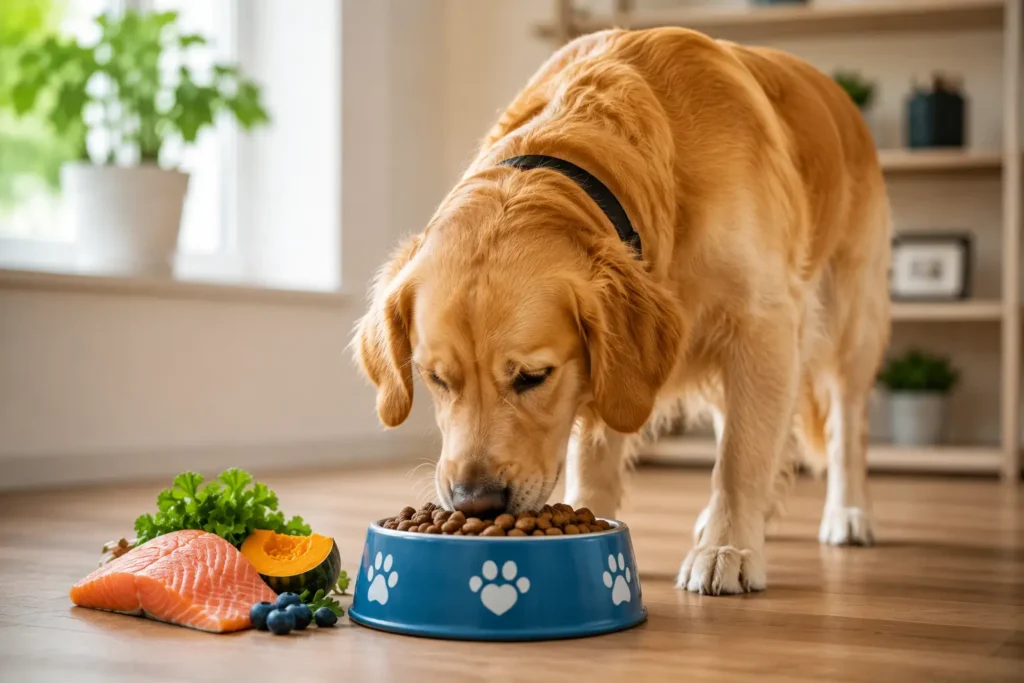



This guide explains what current veterinary science knows about probiotics for dogs, what they are, how they matter to the health of the dog, with the potential mechanism of use, and how probiotics compare with digestive enzymes for dogs. You will also learn how probiotics influence dog gut health, which bacterial strains have been studied, and what to look for when comparing the best probiotic brands.
A growing number of dog owners add probiotics to daily feeding routines, without knowing the logic behind whether they are effective and safe to use for your pets like dogs.
An immense number of prebiotics and other probiotics are also being utilized irrationally, without the consequences, but you no need to worry, as we will explain each and everything regarding probiotics for dogs will be discussed.
What are probiotics for dogs?
Probiotics for dogs are live microorganisms that provide a health benefit when administered in adequate amounts.
According to the International Scientific Association for Probiotics and Prebiotics (ISAPP), probiotics are defined by three essential characteristics:
- The microorganisms remain alive when administered.
- Scientific evidence demonstrates a health benefit.
- The product delivers an adequate amount of viable organisms.
Following common bacterial species are being used as probiotics in dogs:
- Enterococcus faecium
- Lactobacillus acidophilus
- Lactobacillus rhamnosus
- Bifidobacterium animalis
- Bacillus subtilis
According to research and evidence based studies, each microbe is selective for defined conditions, not being utilized for every gut problem with the mixture, as each strain of bacteria performs with the unique mechanism.
What is the difference between probiotics, prebiotics, and synbiotics?
These terms describe different approaches to supporting dog gut health.
These categories often appear together in veterinary nutrition research because they influence the canine gut microbiome through different biological mechanisms.
| Term | Definition | Primary role |
| Probiotics | Live beneficial microorganisms | Add beneficial microbes |
| Prebiotics | Non digestible dietary fibers | Feed existing beneficial bacteria |
| Synbiotics | Combination of probiotics and prebiotics | Support bacterial survival and activity |
Do probiotics for dogs really work?
The answer is Yes, probiotics can work for some dogs, but their effectiveness depends on many factors like:
- Health condition
- Bacterial strain
- Dosage
- Product quality
Researchers have investigated probiotics for several canine conditions, including:
- Acute diarrhea which could be associated by antibiotic use
- Stress related digestive disturbances
- Chronic enteropathy
- After some sort of Gastrointestinal illness
A comprehensive systematic review identified 165 published studies, yet only 17 studies met the inclusion criteria for evaluating probiotic effectiveness in gastrointestinal disease. Researchers concluded that evidence for acute gastrointestinal disease remained limited, while chronic gastrointestinal disease continued to rely primarily on dietary management rather than probiotics alone.
That conclusion does not mean probiotics are ineffective, Instead, it highlights an important scientific principle that:
Different probiotic strains produce different biological effects.
How do probiotics support dog gut health?
Probiotics support dog gut health through multiple biological mechanisms rather than a single action.
1. Competitive exclusion
Beneficial bacteria compete with harmful microorganisms for nutrients and attachment sites along the intestinal lining.
Reduced space limits pathogen colonization.
2. Production of antimicrobial compounds
Certain probiotic strains produce antimicrobial substances that inhibit harmful bacteria without affecting normal digestive processes.
3. Strengthening the intestinal barrier
Healthy intestinal cells form tight junctions that reduce unwanted leakage across the intestinal wall.
Several probiotic strains appear to strengthen these junctions, helping maintain normal barrier function.
4. Immune modulation
Rather than simply “boosting immunity,” probiotics help regulate immune responses.
Veterinary immunologists consider immune modulation a more accurate description because probiotics influence inflammatory signaling instead of uniformly increasing immune activity.
5. Short-chain fatty acid production
Beneficial microbes ferment dietary fibers into compounds such as:
- Butyrate
- Acetate
- Propionate
These short chain fatty acids provide energy for intestinal cells and contribute to a healthy gut environment.
Also Read : How 4 Health Dog Food Keeps Your Dog Strong & Healthy
Which dogs benefit most from probiotics?
Those dogs experiencing gastrointestinal issues generally show greater potential benefit than healthy dogs, Healthy dogs already maintain stable microbial communities.
Research most commonly investigates probiotics under specific clinical circumstances.
| Clinical situation | Current evidence |
| Acute diarrhea | Moderate but mixed evidence |
| Antibiotic-associated diarrhea | Emerging supportive evidence |
| Chronic enteropathy | Limited additional benefit beyond dietary therapy |
| Kennel stress | Some positive findings |
| Healthy adult dogs | Evidence remains inconsistent |
According to the Veterinary studies report different outcomes because of many factors including:
- Probiotic strains,
- Treatment duration,
- Disease severity,
- Study design varies substantially between clinical trials.
Healthy dogs already maintain stable microbial communities. Adding probiotics does not necessarily improve an already balanced microbiome.
Dogs recovering from different gastrointestinal illness, antibiotic treatment, or some other temporary digestive disturbances will respond more effectively than the healthy ones.
Which probiotic strains have the strongest veterinary evidence?
According to the latest study guidelines and clinical usage the following probiotics are best recommended for the dogs health.
- Enterococcus faecium
- Lactobacillus acidophilus
- Lactobacillus casei
- Bifidobacterium animalis
- Bacillus coagulans
Each strain has a unique biological mechanism of action, that’s why selection should be highly precise from veterinary experts.
Veterinary nutrition studies increasingly evaluate strain-specific outcomes instead of discussing probiotics as one homogeneous category. This shift reflects a broader understanding that the canine microbiome responds differently to different microbial species and even different strains within the same species.
What are the Signs Your Dog Needs Probiotics?
Your dog may benefit from a probiotic if they deal with the following health issues frequently:
- Loose stool or diarrhea
- Constipation
- Chronic skin inflammation
- Frequent urinary tract infections
- Signs of anxiety including excessive barking, whining, jumping, and pacing
What are the studied-based benefits of probiotics for dogs?
According to different literature and scientific studies, probiotics for dogs offer many good benefits including:
- Supporting digestive health
- Improving stool quality
- Restoring microbial balance after gastrointestinal disturbances
- Reducing the duration of some diarrhea episodes
The magnitude of benefit varies by bacterial strain, dose, the dog’s health status, and product quality.
Read More : Why Benadryl Can Help Your Dog and How to Use It Safely
Can probiotics improve dog gut health?
Yes. Probiotics can improve dog gut health by helping restore microbial balance, supporting intestinal barrier function, and promoting healthier digestion.
Healthy digestion depends on a diverse intestinal microbiome. Many determinants like Antibiotics, infections, dietary changes, chronic gastrointestinal disease, and environmental stress can reduce microbial diversity, a condition known as intestinal dysbiosis.
Can probiotics reduce diarrhea in dogs?
Yes. Acute diarrhea represents one of the strongest evidence based uses for probiotics in dogs by replenishing the deficiency of those microbes.
Acute gastrointestinal disease remains one of the most common reasons dogs visit veterinary clinics.
Dogs that may benefit most include:
- Dogs recovering from acute diarrhea
- Dogs experiencing temporary digestive upset
- Dogs adapting to dietary transitions
- Dogs recovering after gastrointestinal infections
Can probiotics help after antibiotic treatment?
Yes. Certain probiotics may help restore microbial balance following antibiotic therapy, although timing and strain selection influence outcomes.
Antibiotics eliminate disease causing bacteria but also reduce beneficial microorganisms that support normal digestion.
This disruption may contribute to:
- Loose stools
- Reduced microbial diversity
- Temporary digestive discomfort
- Altered intestinal metabolism
Veterinary researchers increasingly investigate probiotics as adjunctive support during or after antibiotic treatment because restoring microbial diversity may accelerate gastrointestinal recovery. Current evidence remains encouraging but not definitive.
Can probiotics improve nutrient digestion?
Probiotics may improve nutrient utilization indirectly, but digestive enzymes perform a different biological function.
Many owners confuse probiotics with digestive enzymes for dogs.
The two supplements support digestion through different mechanisms.
| Characteristic | Probiotics | Digestive enzymes |
| Primary function | Modify gut microbiota | Break down nutrients |
| Biological target | Intestinal microorganisms | Food digestion |
| Main ingredients | Live bacteria or yeast | Amylase, lipase, protease, cellulase |
| Best use | Microbiome support | Enzyme deficiency or digestive assistance |
Although some commercial products combine probiotics with digestive enzymes, scientific evidence evaluates these ingredients separately because they perform different physiological roles.
Digestive enzymes break food into absorbable nutrients.
Probiotics help create an intestinal environment where nutrient absorption functions more efficiently.
Can probiotics strengthen a dog’s immune system?
Probiotics help regulate immune function rather than simply “boost” immunity.
Approximately 70% of immune cells interact with tissues surrounding the gastrointestinal tract across mammals, making intestinal health closely connected with immune regulation.
Scientists increasingly describe probiotics as immune modulators, not boosters.
Immune modulation includes:
- Supporting normal inflammatory responses
- Influencing immune cell signaling
- Maintaining intestinal barrier integrity
- Encouraging balanced microbial interactions
What are the risks of probiotics for dogs?
Most healthy dogs tolerate probiotics well, but probiotics are not risk free. Product quality, underlying disease, contamination, and inappropriate strain selection influence safety.
Many commercial supplements advertise broad health benefits.
Veterinary researchers generally describe probiotics as having a favorable safety profile for healthy animals while emphasizing appropriate veterinary oversight for dogs with serious illness.
What side effects can probiotics cause?
Most reported side effects are mild and temporary.
These include:
- Mild gas
- Temporary bloating
- Soft stools
- Increased bowel sounds
- Short-term changes in stool consistency
These effects often resolve as the intestinal microbiome adapts. For any sort of complication, require veterinary evaluation.
Which dogs require extra caution?
Some dogs require veterinary supervision before starting probiotics, specifically with any type of comorbidities like higher risk groups:
- Dogs receiving chemotherapy
- Dogs with severe immune suppression
- Critically ill hospitalized dogs
- Puppies with serious gastrointestinal disease
Which probiotic strains have the most published veterinary evidence?
Not all probiotic bacteria perform the same function. The table below lists several commonly studied strains and the primary areas investigated in canine research studies.
| Probiotic strain | Common area of research | Potential role |
| Enterococcus faecium | Acute diarrhea, intestinal health | Supports microbial balance and stool quality |
| Lactobacillus acidophilus | Digestive health | Helps maintain beneficial intestinal bacteria |
| Lactobacillus rhamnosus | Immune modulation | Supports gut barrier and immune signaling |
| Bifidobacterium animalis | Gut microbiome diversity | May improve intestinal microbial composition |
| Bacillus subtilis | Digestive support | Forms resilient spores that survive stomach acid |
| Bacillus coagulans | Gastrointestinal support | Produces lactic acid and supports microbial stability |
Clinical evidence applies to individual strains rather than entire bacterial species. Products containing the same species but different strains may produce different outcomes because strain specific characteristics determine biological activity.
FAQ’s about probiotics for dogs
Do probiotics for dogs really work?
Yes. Probiotics can improve digestive health and gut microbiome balance in some dogs, but effectiveness depends on the bacterial strain, dosage, product quality, and the underlying health condition.
How long does it take for probiotics to work in dogs?
Some dogs show digestive improvement within a few days, while others require two to six weeks. Recovery time depends on the health condition, probiotic strain.
Can dogs take probiotics every day?
Yes, many healthy dogs can take probiotics daily when a veterinarian recommends an appropriate product. Long-term supplementation may benefit dogs with recurring digestive disturbances, although routine use is not necessary for every healthy dog.
Are human probiotics safe for dogs?
Human probiotics are not automatically suitable for dogs. Canine probiotic products contain strains selected and studied for dogs, while human formulations may contain different bacterial combinations or dosages.
Can puppies take probiotics?
Yes, puppies can receive probiotics under veterinary guidance. Probiotics may support digestive health during weaning, dietary transitions.. Veterinary supervision remains important because puppies have developing digestive and immune systems.
Do probiotics replace digestive enzymes for dogs?
No. Probiotics and digestive enzymes perform different biological functions. Probiotics support the gut microbiome, while digestive enzymes break food into absorbable nutrients.
What is the best time to give probiotics to dogs?
Most veterinarians recommend giving probiotics with food unless the product label instructs otherwise. Food may improve bacterial survival through the stomach and increase the number of live microorganisms reaching the intestines.
Can probiotics help dogs after antibiotics?
Yes. Certain probiotic strains may help restore microbial diversity following antibiotic treatment. Veterinarians commonly recommend separating probiotics and antibiotics by several hours to improve bacterial survival.
Do probiotics for dogs really work?
The evidence says yes, but with important limitations :
Current evidence shows that probiotics for dogs can support dog gut health, improve stool quality, and help restore the gut microbiome during certain digestive disorders. Benefits depend on the probiotic strain, colony forming units (CFU) count, product quality, and the dog’s health condition rather than probiotics alone. Evidence is strongest for gastrointestinal health, while support for allergies, immunity, and disease prevention remains limited
Because probiotic effects are strain-specific, choose products backed by peer-reviewed research, transparent labeling, and veterinary guidance instead of marketing claims. Probiotics complement, but do not replace, a balanced diet or veterinary care for chronic or severe gastrointestinal disease.