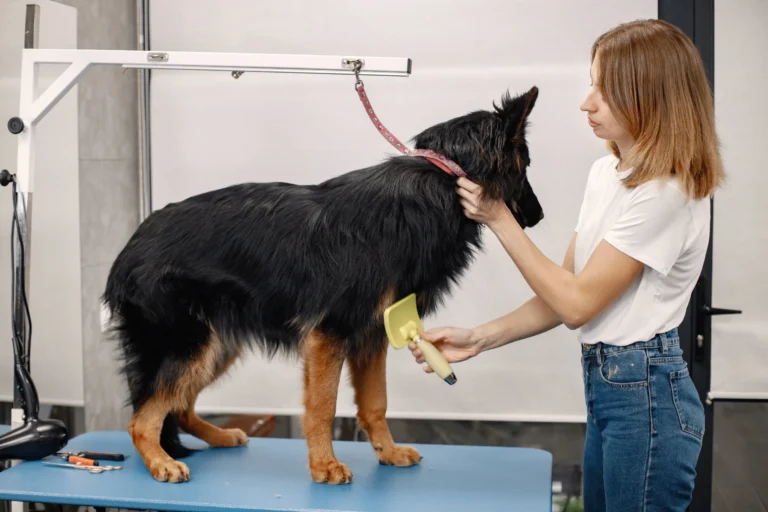
What is a deep-chested dog?
A deep chested dog has a rib cage that is taller than it is wide, typically extending below the front elbows, giving an oval- or egg-shaped appearance from the front. This contrasts with barrel-chested dogs whose chests end at or above the elbows and are wide and round.
Why does chest conformation matter?
Chest shape influences internal space for the heart, lungs and stomach. In dogs with deep chests the enlarged thoracic cavity allows greater lung and heart capacity but also increases the risk of gastric dilatation-volvulus (GDV) because of the excess internal space and mobility of the stomach. Genetic studies confirm that conformation is a significant risk factor for GDV.
How do we identify deep-chested versus barrel-chested dogs?
- Deep-chested: chest extends below the elbows; narrow waist behind the ribs; rib cage appears deeper than wide.
- Barrel-chested: chest ends at or above the elbows; wide rib cage; rounded shoulders.
Radiographic analysis of deep chest dogs shows that they have significantly longer vertebrae than barrel-chest dogs, confirming anatomical differences.
Which breeds are commonly deep-chested?
The deep-chested conformation is most common in large and giant breeds and some medium sized dogs:
Great Dane
Great Danes may appear intimidating with their towering height and regal stance, but they are gentle giants at heart. Known as the “Apollo of Dogs,” they are affectionate, loyal, and love spending time with their families. Despite their size, they’re calm and friendly, great with children and other pets when properly socialized.
- Group: Working group
- Height: 30 to 32 inches (males); 28 to 30 inches (females)
- Weight: 100 to 120 pounds
- Energy Level: Moderate to high; needs daily walks and open space to stretch
- Physical Characteristics: Muscular build, long legs, strong neck, deep chest, and short coat
- Lifespan: 8 to 10 years
- Colors: Fawn, brindle, blue, black, mantle, harlequin
- Shedding: Moderate to heavy
- Bark: Deep and resonant; protective if needed but not excessive
Doberman Pinscher
The Doberman Pinscher is a sleek, powerful, and intelligent breed — a true guardian with a heart of gold. Known for their loyalty and alertness, they are excellent family protectors and companions when trained with firm but loving consistency. Their elegance, athleticism, and devotion make them one of the most admired working breeds.
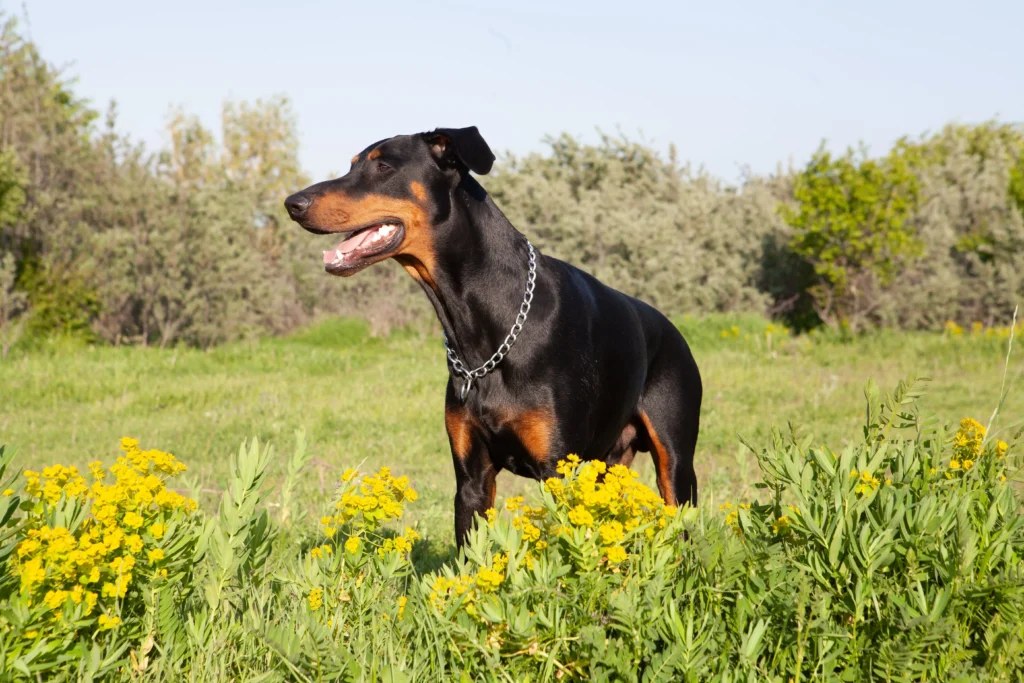
- Group: Working group
- Height: 26 to 28 inches (males); 24 to 26 inches (females)
- Weight: 70 to 100 pounds
- Energy Level: High; thrives on physical and mental stimulation
- Physical Characteristics: Muscular, square build with a shiny, short coat and proud carriage
- Lifespan: 10 to 12 years
- Colors: Black, red, blue, fawn (with rust markings)
- Shedding: Moderate
- Bark: Strong and commanding; excellent watchdog
- Temperament: Loyal, alert, confident, and obedient
Rottweiler
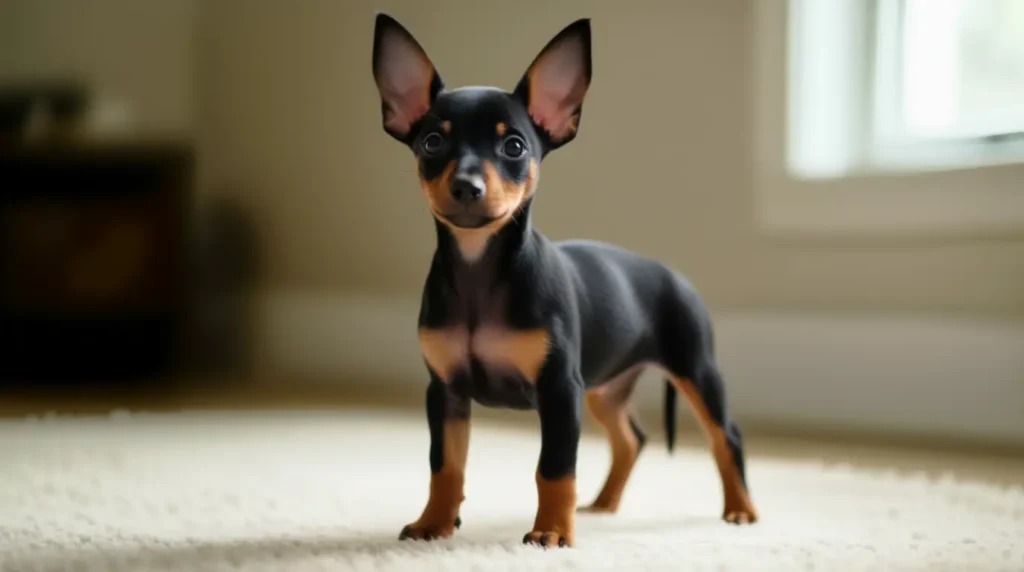
Rottweilers are confident, courageous, and deeply loyal dogs that balance power with affection. Originally bred for herding and guarding, they are known for their calm intelligence and strong sense of duty. With proper training, Rottweilers become loving family protectors who form deep bonds with their owners.
- Group: Working group
- Height: 24 to 27 inches (males); 22 to 25 inches (females)
- Weight: 80 to 135 pounds
- Energy Level: Moderate; enjoys regular exercise and purpose-driven activities
- Physical Characteristics: Stocky, muscular body; broad head; deep chest; black coat with rust markings
- Lifespan: 9 to 10 years
- Colors: Black with rust or mahogany markings
- Shedding: Moderate
- Bark: Deep, commanding, protective
- Temperament: Loyal, confident, and protective; needs early socialization
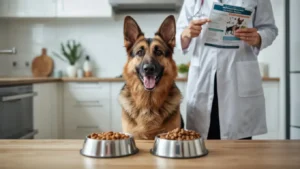
German Shepherd Dog
The German Shepherd Dog is a courageous and loyal working breed that excels in family life and service roles alike. With strong intelligence and protective instincts, they thrive when given both mental and physical activity.
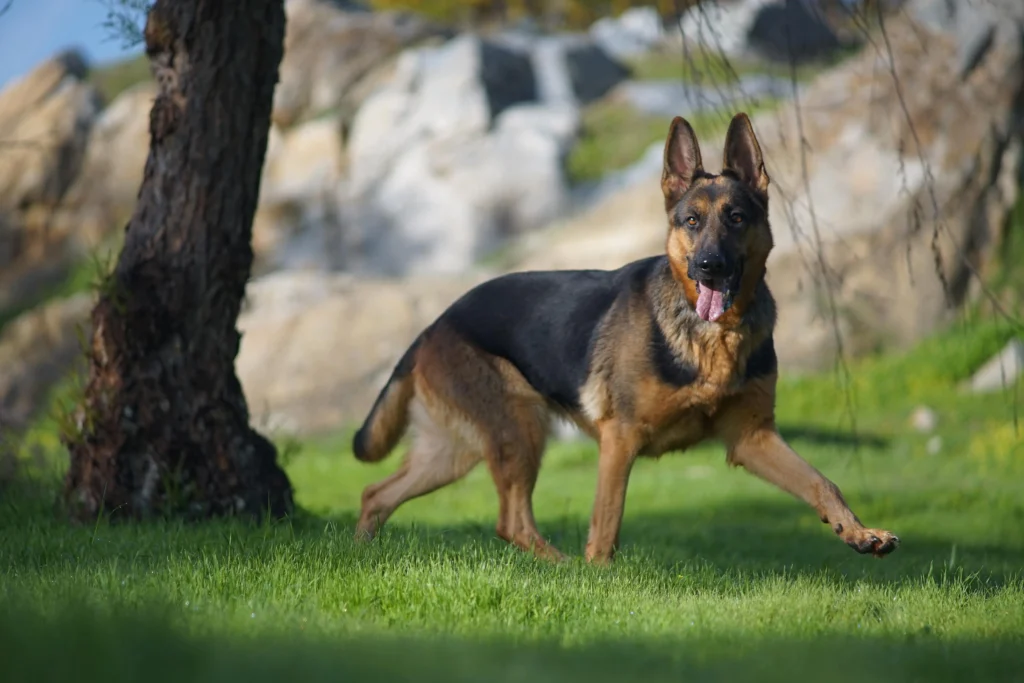
- Group: Herding (AKC)
- Height: Males 24-26 in (61-66 cm); Females 22-24 in (56-61 cm)
- Weight: Males ~65-90 lbs (29-41 kg); Females ~50-70 lbs (23-32 kg)
- Energy Level: High; requires daily exercise and mental stimulation.
- Physical Characteristics: Strong, muscular frame; deep chest; erect ears; double coat.
Weimaraner
The Weimaraner is an athletic, graceful hunting companion known for stamina, speed and devotion. With its sleek silver-gray coat and alert expression, it commands attention and thrives on activity.
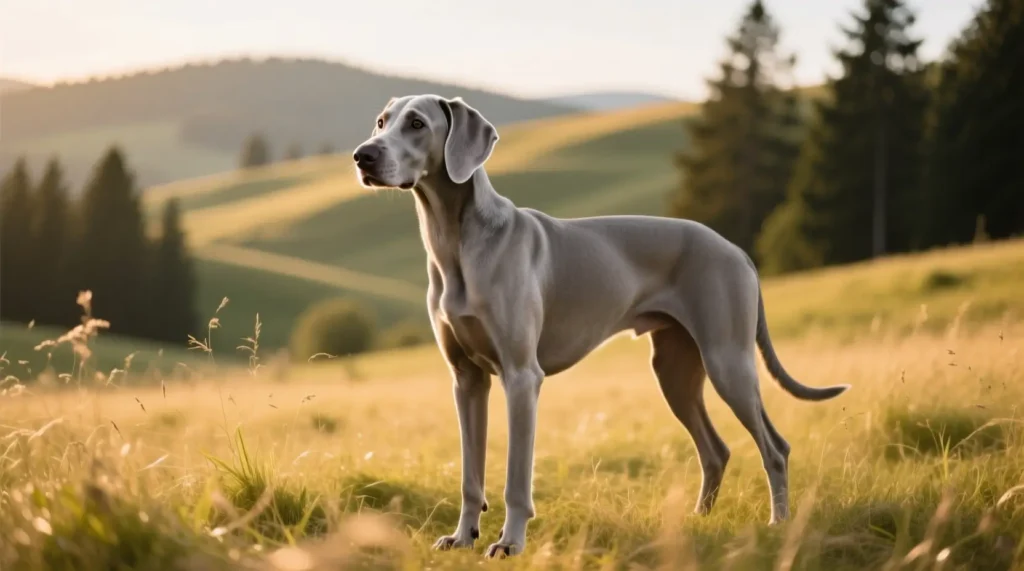
- Group: Sporting (AKC)
- Height: Males 25-27 in (64-69 cm); Females 23-25 in (58-64 cm)
- Weight: Males ~70-90 lbs (32-41 kg); Females ~55-75 lbs (25-34 kg)
- Energy Level: Very high; excels with running and active work.
- Physical Characteristics: Medium-large, sleek, short coat; deep chest; noble head.
Akita
The Akita is a powerful, dignified Japanese breed revered for loyalty and courage. Originally developed to guard royalty and hunt large game, it remains a devoted family protector with a calm, noble presence.
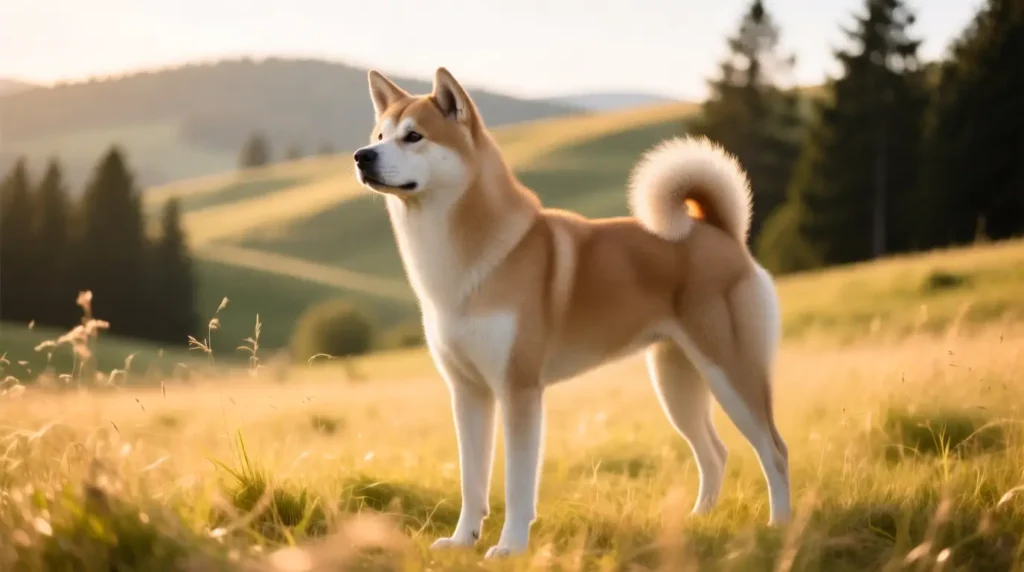
- Group: Working Group (AKC)
- Height: Males 26–28 in (66–71 cm); Females 24–26 in (61–66 cm)
- Weight: Males 100–130 lbs (45–59 kg); Females 70–100 lbs (32–45 kg)
- Energy Level: Moderate; enjoys daily walks and mental engagement
- Physical Characteristics: Broad head, deep chest, strong bones, double coat (thick undercoat with harsh outer coat)
- Lifespan: 10–13 years
- Colors: White, brindle, red, sesame, or pinto
- Shedding: Heavy, particularly seasonally
- Temperament: Loyal, quiet, alert, reserved with strangers but affectionate with family
Irish Wolfhound
The Irish Wolfhound is one of the tallest dog breeds — gentle, patient, and deeply loyal. Once bred for hunting wolves and guarding homesteads, today it’s a calm, loving companion known for its kind heart.
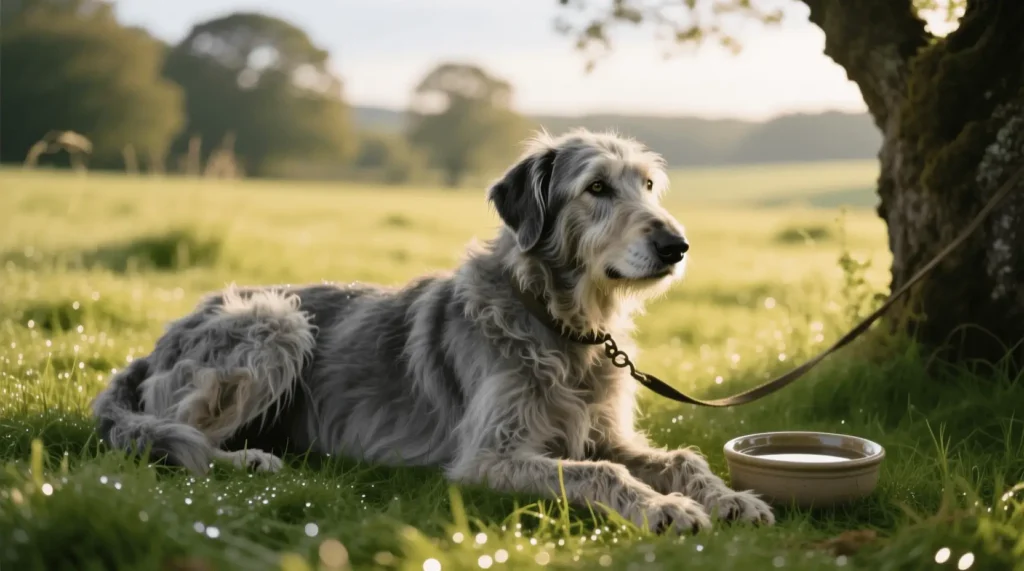
- Group: Hound Group
- Height: Minimum 32 in (males); 30 in (females)
- Weight: 105–120 lbs (females); 140–180 lbs (males)
- Energy Level: Moderate; needs regular but not intense exercise
- Physical Characteristics: Rough coat, long legs, deep chest, arched loin; strong but graceful frame
- Lifespan: 6–8 years
- Colors: Gray, brindle, red, black, white, fawn
- Shedding: Moderate
- Temperament: Calm, noble, gentle giant; affectionate with children and other pets
Standard Poodle
Elegant and intelligent, the Standard Poodle is more than a show dog — it’s an agile athlete and quick learner with a friendly disposition. Their intelligence and hypoallergenic coat make them exceptional family dogs.
- Group: Non-Sporting Group (AKC)
- Height: Over 15 in (38 cm) at shoulder
- Weight: 45–70 lbs (20–32 kg)
- Energy Level: High; thrives on play, training, and swimming
- Physical Characteristics: Curly dense coat; long neck; deep chest; straight back
- Lifespan: 10–18 years
- Colors: Varied (black, white, apricot, silver, gray, cream, red)
- Shedding: Very low; requires regular grooming
- Temperament: Active, alert, highly intelligent, affectionate with family
Irish Setter
Known for its glossy red coat and joyful personality, the Irish Setter is a spirited sporting dog that combines energy with elegance. It’s friendly, social, and thrives on human companionship and exercise.
- Group: Sporting Group
- Height: Males 27 in (69 cm); Females 25 in (64 cm)
- Weight: 60–70 lbs (27–32 kg)
- Energy Level: High; loves running and outdoor activities
- Physical Characteristics: Deep chest; long silky mahogany coat; feathered ears and tail
- Lifespan: 12–15 years
- Colors: Rich chestnut or mahogany
- Shedding: Moderate to high
- Temperament: Friendly, enthusiastic, outgoing, good with children and other dogs
Gordon Setter
The Gordon Setter, Scotland’s only native setter, combines beauty with endurance. Originally bred for bird hunting, it’s loyal and serious in the field but affectionate and dependable at home.
- Group: Sporting Group (AKC)
- Height: Males 24–27 in (61–69 cm); Females 23–26 in (58–66 cm)
- Weight: Males 55–80 lbs (25–36 kg)
- Energy Level: Moderate to high; needs consistent exercise
- Physical Characteristics: Black and tan silky coat; deep chest; muscular build
- Lifespan: 10–12 years
- Shedding: Moderate; regular brushing needed
- Temperament: Loyal, calm, gentle with family yet tenacious while working
Newfoundland
The Newfoundland is a gentle, massive water-rescue breed known for its strength and sweetness. Despite its size, it’s famously patient with children and highly trainable.
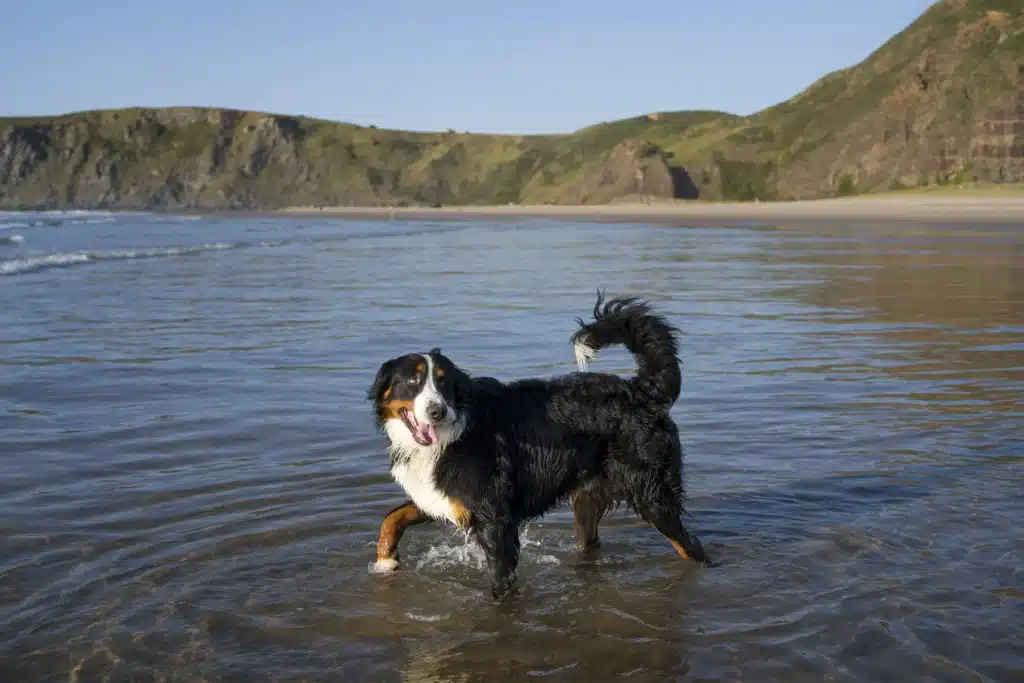
- Group: Working Group (AKC)
- Height: Males 28 in (71 cm); Females 26 in (66 cm)
- Weight: Males 130–150 lbs (59–68 kg); Females 100–120 lbs (45–54 kg)
- Energy Level: Moderate; enjoys swimming and cool weather
- Physical Characteristics: Large frame; deep chest; dense water-resistant double coat
- Lifespan: 9–10 years
- Colors: Black, brown, gray, Landseer (white & black)
- Shedding: Heavy seasonally
- Temperament: Gentle, patient, loyal, natural lifeguard instinct
Basset Hound
The Basset Hound is a low-slung scent hound with remarkable tracking skills and a loving personality. Its droopy ears and soulful eyes make it a favorite companion.
- Group: Hound Group (AKC)
- Height: Up to 15 in (38 cm)
- Weight: 40–65 lbs (18–29 kg)
- Energy Level: Moderate; daily walks suffice
- Physical Characteristics: Long body, short legs, deep chest, loose skin, long ears
- Lifespan: 12–13 years
- Colors: Any hound color (typically tri-color or red & white)
- Shedding: Moderate
- Temperament: Easygoing, gentle, good-natured, great with families
Dachshund
The Dachshund — affectionately called the “sausage dog” — is brave, curious, and full of character. Originally bred to hunt badgers, its long body and deep chest give it impressive stamina for its size.
- Group: Hound Group
- Height: 8–9 in (standard); 5–6 in (miniature)
- Weight: 16–32 lbs (standard); up to 11 lbs (miniature)
- Energy Level: Moderate; enjoys daily walks and play
- Physical Characteristics: Elongated body, short legs, deep chest, varied coat types (smooth, long, wirehaired)
- Lifespan: 12–16 years
- Colors: Wide variety (black & tan, red, chocolate, cream)
- Shedding: Low to moderate (depending on coat type)
- Temperament: Curious, courageous, loyal, vocal but affectionate
What are the health implications associated with deep chests?
Gastric Dilatation-Volvulus (GDV)
GDV is a life-threatening condition where the stomach fills with gas and twists, impairing blood flow and respiration. Large, deep-chested breeds carry a lifetime risk of 3.9 % to 36.7 % and breed is the most significant risk factor.
Cardiopulmonary considerations
Dogs with deep chests have increased lung and heart volume, which supports endurance but also places stress on the cardiovascular system if body condition is poor or weight is excessive.
What recent research reveals
A 2020 genome-wide association study of 253 dogs across ten breeds identified protective and deleterious single nucleotide polymorphisms (SNPs) related to GDV risk, implicating genes affecting gastric tone and motility. A 2024 radiographic study found that vertebral length/height ratios were highest in deep-chest dogs compared to barrel-chest dogs (p < 0.0001), verifying morphological differences.
How to Mitigate Health Risks in Deep-Chested Breeds
Deep-chested breeds—such as Great Danes, Weimaraners, Irish Setters, and Standard Poodles—are anatomically predisposed to Gastric Dilatation-Volvulus (GDV), or “bloat.” This life-threatening condition occurs when the stomach fills with gas and twists on itself, cutting off blood supply. Prevention relies heavily on feeding strategy, body condition, and veterinary preparedness.
1. Feeding Strategy
- Split meals: Feed 2–3 smaller meals daily rather than a single large meal to avoid gastric over-distention (AKC-CHF, 2022).
- Avoid raised bowls unless prescribed for orthopedic reasons—studies (Purdue University GDV Study, 2000) found that elevated bowls can increase GDV risk in some breeds.
- Choose high-quality digestible diets: Diets with moderate fat and balanced fiber content promote efficient gastric emptying. Avoid sudden diet changes.
2. Slow Feeding
- Use slow-feed bowls or puzzle feeders to prevent gulping and air ingestion, a key trigger of gastric torsion (VCA, 2024).
- Allow dogs to eat in calm environments to prevent “competitive” eating behavior common in multi-dog households.
3. Exercise Timing
- Avoid vigorous exercise 60–90 minutes before and after meals (Cornell CVM, 2023).
- Gentle walks are fine post-meal, but running, jumping, or play that causes abdominal movement should be delayed to allow gastric emptying.
4. Maintain Lean Body Condition
- Target a Body Condition Score (BCS) of 4–5 / 9, as overweight dogs are at higher GDV risk (ACVS, 2023).
- Leaner dogs show improved cardiovascular efficiency and lower gastric pressure.
- Regular vet check-ups help ensure ideal weight and muscle mass.
5. Preventive Gastropexy (Surgical Prevention)
- Prophylactic gastropexy, a minimally invasive surgery that permanently tethers the stomach to the abdominal wall, can reduce GDV recurrence from >70 % to <5 % (VCA, 2024).
- Recommended for high-risk breeds (Great Dane, Weimaraner, Standard Poodle, Irish Setter, Akita).
- Can be performed preventively during spay/neuter under the same anesthesia.
6. Emergency Awareness
- Learn the signs of GDV:
- Sudden distended or firm abdomen
- Unproductive retching or drooling
- Rapid breathing or restlessness
- Weakness or collapse
- Act immediately: GDV is a true emergency—survival rate drops drastically without surgery within 6 hours (Cornell CVM).
- Keep your vet’s emergency contact visible at home and save the nearest 24-hour clinic number.
Veterinary Takeaway
“For owners of deep-chested dogs, prevention is far safer than treatment. Feeding routines, body weight management, and prophylactic gastropexy dramatically improve outcomes.”
— Dr. Megan Shepherd, DVM, DACVN (Virginia-Maryland College of Veterinary Medicine, 2024)
Body condition & lifestyle recommendations
Deep-chested dogs benefit from regular moderate exercise, lean muscle build, and regular veterinary check-ups. Avoid overfeeding and excess fat deposition, as abdominal fat increases thoracic and gastric pressure.
Frequently Asked Questions
Q: Can small dogs be deep-chested?
Yes—although deep-chested conformation is more common in large breeds, smaller dogs such as Dachshunds or Basset Hounds may exhibit a deep ribcage anatomy.
Q: Is deep chest the only risk factor for GDV?
No. Other factors include breed, family history, rapid eating, stress, high volume meals and certain diet types. Deep conformation is a major but not sole risk. American Kennel Club
Q: Does gastropexy eliminate GDV risk?
It significantly reduces the risk but does not guarantee zero risk. Preventive measures and monitoring remain important.
Conclusion
Deep-chested dog breeds display distinct anatomical features that influence their physiology and health. Awareness of chest conformation, combined with preventive care and feeding strategies, can dramatically improve wellness and reduce the risk of serious conditions such as GDV. Proper lifestyle management ensures that owners of these breeds can support long, healthy lives for their dogs — because tone, chest and diet matter.