

Housebreaking an older dog succeeds through structured scheduling, immediate reinforcement, supervision, enzymatic cleaning, and veterinary screening. Adult dogs learn quickly, but age-related conditions like urinary incontinence, anxiety, and cognitive decline require tailored routines to achieve consistent, long-term house-training success.
To housebreak an older dog successfully, use a fixed potty schedule, reward outdoor toileting immediately, restrict unsupervised indoor access, clean accidents with an enzymatic cleaner, track medical signs, and treat the dog as untrained for the first few weeks.
This guide explains how to housebreak an older dog using structured schedules, precise reward timing, supervision, and medical screening. You will learn how to identify root causes, build a repeatable potty routine, prevent common mistakes, and adjust training for anxiety, mobility limits, or cognitive decline. Each section gives practical steps, real case patterns, and evidence-backed guidance so you can move from daily accidents to consistent outdoor habits with measurable progress.
What does “housebreaking an older dog” mean?
Housebreaking an older dog means training an adult or senior dog to eliminate outdoors consistently while preventing indoor accidents through structured routine, supervision, and reinforcement.
This differs from puppy training because:
- Older dogs already have learned habits
- Physical conditions affect bladder control
- Environmental changes disrupt previous routines
Behavioral problems in older dogs often reflect medical or cognitive changes rather than disobedience.
What causes housebreaking failure in adult dogs
Housebreaking failure falls into three primary domains.
Medical causes
Medical conditions directly increase urination frequency or reduce control.
Common causes
- Urinary tract infection
- Diabetes mellitus
- Kidney disease
- Hormonal imbalance
- Neurological disorders
Increased urination is a key symptom of metabolic disease.
Behavioral causes
Behavioral triggers include:
- Anxiety
- Change in environment
- Lack of routine
- Previous neglect
Shelter dogs often lose house training due to limited outdoor access.
Environmental causes
Environmental barriers include:
- Distance to exit
- Slippery floors
- Stairs
- Weather conditions
Root cause classification for housebreaking problems
| Cause type | Example | Observable behavior | Intervention |
| Medical | UTI | Frequent urination | Veterinary treatment |
| Behavioral | Anxiety | Pee when alone | Training + routine |
| Environmental | Access delay | Pee near the door | Modifying environment |
This table maps observable behaviors to root causes and actions.
Why does housebreaking an older dog work differently?
Housebreaking an older dog works through routine, supervision, medical screening, and reward timing. Adult dogs often learn fast, but past habits, shelter routines, urine marking, anxiety, pain, or urinary disease change the training plan.
Animal Shelter Statistics
- 5.8 million dogs and cats entered shelters and rescues in 2024, down only slightly from the year before. The number of dogs and cats entering shelters and rescues last year is evenly split, with both populations contributing to the overall slight decline in shelter intake.
- The length of time dogs, especially large dogs, are staying in shelters before being adopted has increased in the last 5 years, adding strain to an already overburdened shelter system. The extended length of time animals are staying in shelters contributes to the ongoing capacity crisis, limiting space for new animals.
- 4.2 million shelter animals were adopted into loving homes in 2024, approximately the same number of animals adopted as the year before. Unfortunately, not enough animals were adopted to significantly reduce the number of dogs and cats in shelters nationwide.
- Approximately 607,000 animals were euthanized in shelters in 2024, decreasing by approximately 2% compared to 2023. In the past five years, euthanasia rates have dropped from 13% in 2019 to 8% in 2024.
- Approximately 2 million dogs were adopted in 2024; 554,000 were returned to their owners; 334,000 were euthanized, and 524,000 were transferred to other organizations.
- Approximately 2.2 million cats were adopted in 2024; 362,000 were returned to their owners or the field; 273,000 were euthanized, and 369,000 were transferred to other organizations.
These numbers show why practical house training guidance affects home retention, welfare, and owner confidence.
Older dogs also age at different rates. Small dogs may not reach senior status until around 12 years old, while large dogs can reach senior status at 7 to 8 years old. That age gap matters when you plan potty breaks, stairs, outdoor access, and veterinary checks.
How long does it take to housebreak an older dog?
Housebreaking an older dog often takes a few weeks when the dog is healthy, supervised, and rewarded correctly. The timeline becomes longer when the dog has medical issues, anxiety, prior kennel habits, mobility pain, or cognitive decline.
Adult dogs can learn new house-training habits with time and patience, and the timeline depends on routine consistency, learning speed, age, and experience.
A practical benchmark is 14 clean days before full freedom. Some dogs reach that point quickly. Others need a month or more because the goal is clean repetition, not speed.
15 Practical Tips to Housebreak an Older Dog Successfully
Start with a veterinary check before blaming behavior
A veterinary check separates housebreaking failure from illness. Book an exam when an older dog suddenly urinates indoors, asks out more often, leaks while resting, strains, drinks more water, or loses weight.
Many veterinary guides list infections, estrogen deficiency in spayed female dogs, kidney failure, diabetes mellitus, diabetes insipidus, Cushing’s disease, neurological disease, territorial behavior, and corticosteroid medication as causes of inappropriate urination.
This step matters most for dogs with new accidents after years of clean house habits. A trained dog that starts peeing indoors is not “stubborn.” This behavior may signal bladder inflammation, metabolic disease, pain, medication effects, or cognitive decline.
Ask your veterinarian about urinalysis, blood work, pain assessment, and mobility screening. Urinalysis helps evaluate kidney function, urinary inflammation, infection, diabetes, and metabolic disturbances.
Case study: Undiagnosed urinary infection
A 9-year-old Labrador showed sudden indoor accidents.
Observed pattern
- Frequent urination
- Small volumes
- Restlessness
Diagnosis: urinary tract infection
After treatment, accidents stopped within 5 days.
Insight: Training failed because the cause was biological, not behavioral.
Treat the older dog as untrained for the first few weeks
Treat an older dog as untrained at the start, even if the dog came from a previous home. This prevents early freedom from turning into repeated accidents.
Many adult shelter dogs were house-trained before adoption, but limited outdoor access in shelters can weaken house-training habits. New home odors and missed bathroom signals also cause early indoor accidents.
Assume a new adult dog is not housetrained for the first few weeks and start from scratch. Take the dog out at the same times daily, including morning, after meals, after work, and before bed.
This method reduces pressure on the dog. You are not correcting the past. You are teaching the new home rule: bathroom outside, rest inside, and rewards after outdoor toileting.
Build a fixed potty schedule
A fixed potty schedule gives an older dog predictable chances to toilet outside. Use the same outdoor times for 10 to 14 days before expanding indoor freedom.
Start with these potty windows:
- Take your dog out after waking
- Take your dog out after meals
- Take your dog out after naps
- Take your dog out after play
- Take your dog out before bedtime
- Take your dog out after long confinement
- Take your dog out when sniffing or circling starts
Regular, predictable intervals and potty break frequency depend on age, breed, and previous training. Increase the time between breaks only after several successful days.
For many adult dogs, one outdoor trip every 1 to 2 hours at the start gives enough data. After 3 clean days, the interval slowly increases. Return to shorter intervals after an accident.
Case study: Schedule correction success
A rescue dog had 3–4 daily accidents.
Adjustment
- Potty breaks every 2 hours
- Immediate rewards
Result: Accidents reduced by 80% within 7 days
Insight: Schedule timing controls behavior more than discipline.
Use one clear outdoor potty area
One outdoor potty area reduces confusion. Take your older dog to the same grass patch, gravel area, yard corner, or walking route for the first training phase.
A consistent location adds scent, surface memory, and route familiarity. Dogs often link toileting with texture, smell, and body routine. Grass, mulch, gravel, concrete, and pee pads create different surface habits.
Use a leash during early housebreaking. Take the dog directly to the selected potty area and keep the dog outside until elimination occurs.
Keep the first trip boring. Skip play until after the dog pees or poops. This keeps the dog focused on toileting before exploration.
Reward the exact moment your dog finishes outside
Immediate reward creates the strongest housebreaking connection. Give a high-value treat and praise within 1 to 2 seconds after your older dog finishes peeing or pooping outside.
Successful toilet training uses reward-based positive reinforcement. The reward must occur within a second or two after toileting, not after the dog comes back indoors.
This timing matters because dogs connect rewards to the most recent action. A treat in the kitchen rewards returning inside. A treat at the potty spot rewards toileting outside.
Use the same short phrase each time, such as “go potty.” Say the phrase softly as the dog starts. Reward after the dog finishes. Over time, the phrase becomes a cue.
Case study: Reward timing error
The owner rewarded the dog indoors after returning.
Result
- The dog learned: return indoors = reward
- Accidents continued
Correction: Reward given immediately
Outcome: Behavior corrected within 10 days
Supervise with full attention indoors
Supervision prevents accidents before they become habits. Watch your older dog closely in the first training phase, especially after meals, naps, water intake, and indoor play.
Common pre-potty signals include sniffing, squatting, circling, or tail position changes.
Use simple management:
- Keep the dog in the same room
- Use baby gates
- Use a leash indoors
- Close bedroom doors
- Block carpeted rooms
- Limit access to accident zones
- Move the dog outside after the warning signs
Indoor freedom is earned. Give one room after several clean days. Add another room after the next clean stretch. Remove freedom after accidents.
Use confinement without turning it into punishment
Confinement supports housebreaking when it keeps the dog safe, calm, and supervised. Use a crate, pen, gated laundry area, or dog-proofed room when you cannot watch your dog.
Crate size matters. The dog must be able to stand, turn around, and lie down. A crate that is too large allows one corner for sleeping and another for toileting.
Introduce confinement with meals, chews, and short, calm sessions. Do not push a fearful dog into a crate. Use a pen or gated area when the dog panics, scratches, drools, barks hard, or tries to escape.
Confinement is not training. Confinement prevents rehearsal of indoor accidents while the potty schedule teaches the correct habit.
Clean every accident with an enzymatic cleaner
Enzymatic cleaner removes urine odor that human noses miss. Standard cleaners often remove visible stains but leave odor markers that bring the dog back to the same spot.
Dogs return to places where they urinated or defecated before, and pet urine needs enzymatic cleaning because standard household cleansers do not work well enough.
Clean in this order:
- Blot fresh urine with paper towels
- Apply the enzymatic cleaner to the fully soaked area
- Let the cleaner sit for the label time
- Block access until the area dries
- Repeat for deep carpet or underpadding
Avoid ammonia-based cleaning for urine spots. Urine already contains ammonia-like odors, so the smell may keep the area meaningful to the dog.
Track accidents in a simple potty log
A potty log turns guesswork into patterns. Track time, food, water, location, stool quality, urine amount, warning signs, and your response.
Use this table for 7 days:
| Time | Event | Location | Result | Notes |
| 6:30 a.m. | Wake-up trip | Yard | Peed | Rewarded outside |
| 7:15 a.m. | Breakfast | Kitchen | No potty | Drank water |
| 8:00 a.m. | Post-meal trip | Yard | Pooped | Soft stool |
| 10:00 a.m. | Indoor accident | Hallway | Urine | Sniffing missed |
| 10:05 a.m. | Clean-up | Hallway | Enzyme used | Door closed |
The log helps you adjust the schedule. Morning accidents point to overnight timing. Post-meal accidents point to meal-to-potty delay. Repeated hallway accidents point to odor, access, or missed signals.
Bring the log to your veterinarian if accidents continue. Timed notes help separate behavioral house soiling from medical urination problems.
Watch for urinary tract infection signs
A urinary tract infection can look like house training failure. Look for frequent urination, small urine amounts, straining, painful urination, blood, licking, or sudden accidents.
Bladder infection signs include frequent urination, painful or difficult urination, urinating in inappropriate places, and sometimes blood in the urine.
UTI-related accidents often feel urgent. The dog may ask outside repeatedly, pee small amounts, or squat soon after returning indoors. Punishment does not address infection, pain, or bladder inflammation.
Book a veterinary visit when accidents appear suddenly, urine smells abnormal, or the dog strains. Early testing protects the dog and prevents weeks of ineffective training.
Check thirst, appetite, and weight changes
Increased drinking and urination can come from endocrine or kidney disease. Housebreaking fails when the dog produces more urine than the schedule allows.
Some veterinary guides list increased thirst, increased urination, increased appetite, and weight loss as the main clinical signs of diabetes mellitus in dogs.
Watch the water bowl. Track refills per day. Note whether your dog wakes at night to drink or urinates in larger puddles than usual.
Medical polyuria differs from marking. Marking often leaves small amounts on vertical or meaningful surfaces. Increased urine production often creates larger puddles and more frequent outdoor requests.
Case study: Diabetes-related accidents
Dog showed:
- Increased thirst
- Large urine volume
Diagnosis: Diabetes mellitus
After insulin therapy: Accidents reduced significantly
Separate urine marking from loss of house training
Urine marking is scent communication. House training failure is elimination in the wrong place. The solution changes when you identify the pattern.
Marking often includes small urine amounts, upright surfaces, new furniture, guest bags, doorways, or areas with animal scent. House training accidents often occur after meals, naps, long gaps, or missed signals.
Blue Cross lists territory marking, stress, anxiety about being left alone, and feeling poorly as reasons dogs toilet indoors.
Use this decision table:
| Pattern | Likely category | First response |
| Large puddle after 4 hours indoors | Schedule gap | Shorten potty interval |
| Small spray on the chair leg | Marking | Block access and clean |
| Urine during sleep | Incontinence | Vet exam |
| Peeing when left alone | Anxiety-related | Separation plan |
| Frequent squatting outside | UTI risk | Urinalysis |
| Accident near the door | Missed signal | Add bells or a faster response |
Neutering status, new pets, visitors, and neighborhood dog odors may affect marking. A trainer or veterinary behavior professional helps when marking continues after cleaning and access control.
Adjust the plan for pain, arthritis, and stairs
Pain changes bathroom behavior. An older dog with sore joints may delay outdoor trips, avoid stairs, move slowly to the door, or soil near exits.
Veterinary guides list arthritis signs such as slow rising, avoiding stairs, hesitating to jump, limping, stiffness, and falling behind on walks. These signs matter during housebreaking because the dog may not reach the potty area in time.
Make outdoor access easier:
- Add a ramp for steps
- Use a non-slip runner near doors
- Choose the nearest potty spot
- Keep the route well-lit
- Clear ice, heat, mud, or sharp gravel
- Use a harness instead of pulling the collar
A dog with pain still learns, but the plan must fit the body. Faster access often solves accidents that look like stubbornness.
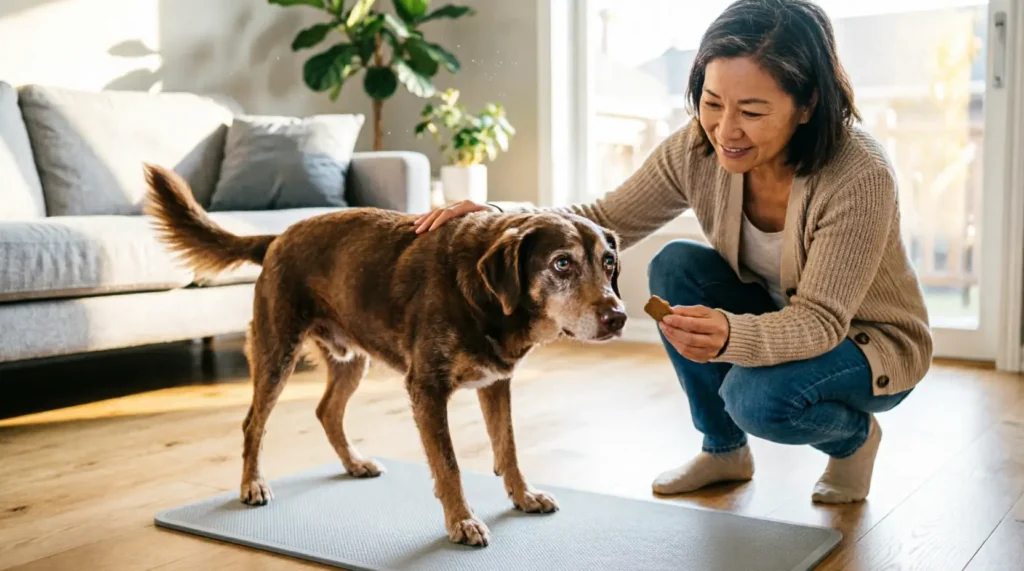
Screen for cognitive decline in senior dogs
Canine cognitive dysfunction can cause house soiling in older dogs. The dog may forget learned routines, go to the wrong side of the door, seem confused, or fail to signal.
The estimated canine cognitive dysfunction prevalence ranges from 14% to 35% in pet dogs, with one study finding 28% in dogs aged 11 to 12 and 68% in dogs aged 15 to 16.
Disorientation, social interaction changes, sleep-wake changes, house soiling and memory changes, activity changes, and anxiety.
Aging can reduce memory, learning ability, awareness, sight, and hearing. It advises reporting behavior changes to a veterinarian because medical disorders may be treatable.
Use more structure for cognitively aging dogs. Add more outdoor trips, night lights, clear door access, consistent routes, and a smaller safe indoor zone.
Use reward-based training and avoid punishment
Reward-based training is the safest housebreaking foundation for an older dog. Punishment increases fear, hides signals, and weakens trust.
Only reward-based training methods are recommended for dog training and behavior modification. Aversive methods, including electronic collars, prong collars, choke chains, leash corrections, and physical or psychological punishment, are not supported.
Punishment can inhibit learning, increase fear-related and aggressive behaviors, and cause injury to animals or people.
For an accident you witness, interrupt calmly and take the dog outside. Reward if the dog finishes outdoors. For an accident you find later, clean it and adjust supervision. The dog cannot connect late scolding to an earlier elimination event.
A 14-day housebreaking plan for an older dog
This plan works for adult dog potty training, senior dog housebreaking, and re-house training after adoption.
| Day range | Main goal | Action |
| Days 1 to 3 | Stop repeat accidents | Vet check if signs appear, restrict access, take the dog out every 1 to 2 hours |
| Days 4 to 7 | Build pattern memory | Use the same potty spot, cue phrase, immediate reward, and potty log |
| Days 8 to 10 | Expand freedom slowly | Add one room after clean days; keep gates on carpeted areas |
| Days 11 to 14 | Test routine | Increase intervals only after success; keep reward timing strict |
Return to day 1 rules after any accident cluster. Regression means the schedule, supervision, medical status, or cleaning protocol needs adjustment.
Common mistakes when housebreaking an older dog
The most common mistake is giving freedom before the dog understands the home rule. Early freedom creates unsupervised accidents, and repeated odor strengthens the bad habit.
Other mistakes include:
- Rewarding after the dog comes indoors
- Cleaning urine with a standard cleaner
- Missing UTI or diabetes signs
- Leaving the dog loose after meals
- Expecting shelter dogs to signal immediately
- Using punishment after accidents
- Taking the dog outside without staying present
- Allowing play before toileting
- Ignoring pain, stairs, or door access
Owners must be outside with the dog to praise outdoor toileting. Letting the dog out and closing the door is not enough during training.
Final takeaway: Consistent inputs create predictable results
Housebreaking an older dog succeeds when you control routine, timing, and environment with precision. Accidents drop when you remove guesswork and respond to clear signals. A fixed schedule reduces uncertainty. Immediate rewards lock in the correct behavior. Supervision prevents mistakes before they repeat. Medical screening removes hidden barriers such as infection, diabetes, or pain.
You now have a system. Start with health checks. Build a strict schedule. Use one potty location. Reward within seconds. Limit freedom until you see clean patterns. Track data and adjust quickly. Each step builds the next. Within weeks, most older dogs shift from random accidents to reliable outdoor habits. The result is stable, measurable, and repeatable.
Frequently asked questions
How often should you take an older dog outside at the start?
Take the dog out every 1–2 hours until you record at least 3 clean days.
What is the fastest way to stop indoor accidents?
Use strict scheduling, full supervision, and immediate outdoor rewards.
Can an older dog relearn house training after years of accidents?
Yes, consistent routine and reinforcement rebuild the habit within weeks.
How do you know if accidents are medical, not behavioral?
Look for sudden changes, frequent urination, large volume, or straining.
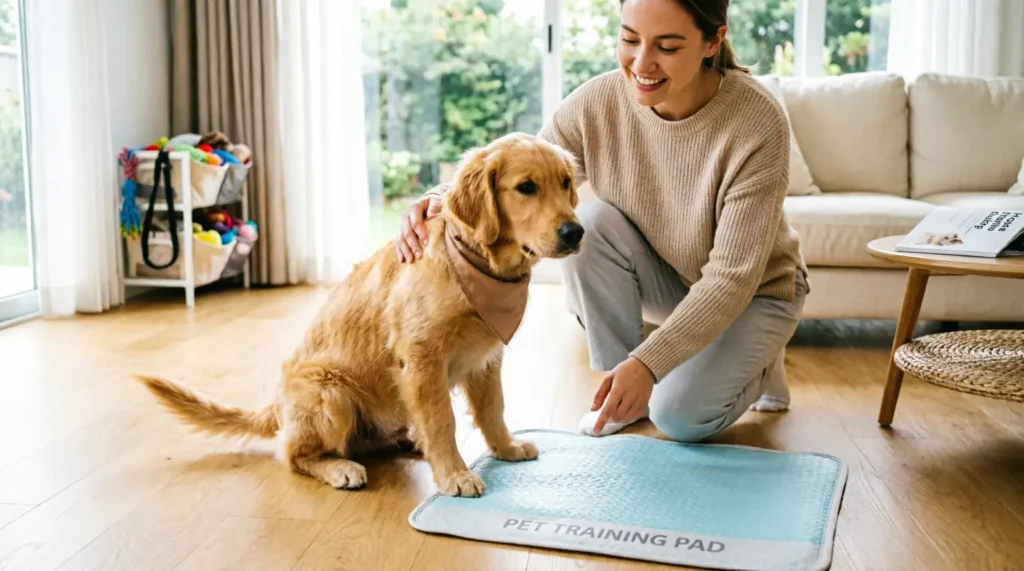
Should you use pee pads for older dog training?
Avoid them unless needed, as they create indoor elimination patterns.
What time gap works best between meals and potty breaks?
Take the dog out within 10–20 minutes after eating.
How long before you allow full indoor freedom?
Wait for at least 14 consecutive accident-free days.
What type of cleaner prevents repeat accidents?
Use enzymatic cleaners that break down urine odor at a molecular level.