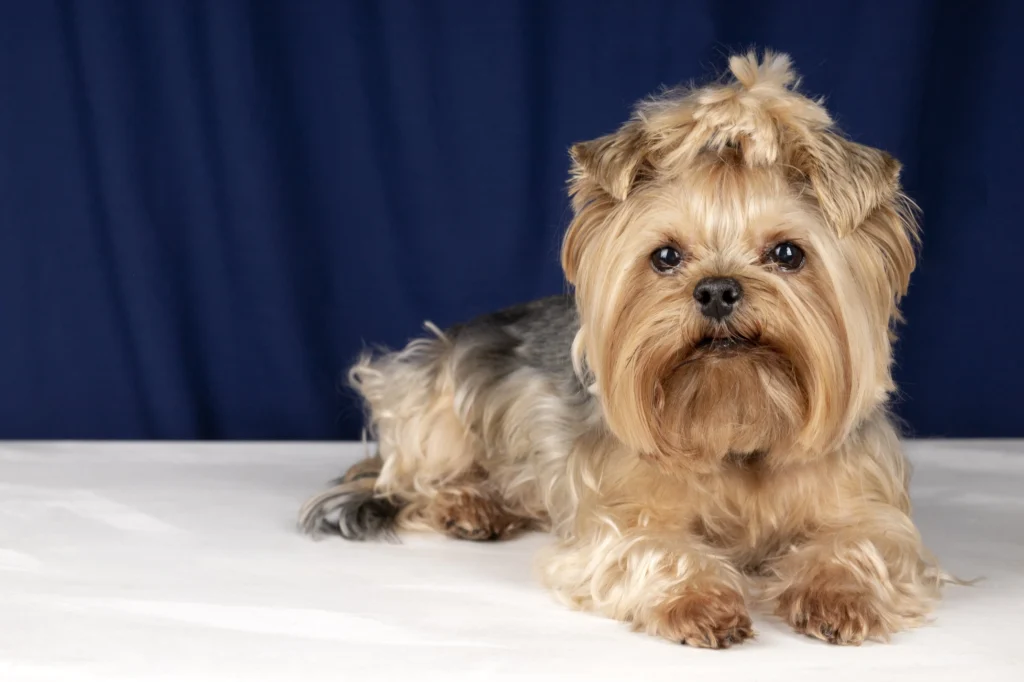


Small dog breeds have played surprisingly important working roles throughout history, proving that their value extends far beyond companionship and lap warming. Thanks to their compact size, agility, sharp senses, and determination, many small dogs were bred or trained to perform specialized tasks that larger breeds could not manage as easily. Yorkshire Terriers and other ratting terriers helped control vermin in homes, farms, mills, and other workplaces, while Dachshunds and small terriers were developed to pursue quarry into underground burrows.
Schipperkes became known for guarding Belgian canal boats, and the now-extinct Turnspit Dog was historically used to power kitchen roasting spits by running inside a wheel-like device. During World War II, a Yorkshire Terrier named Smoky became famous for helping run a communications wire through a narrow pipe. Other small breeds, including Pekingese and Japanese Chins, were valued in royal households for companionship and alertness. Exploring these historical jobs reveals how selective breeding shaped the instincts, behavior, and abilities of many small dogs we know today.
The early jobs of small dog breeds fit into six clear categories: burrow hunting, vermin control, flushing game, scent-driven tracking tasks, alarm duty, and court companion-sentinel work. These dogs were not “just pets.” Their size, anatomy, and temperament were selected for specific environments, including tunnels, mills, farms, and guarded households. Understanding Dachshund hunting purpose, Yorkshire Terrier ratting history, Jack Russell Terrier fox-working origins, Miniature Pinscher vermin-control role, Pomeranian descent from larger spitz-type dogs, Miniature Schnauzer farm ratter background, Pekingese imperial palace role, Maltese Mediterranean companion history, Shih Tzu Chinese royal companion history with Tibetan links, Chihuahua likely Techichi ancestry and companion-alert tendencies, and Pug elite companion history with strong watchdog behavior helps explain why many small breeds act the way they do in 2026—and how to meet their needs effectively.
Key Takeaways
- Small dog breeds performed specialized working roles including burrow hunting, ratting, flushing, scent-driven tasks, alarm duty, and court sentinel companionship that required specific physical adaptations and behavioral traits.
- Historical jobs predict modern behavior patterns: digging, barking, chasing, and alertness are not personality flaws but retained work behaviors that need appropriate outlets.
- Six job categories explain most small breed origins: understanding whether your dog descends from hunters, ratters, or palace sentinels helps you provide breed-appropriate enrichment.
- Physical traits directly correlate to historical function: short legs supported tunnel access, high vocalization supported alarm work, and compact size enabled work in confined spaces.
- Modern enrichment should match historical roles: scent games for scent-driven breeds, controlled chase for ratters, and boundary training for alert breeds reduce unwanted behaviors.
What Is A “Working Small Dog Breed” In Historical Breeding Terms?
What Is A “Working Small Dog Breed” In Historical Breeding Terms?
A working small dog breed is a small-bodied breed selectively bred for a repeatable task that improves hunting efficiency, pest control, or household security within a specific environment. This definition separates true working breeds from dogs developed primarily for ornamentation or companionship, although many small breeds served dual roles across different historical periods.
Selective breeding refers to the intentional pairing of dogs that consistently performed a defined task well, allowing those traits to concentrate across generations. When breeders repeatedly selected the most effective ratters, burrow workers, or alert dogs to reproduce, they created task specialization—breeds whose anatomy, instincts, and behavior patterns aligned closely with a single functional role.
Functional morphology explains how a dog’s physical structure directly supports its work. These traits are not cosmetic variations; they are mechanical adaptations tied to performance:
- Short legs → improved burrow access and stability in confined tunnels
- Narrow chest → enhanced maneuverability and turning radius underground
- High vocalization → effective alarm signaling and quarry location
- Strong forelimbs → increased digging power and prey restraint
- Developed scenting ability → reliable detection and tracking capability
The Danish-Swedish Farmdog, fully recognized by the American Kennel Club in 2025, illustrates how functional purpose, not size defines working status. Historically used as an all-purpose farm dog, the breed has also demonstrated aptitude in structured activities such as scent work, rally, agility, and modern assistance roles. Its recognition reinforces that working classification reflects historical function rather than physical scale.
Canine genetics research supports this model, showing that selective breeding amplifies task-specific traits that can be measured through behavioral testing, anatomical proportions, and performance outcomes. When examining a small dog breed’s history, you are effectively tracing centuries of deliberate selection for particular capabilities rather than personality alone.
Why Did Humans Use Small Dogs For Work Instead Of Only Large Dogs?
Small dogs were used for work because many human environments physically excluded larger animals. Tunnels, storage rooms, ship holds, and dense urban housing required compact workers that could move efficiently where large dogs could not. In these contexts, small size was not a limitation but a functional advantage tied directly to access, efficiency, and control.
Environmental Access Advantages
Underground structures such as badger setts and fox dens contain narrow passages that restrict entry based on shoulder height and chest width. The Dachshund, standing roughly 8–9 inches at the shoulder, was intentionally bred to navigate these confined spaces while maintaining stability and forward drive underground (Encyclopaedia Britannica, Dachshund history). Larger hounds lacked the physical clearance to operate in these environments.
During the Industrial Revolution, textile mills and warehouses introduced similar spatial constraints. Machinery gaps, storage cavities, and narrow corridors favored small, agile dogs. Historical accounts of the Yorkshire Terrier place its development in industrial northern England, where terrier-type dogs were valued for controlling rodents in cramped mill and factory settings (American Kennel Club, Yorkshire Terrier history).
Maritime trade created another confined working environment. Ship holds and cargo decks demanded compact pest-control solutions that could maneuver between stacked goods. Some breed histories suggest that Maltese-type dogs may have traveled with Mediterranean traders and assisted in deterring rodents around stored provisions, although this role is best described as situational rather than formally documented (Nylabone Maltese history).
Resource Efficiency
Small dogs require significantly less daily energy intake than large dogs due to body-mass scaling. Veterinary nutrition models show that a 10-pound adult dog typically requires approximately 200–275 kcal per day at maintenance, while a 70-pound dog may require 1,200 kcal or more depending on activity level (World Small Animal Veterinary Association calorie guidelines; NRC-based maintenance equations). In agricultural and pre-industrial societies where food resources were closely managed, this efficiency carried practical importance.
Portability further increased working value. Small terriers could be transported easily on horseback or by hand. Historical fox-working accounts describe Jack Russell–type terriers being carried in saddlebags and released only when quarry entered underground dens, improving hunting efficiency without exhausting the dog during pursuit (American Kennel Club, Jack Russell Terrier origin).
Urban Density Solutions
As European cities grew denser, rodent pressure increased alongside food storage and waste accumulation. Narrow alleys, multi-story buildings, and crowded market districts created conditions where large dogs struggled to patrol effectively. Small dogs, particularly terrier types, could navigate tight interior spaces and rapidly change direction when pursuing rodents among crates or grain stores.
Royal and elite households presented a different but equally confined environment. Breeds such as the Papillon are best documented as court companion dogs rather than primary ratters; however, palace settings still required discreet animal control that would not damage furnishings or disrupt daily life. In such spaces, compact dogs provided mobility and presence without the physical disruption associated with larger working breeds (Papillon breed history, breed club sources).
Rapid turning radius and low center of gravity gave small dogs an advantage in confined pursuit. Rodents change direction rapidly in enclosed environments, and small dogs with comparable agility could match these movements more effectively than larger, slower-pivoting animals.
Which 6 Historical Job Categories Explain Most Small Dog Breed Origins?
Six historical job categories explain the origins of most small dog breeds and provide a reliable framework for interpreting breed-specific behavior. Each category selected for distinct physical traits and behavioral tendencies that continue to appear in modern dogs:
- Hunt quarry in burrows and dens: Pursue foxes, badgers, and other animals underground using scent tracking, vocal signaling, and persistence
- Kill rodents in storage areas and homes: Control rat and mouse populations in mills, barns, kitchens, and warehouses through speed, agility, and prey drive
- Flush small game from cover: Push rabbits, birds, and other game from brush or hedgerows toward hunters or nets
- Trail scent over short distances: Follow ground scent to locate wounded game, track quarry, or recover lost items
- Alert households to intruders and animals: Provide early vocal warnings when strangers, predators, or unusual activity approach homes or camps
- Guard personal space in courts and travel: Act as proximity sentinels for nobility, detecting movement or threats in private chambers and during journeys
These categories often overlapped. The Miniature Schnauzer combined vermin control with alert duty on farms, while the Pomeranian traces back to larger northern spitz dogs used for utility work before transitioning into companion-alert roles in European households.
Understanding which category or combination of categories shaped a dog’s ancestry helps predict modern behavior and design enrichment that satisfies inherited instincts rather than suppressing them.
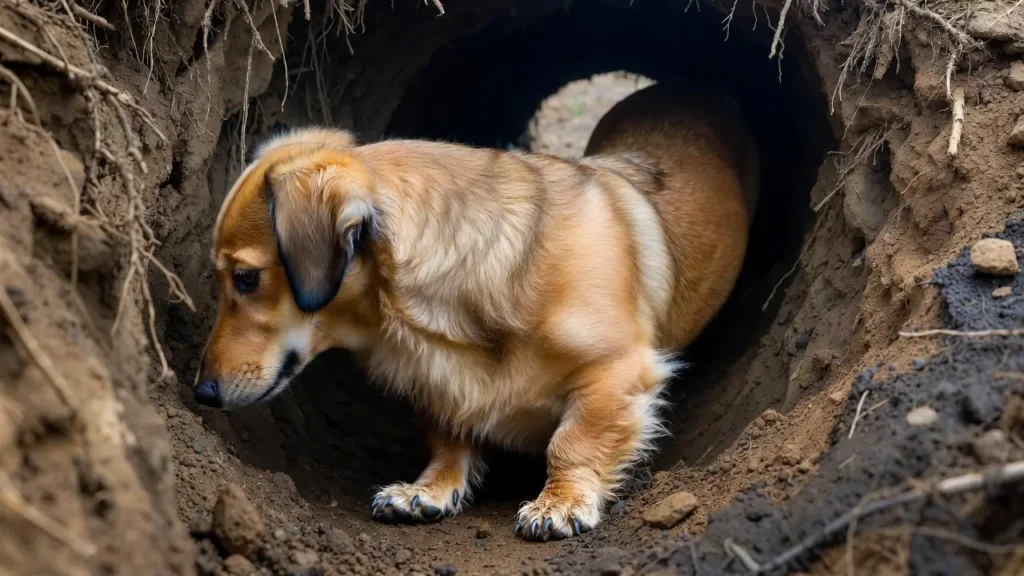
How Did Burrow Hunting Shape Small Dog Body Design?
Burrow hunting selected for low stature, forward drive, strong forelimbs, and persistence under confinement. This form of work produced some of the most specialized canine body plans, where form followed function in measurable anatomical ways.
“Go-to-Ground” Morphology
“Go-to-ground” describes a dog’s ability and willingness to enter underground burrows to confront quarry in darkness and confined space. This work required specific physical adaptations:
- Limb-to-torso ratio influenced tunnel efficiency. Dogs with shorter legs relative to body length maintained stability in horizontal tunnels and could brace against tunnel walls during confrontation. Veterinary biomechanics research shows that limb proportions affect locomotion efficiency in confined substrates, with optimal ratios varying by tunnel diameter and soil resistance.
- Chest depth and width affected breathing and maneuverability. A moderately deep but narrow chest preserved lung capacity while allowing rotation in tight spaces; excessive width increased friction and reduced turning ability.
- Spinal length and flexibility enabled serpentine movement through curved or branching tunnels. Longer, more flexible spines allowed navigation through passages that blocked stockier builds.
- Forelimb strength and claw structure determined digging capacity. Robust shoulders, strong forelimbs, and durable claws supported sustained excavation and tunnel modification across different soil types.
Behavioral Requirements of Burrow Work
Beyond anatomy, burrow hunting demanded scent persistence, defined as sustained focus on a target odor despite darkness, discomfort, and competing stimuli. Vocal signaling allowed handlers above ground to locate the dog and confirm contact with quarry. Tunnel endurance required tolerance of low light, restricted airflow, and physical risk for extended periods.
These traits persist even when the dog no longer works underground. Modern burrow-bred dogs often dig in gardens, burrow under furniture or blankets, and vocalize in response to underground sounds—behaviors that appear puzzling without historical context.
Why Is The Dachshund Known For Badger Hunting?
The Dachshund is associated with badger hunting because the breed was developed specifically to pursue quarry into burrows using scent tracking, digging, and sustained vocal signaling. The name itself reflects this purpose: Dachshund translates from German as “badger dog.”
Dachshund hunting history centers on German forest ecosystems where badgers constructed extensive underground set systems, often exceeding 30 feet in length with multiple chambers and exits. Hunters required dogs small enough to enter these systems, persistent enough to maintain pressure on a defensive quarry weighing up to 25 pounds, and vocal enough to signal location from below ground.
The breed’s long body, short legs, and flexible spine reflect structural optimization for tunnel work rather than cosmetic design. Scent persistence allows Dachshunds to remain focused on badger scent despite encountering other animals underground. Digging behavior enables passage enlargement when quarry block tunnels. Vocalization intensity typically increases once a quarry is located, guiding handlers to the correct excavation point.
Historical accounts describe Dachshunds remaining underground for extended periods, maintaining pressure on quarries until hunters could intervene. In modern environments, this endurance often appears as determined problem-solving, persistent digging, and sustained focus on scent trails. These behaviors are not defects but predictable expressions of traits selected through centuries of specialized work.
How Did Ratting And Vermin Control Shape Toy And Small Terrier Breeds?
Ratting selected for rapid strike timing, strong prey drive, visual tracking accuracy, and confident engagement with rodents in confined indoor environments. These pressures produced small terrier and toy breeds with behavioral profiles that remain visible in modern dogs.
The Rodent Problem In Historical Context
Mills, kitchens, granaries, stables, and court chambers faced persistent rodent infestation. Rats reproduce quickly; under favorable conditions, a single breeding pair can generate thousands of descendants within a year, making unchecked populations a serious economic threat in agricultural societies. Rodents contaminated stored food, damaged goods, and contributed to disease transmission.
Textile mills during the Industrial Revolution created ideal rodent habitats. Warm machinery, dense storage, and food scraps supported large rat populations. Small terrier-type dogs, including early Yorkshire Terrier, were valued because they could move between looms and storage areas and capture rodents in motion within narrow spaces.
Physical And Behavioral Adaptations
Effective ratting depends on reaction speed. Rats accelerate rapidly and change direction unpredictably. Successful ratters developed anticipatory visual tracking and strike timing that intercepted prey before escape routes could be used.
The bite-and-shake action common in small terriers produces rapid cervical injury, neutralizing rodents efficiently. This behavior reflects strong jaw musculature relative to body size and instinctive head-shaking triggered by prey-scale resistance.
Persistence was equally important. Ratters continued hunting despite fatigue or obstacles, a trait that appears today as sustained toy focus, high play drive, and difficulty disengaging from fast-moving stimuli.
Heightened auditory sensitivity allowed detection of rodents behind walls, beneath flooring, or inside storage containers. In modern homes, this same sensitivity often manifests as reactivity to environmental sounds such as doorbells or appliances.
Why Was The Papillon Associated With Indoor Pest Control In Courts?
The Papillon is best documented as a court companion breed, but some historical accounts suggest small spaniel-type dogs may have assisted with incidental rodent control in palace interiors where discretion mattered.
Royal residences contained fabric storage rooms, kitchens, and private chambers vulnerable to rodent intrusion. Large working terriers were impractical in these environments due to noise, coat texture, and potential damage. Papillons, valued primarily for companionship, possessed agility and alertness that may have allowed limited pest deterrence without disrupting court life.
Paintings and household records consistently portray Papillons as companion dogs rather than formal ratters. Any working contribution should be viewed as secondary to their ornamental and social role, not a defining breeding purpose. Modern Papillons retain strong visual interest in small moving objects and display notable agility, reflecting inherited attention and motion sensitivity rather than dedicated vermin specialization.
Why Did The Yorkshire Terrier Become A Mill Ratter?
The Yorkshire Terrier became associated with mill ratting because textile mills and worker housing faced continuous rodent pressure, and small terriers could access spaces around machinery while remaining manageable in crowded living conditions.
Nineteenth-century English mills provided warmth, shelter, and food sources that supported large rat populations. Contemporary reports and breed histories describe terrier-type dogs being used to reduce infestations that damaged materials and threatened worker health.
Yorkshire Terriers, developed from regional terrier stock, combined compact size with determination and rapid bite delivery. Early examples weighed slightly more and carried less profuse coats than modern show dogs, making them better suited to industrial environments. Selective breeding later emphasized coat aesthetics, but core ratter behaviors persisted.
Today, Yorkshire Terriers commonly show motion sensitivity, vocal alerting, and intense focus on small moving objects—behaviors consistent with their historical ratting context.
Why Is The Miniature Schnauzer Linked To Farm Pest Control?
The Miniature Schnauzer is linked to farm pest control because agricultural settings required both rodent removal and environmental alerting around barns, feed rooms, and poultry areas.
Rodents consume and contaminate stored grain, while attracting larger predators. Effective pest control reduced feed loss and protected livestock health. Studies in agricultural management show that rodent control programs can reduce feed waste by 15–30 percent, representing substantial economic benefit.
Miniature Schnauzers combined vermin drive with territorial awareness, alerting to unusual activity while hunting opportunistically. This dual function appears today as watchfulness paired with interest in small animals and environmental changes.
Understanding this background helps explain why modern Miniature Schnauzers often patrol spaces, investigate sounds, and show sustained engagement with movement rather than remaining passive companions.
How Did Flushing Work Create Small Sporting Behaviors?
Flushing work selected for short-burst speed, close handler cooperation, and systematic searching through vegetation to force hidden game into open areas where hunters could act. This form of work favored dogs that operated within a defined range, responded quickly to direction, and reset efficiently after each flush rather than pursuing quarry independently.
Flushing Mechanics
Dense hedgerows, brush cover, and upland habitats conceal rabbits, ground birds, and similar quarry that rarely emerge without applied pressure. Flushing dogs worked methodically through this cover, using scent, movement, and disturbance to trigger flight or escape responses that exposed game to hunters or nets.
Unlike pursuit hunters, flushing dogs were required to remain within firearm or net range. Recall reliability was therefore critical. Dogs that failed to return promptly after a flush disrupted coordination and reduced hunting efficiency. Selection favored individuals that maintained constant spatial awareness of the handler rather than chasing quarry beyond the working zone.
Search patterning, often described as quartering, refers to structured back-and-forth movement through cover that maximizes area coverage. Effective flushers learned to search methodically rather than randomly, increasing the probability of game contact per unit area searched.
Flushing stamina differed from endurance tracking. Work occurred in short, high-intensity bursts—often 10 to 15 minutes—followed by brief recovery periods. This contrasts with scent hounds, which trail for extended durations, and sight hounds, which rely on explosive speed over open ground. Flushing behavior selected for repeatable intensity rather than long-duration output.
Wildlife and hunting efficiency studies show that successful flushing depends heavily on handler-dog coordination, measured through metrics such as flush rate per acre, percentage of productive contacts, and post-flush compliance. Dogs that synchronized movement and timing with handlers consistently produced better outcomes.
Modern small sporting breeds often retain these cooperative traits. Many display strong handler focus, rapid response to direction changes, and enthusiasm for structured search games—behaviors that reflect flushing heritage rather than general obedience training.
How Did Scent Trailing Create “Nose-First” Small Dogs?
Scent trailing selected for olfactory prioritization, ground-level tracking persistence, and route memory over short to moderate distances. This work produced dogs that process environmental information primarily through scent rather than vision.
Olfactory Specialization
Canine olfaction research shows that scent-oriented dogs devote a significantly higher proportion of exploratory behavior to odor sampling compared to visually oriented breeds. While sight hounds scan for motion, scent trailers maintain sustained nose-to-ground contact, interpreting chemical cues related to direction, recency, and passage.
Trail adherence describes a dog’s ability to remain committed to a specific scent path despite intersecting trails or environmental distractions. Strong adherence reflects scent discrimination capacity rather than obedience, allowing the dog to ignore irrelevant stimuli while maintaining task focus.
Distraction resistance in scent work differs from general impulse control. A scent trail provides intrinsic reinforcement, meaning dogs may ignore food, toys, or handler cues while tracking. In non-working contexts, this intensity is often misinterpreted as stubbornness when it actually reflects task prioritization.
Route memory enables experienced scent trailers to recall successful paths and anticipate movement patterns. In modern dogs, this appears as strong location memory—returning repeatedly to areas where notable scents were previously encountered.
Owners of small scent-oriented breeds often report frustration during walks due to frequent stopping, pulling toward odor sources, and apparent inattentiveness. Recognizing these behaviors as inherited scent-trailing traits allows for appropriate outlets such as structured nose work and scent games rather than excessive correction.
Why Do Many Small Dogs Act Like Alarm Systems?
Alarm duty selected for rapid threat detection, low stimulus thresholds for vocal signaling, and sensitivity to territorial boundaries within homes, shops, and camps. This work produced dogs with heightened vigilance rather than physical guarding capacity.
Security Functions
Before mechanical alarms, households relied on early warning. Small dogs provided continuous environmental monitoring and immediate vocal alerts to approaching strangers, animals, or unusual activity. Physical confrontation was not required; signaling allowed human intervention before threats escalated.
Compact size enabled access to interior spaces, storage areas, and boundary zones that larger dogs could not monitor effectively. This made small dogs efficient sentinels in dense living environments.
Behavioral Characteristics
Bark threshold refers to the level of stimulus required to trigger vocalization. Alarm-oriented breeds were selected for low thresholds, responding to subtle auditory, visual, or scent changes. This same trait explains why modern small dogs often react to door sounds, footsteps, or movement outside windows.
Common reactivity triggers include novelty, boundary approach, and movement. These align directly with historical alarm functions: detect anything unusual and signal immediately.
Behavioral research shows that alert barking correlates strongly with auditory novelty, visual motion near boundaries, and unfamiliar environmental changes, with frequency influenced by breed background and individual temperament.
Which Small Breeds Are Commonly Used For Alert Roles?
Small spitz-type and terrier-type breeds are frequently associated with alert roles because vigilance and vocal signaling increase perceived security in confined living environments.
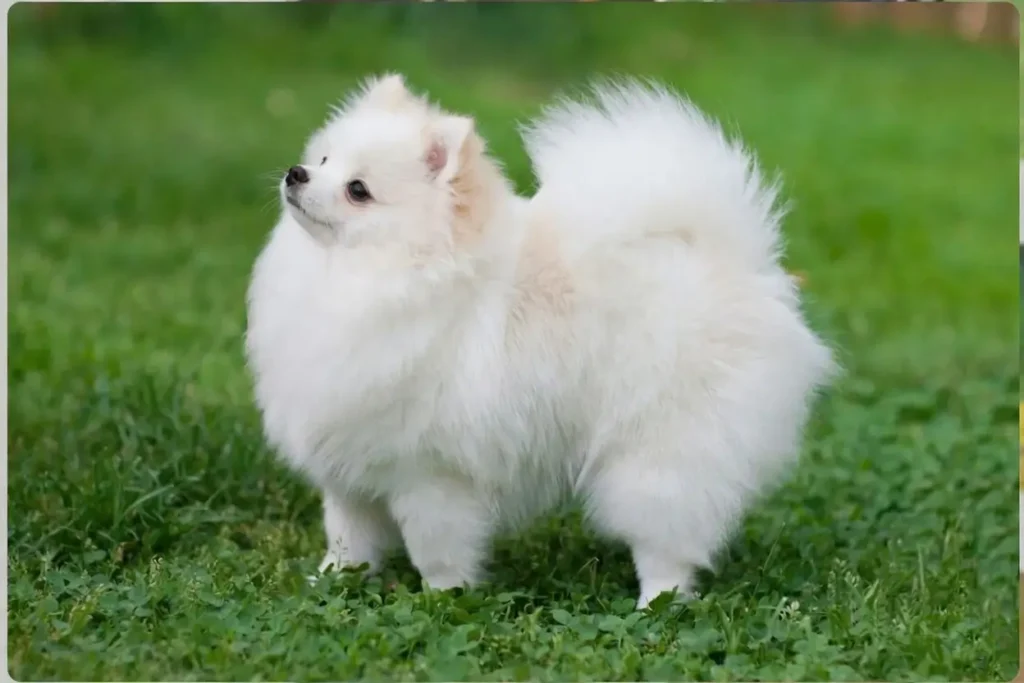
The Pomeranian, descended from larger northern spitz dogs, was reduced in size while retaining characteristic alertness and vocal responsiveness. Historical records show a transition from utility spitz ancestry to companion-alert roles in European households.
The Miniature Pinscher originated as a multifunctional farm dog combining ratting with watchdog duties. Territorial awareness and rapid alerting made the breed effective as a small guardian around property boundaries.
The Chihuahua is best documented in later household roles emphasizing companionship and vigilance. While theories linking the breed to ancient cultures remain debated, historical accounts consistently describe Chihuahuas as effective indoor alert dogs due to their sensitivity, bonding, and vocal nature.
These breeds illustrate how alarm functions shaped modern behavior. Vocalization, environmental monitoring, and reactivity are not behavioral flaws but predictable expressions of traits selected for early warning roles over generations.
What Court Roles Did “Toy” Breeds Perform Besides Companionship?
Court toy breeds were not bred solely for decoration. In palace environments, they functioned as proximity sentinels, combining companionship with early-warning roles. Their work centered on detecting movement, signaling visitors, and remaining close to high-value individuals during daily life, ceremonies, and travel. This was not physical guarding but close-range security integrated into court routines.
Palace Security Dynamics
European and Asian courts imposed strict behavioral and spatial rules. Large guard dogs could not enter private chambers, ceremonial halls, or confined living quarters, nor could they accompany nobility during formal events without violating etiquette. Small dogs filled this gap by providing continuous awareness without disruption.
Visitor signaling was one of their primary functions. In environments where visual privacy was limited and access was controlled by layers of servants, small dogs alerted their owners to approaching individuals through posture, movement, and vocal cues. In Chinese imperial settings, palace dogs such as the Pekingese were closely associated with private quarters, where proximity to elites and heightened alertness made them effective early-warning companions rather than physical deterrents.
Indoor surveillance required dogs capable of moving freely through corridors, chambers, and ceremonial spaces while remaining composed. Dogs that startled easily, vocalized excessively, or interfered with ritual activity were unsuitable. Court refinement favored breeds that balanced calm demeanor with environmental awareness. Shih Tzu–type palace dogs exemplified this balance, maintaining attentiveness while tolerating long periods of stillness during formal proceedings.
Travel amplified security concerns. Nobility frequently moved between residences, courts, and diplomatic destinations. Small dogs could ride in carriages, remain close during rest stops, and alert to approaching riders or animals. Historical accounts of Maltese-type dogs emphasize adaptability, close human bonding, and tolerance for confinement—traits well suited to traveling households and maritime or overland movement where space and resources were limited.
Pugs demonstrate the dual nature of court toy work. They were valued primarily as companions, yet they retained strong environmental awareness and vocal responsiveness. Their role emphasized alerting and presence rather than guarding, making them effective in noble households where early detection mattered more than confrontation.
Attribute Values That Enabled Court Work
Across court toy breeds, several trait clusters appear consistently:
- Proximity bonding
A strong tendency to remain near a specific individual, following from room to room and maintaining close physical distance. In modern settings, this often appears as “velcro dog” behavior rather than separation tolerance. - Sensitivity to subtle environmental change
Responsiveness to faint sounds, unfamiliar scents, or minor movement allowed early detection of approaching individuals before visual contact. - Portability and handling tolerance
Dogs that remained calm when carried, confined, or transported between environments were preferred during ceremonies and travel. - Low-disruption alerting
Vocal or behavioral signaling that drew attention without escalating into uncontrolled aggression or chaos.
Historical records show small dogs granted access privileges within courts that exceeded those of ordinary pets, indicating their role extended beyond ornamentation into recognized functional presence.
How Historical Jobs Predict Modern Behavior Problems In Small Dogs
Behavior issues in small dogs often arise when inherited work traits lack appropriate outlets. What appears as “problem behavior” is frequently a predictable expression of historical function operating in an environment that no longer provides resolution.
Behavior–Heritage Connections
- Chase responses to movement
Ratters and flushing dogs were selected for instant reaction to motion. Modern environments supply constant movement—vehicles, joggers, children, wildlife—without completion of the chase sequence, leading to frustration and inappropriate chasing. - Digging in furniture and bedding
Burrow hunters developed strong digging drive and comfort in confined spaces. Without acceptable outlets, this behavior redirects toward cushions, sofas, and garden beds. - Alert barking at doors and hallways
Sentinel breeds were selected for low alert thresholds and persistent signaling. Modern homes multiply triggers such as deliveries and shared corridors, escalating barking when heritage is ignored. - Resource guarding in tight spaces
Dogs that worked independently in confined environments developed strong control over limited resources. This can appear as guarding food, toys, or resting spots, especially indoors.
Veterinary behavior research consistently shows that under-stimulation significantly increases both frequency and intensity of unwanted behaviors in working-heritage dogs. When enrichment aligns with historical roles, behavioral issues decline rather than intensify.
Prevention Through Understanding
Understanding breed history reframes training. Recognizing that a Yorkshire Terrier’s reactivity to fast motion reflects mill-ratting heritage supports controlled chase outlets rather than punishment. Understanding that a Dachshund’s digging stems from burrow-hunting selection makes designated digging zones more effective than correction.
Modern care should reflect mental workload, not size alone. Many small working breeds require structured cognitive engagement beyond physical exercise to remain behaviorally stable.
Table Framework For Mapping Small Dog Jobs
The table framework standardizes historical evidence using consistent dimensions to enable direct comparison and avoid narrative repetition.
Dimensions Used
- Breed
- Historical job
- Work environment
- Selected traits
- Modern behavior signals
- Enrichment match
| Breed | Historical Job | Work Environment | Selected Traits | Modern Behavior Signals | Enrichment Match |
| Dachshund | Burrow hunter | Underground dens | Scent persistence, digging power | Digging, scent fixation | Digging box, scent trails |
| Yorkshire Terrier | Mill ratter | Textile mills | Quick strike, determination | Motion reactivity | Controlled chase games |
| Miniature Schnauzer | Farm pest control + alarm | Barns, feed rooms | Vigilance, versatility | Alert barking | Scent work, boundary training |
| Pekingese | Palace sentinel | Private chambers | Alertness, proximity bonding | Territorial awareness | Calm enrichment, routine |
| Maltese | Travel companion | Ships, households | Adaptability, bonding | Environmental alertness | Socialization, travel training |
| Shih Tzu | Palace companion | Ceremonial spaces | Calm awareness | Attachment behavior | Gentle play, routine |
| Pug | Companion-alert | Noble households | Sociability, alertness | Vocal signaling | Bonding games, temperature control |
- This structure connects historical function to modern behavior and appropriate enrichment without excess detail.
What Instruction List Converts Each Historical Job Into Safe Indoor Enrichment?
Use six enrichment categories that match the six historical job categories to reduce behavior spillover and provide appropriate outlets for inherited instincts.
Enrichment Instructions By Job Category
1. Build scent trails with hidden food: For breeds with scent trailing heritage, create indoor scent games by dragging treats along baseboards, hiding them in puzzle toys, or placing them in increasingly difficult locations. This satisfies scenting instincts without requiring outdoor space.
2. Use snuffle mats for foraging time: Ratters and pest control breeds benefit from snuffle mats where treats are hidden in fabric strips, simulating the search-and-capture sequence of their historical work. Allocate 10-15 minutes daily for this activity.
3. Run short recall drills in corridors: Flushing breeds and cooperative hunters need handler-focused activities. Practice recalls in hallways, rewarding immediate response. This builds the handler connection their ancestors required while providing mental stimulation.
4. Add controlled tug with release cues: Breeds with prey-capture heritage (ratters, small game hunters) need appropriate bite-and-shake outlets. Use tug toys with clear “take it” and “drop it” cues, preventing resource guarding while satisfying prey-handling instincts.
5. Create a digging box with paper fill: Burrow hunters need appropriate digging outlets. Fill a cardboard box or plastic container with shredded paper, burying toys and treats. This redirects digging from furniture and gardens to acceptable locations.
6. Limit visual triggers near windows, if street motion increases barking: For alarm breeds, manage environmental triggers by blocking window access during high-traffic times, using window film to reduce visual clarity, or training “quiet” cues with high-value rewards. This acknowledges alert instincts while preventing excessive reactivity.
These instructions transform historical jobs into modern enrichment that respects breed heritage while fitting contemporary living situations.
FAQ: Common Questions
What is a ratter dog?
A ratter dog is a dog bred to locate, pursue, and kill rodents in indoor storage and household environments using speed, visual tracking, and prey drive. Ratters worked in mills, barns, kitchens, and ships where rodent control protected food supplies and valuable goods.
Are toy breeds non-working by definition?
Toy breed classification describes size, while historical breeding records often include functional household roles such as vermin control and alert signaling. Many toy breeds performed real work despite their small size, with “toy” referring to their compact build rather than their capabilities.
Why do small dogs dig?
Digging is a retained work behavior from quarry pursuit and den access tasks, and it rises when the environment lacks scent and foraging outlets. Breeds like Dachshunds and terriers were selected for powerful digging ability, which persists in modern dogs without appropriate channels.
Do small dogs need as much exercise as large dogs?
Small dogs need exercise appropriate to their historical job category rather than their size alone. A Jack Russell Terrier with fox hunting heritage requires more intense activity than a Pekingese bred for palace companionship, despite similar size ranges.
Why are small dogs so vocal?
Many small dogs are vocal because they were selected for alarm duty or underground signaling where vocalization served essential work functions. Breeds like Miniature Schnauzers, Pomeranians, and Chihuahuas retain low bark thresholds from their alert heritage.
Can small working breeds still perform their original jobs?
Yes, many small working breeds excel in modern versions of their historical work through activities like barn hunt trials (ratting simulation), earth dog tests (burrow work), scent work competitions (trailing), and therapy work (companion roles).
How do I know what job my mixed-breed small dog was bred for?
Mixed-breed dogs may show behavioral indicators of their heritage: digging and tunneling suggest burrow hunter ancestry, intense chase behavior indicates ratter background, and high alertness with vocal responses suggests alarm or sentinel heritage. DNA testing can provide breed composition that helps predict job categories.
Are small dogs easier to train than large dogs?
Training ease depends on job heritage rather than size. Small dogs bred for independent work (terriers, burrow hunters) may show more independence, while those bred for cooperative roles (flushing dogs, court companions) often demonstrate stronger handler focus. Understanding breed history improves training approaches.
Conclusion: Honoring the Working Heritage of Small Dog Breeds
Small dogs lounging on sofas in 2026 carry working legacies that shaped their bodies, instincts, and behavior over centuries. From burrow hunters and ratters to palace sentinels and cooperative hunters, these breeds were never decorative by default. They were specialists, bred to solve real problems in spaces where large dogs could not.
Understanding those roles reframes modern behavior. Alert barking, digging, chasing, scent fixation, and intense bonding are not flaws to eliminate; they are predictable expressions of inherited work traits. When owners match enrichment to history—scent work for trailers, controlled chase for ratters, digging outlets for burrow hunters, and structured alert training for sentinels—behavior improves because instincts are respected, not suppressed.
Practical takeaways
- Learn your dog’s historical job category.
- Identify which inherited behaviors show up at home.
- Choose enrichment that matches function, not size.
- Train with instincts, not against them.
- Use breed-appropriate activities and regular veterinary care to support both behavior and health.
The next time you meet a small dog, look beyond the size. These “little big dogs” earned their place through work, and honoring that heritage creates calmer dogs and more informed owners.