Yes. Fresh pet dog food freezes well when temperature control and packaging control stay consistent. The storage detail that changes both safety and quality is thaw and handling control, especially sealed storage, separation from human food, and refrigerator-thaw discipline.
Fresh dog food spoils quickly when cold-chain control breaks. Many pet owners lose meals to freezer burn, odor transfer, or uncertain thaw safety. This guide explains freezing, thawing, refreezing, and hygiene using measurable controls and accredited sources.
Benefits of reading this article
- A safe freezing and thawing workflow anchored to FDA, CDC, and USDA guidance.
- A quality preservation checklist that reduces freezer burn, texture loss, and waste using packaging and portion controls.
The next section separates fresh dog food into cooked fresh and raw fresh, because safety handling differs by product type.
Can you freeze fresh pet dog food?
Yes. Fresh pet dog food freezes as a standard storage method when it stays sealed and stays cold. FDA guidance for pet food emphasizes prompt refrigeration of leftovers and a refrigerator set to 40°F or below as a baseline storage control.
Freezing adds two practical benefits:
- Time extension through temperature control.
- Portion discipline through pre-measured packs.
What temperature makes freezing and refrigeration defensible?
Refrigeration at 40°F (4°C) or below and consistent freezing create the most reliable safety baseline. FDA pet food storage guidance explicitly states a refrigerator setting of 40°F or below.
Use two measurable checks:
- Fridge control: thermometer reads 40°F or below.
- Freezer control: food stays fully frozen, and packs remain firm across the freezer cycle.
What is the storage detail that changes safety and quality?
The storage detail is thaw control. CDC raw pet food safety guidance focuses on keeping raw pet food frozen until use, thawing in the refrigerator, and keeping it sealed and separate from other foods.
Thaw control affects:
- Safety: bacterial growth risk increases when food warms.
- Quality: moisture loss increases during thaw, then texture declines after refreezing. USDA notes quality loss can occur due to moisture lost through thawing.
Does freezing kill bacteria in fresh or raw dog food?
No. Freezing does not kill all bacteria in food. WSAVA’s Raw Meat Based Diets toolkit states that freezing, dehydration, or freeze-drying do not kill all bacteria.
This matters most for raw fresh diets:
- Hygiene controls remain relevant after thaw.
- Cross contamination controls remain relevant during handling.
Evidence reviews of raw pet food note contamination concerns and hygiene thresholds in raw pet food handling contexts.
What types of “fresh” dog food freeze differently?
Fresh dog food falls into two common product types:
- Cooked fresh (gently cooked or fully cooked meals).
- Raw fresh (raw meat based diets).
Both freeze, but the risk profile differs:
- Cooked fresh centers on spoilage and temperature control.
- Raw fresh adds pathogen handling and kitchen hygiene controls.
What is the safest way to freeze fresh pet dog food?
Portion, seal, label, and freeze fast. These steps protect quality and reduce handling risk.
Portion control
Portioning reduces repeated thaw exposure. Portioning also reduces the number of container openings, which reduces odor transfer and freezer burn risk.
Practical portion units:
- 1 meal pack
- 2 meal pack
- 3 day pack
Sealed packaging control
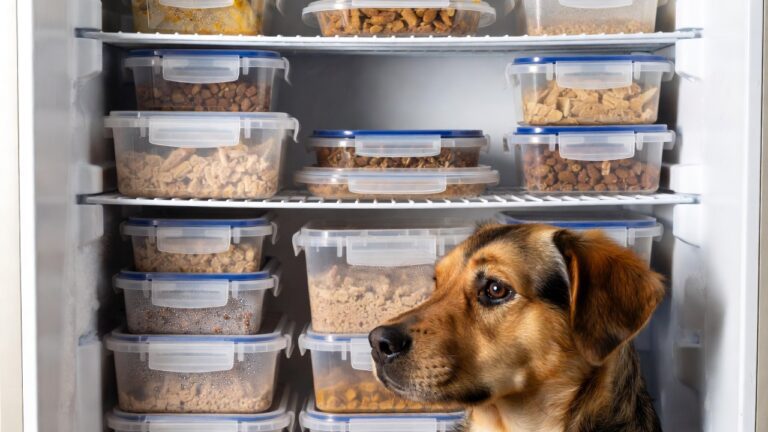
CDC recommends keeping raw pet food in a sealed container in the freezer and refrigerator, separate from other foods.
Packaging formats that reduce quality loss:
- freezer-grade zipper bags with air pressed out
- rigid leak-proof containers
- sealed original packs kept intact until use
Labeling control
Use a label with:
- freeze date
- protein type
- batch or lot number if present on packaging
A consumer safety guide from Virginia Cooperative Extension highlights keeping UPC code, label, and lot number records as part of traceability practices.
How long does frozen fresh dog food stay “good”?
Safety tracks temperature control, while quality tracks time and packaging quality. USDA emphasizes that refreezing and freezing can be safe under controlled thaw conditions, but quality can decline.
Use two separate concepts:
- Safe: remains continuously frozen, no thaw cycles.
- High quality: minimal freezer burn, minimal moisture loss, minimal odor transfer.
Quality loss signals:
- Surface drying and discoloration
- Ice crystal accumulation inside the pack
- Odor transfer from other freezer items
- Texture breakdown after thaw
What is the safest way to thaw frozen fresh dog food?
Thaw in the refrigerator inside a sealed container. CDC raw pet food safety guidance explicitly states: thaw frozen raw pet food in the refrigerator and keep it sealed and separate from other foods.
Three thaw methods appear in food safety guidance, with different risk profiles:
- Refrigerator thaw: slow and temperature stable.
- Cold water thaw: faster, but food safety guidance for thawing often ties this method to immediate cooking for human foods.
- Microwave thaw: fast, but uneven heating risk exists in general food safety contexts.
For pet food, the most defensible method remains refrigerator thaw with sealed containment and surface cleaning after handling.
Can you refreeze fresh pet dog food after thawing?
Yes, in a specific condition. Food thawed in the refrigerator can be refrozen, with quality loss as the main penalty. USDA FSIS states that once food is thawed in the refrigerator, it is safe to refreeze without cooking, though quality can decline due to moisture loss.
Two practical refreezing qualifiers:
- Refreeze after refrigerator thaw only.
- Avoid refreezing food that sat at room temperature. CDC guidance includes discarding leftovers that have been out at room temperature.
What hygiene controls reduce cross contamination during handling?
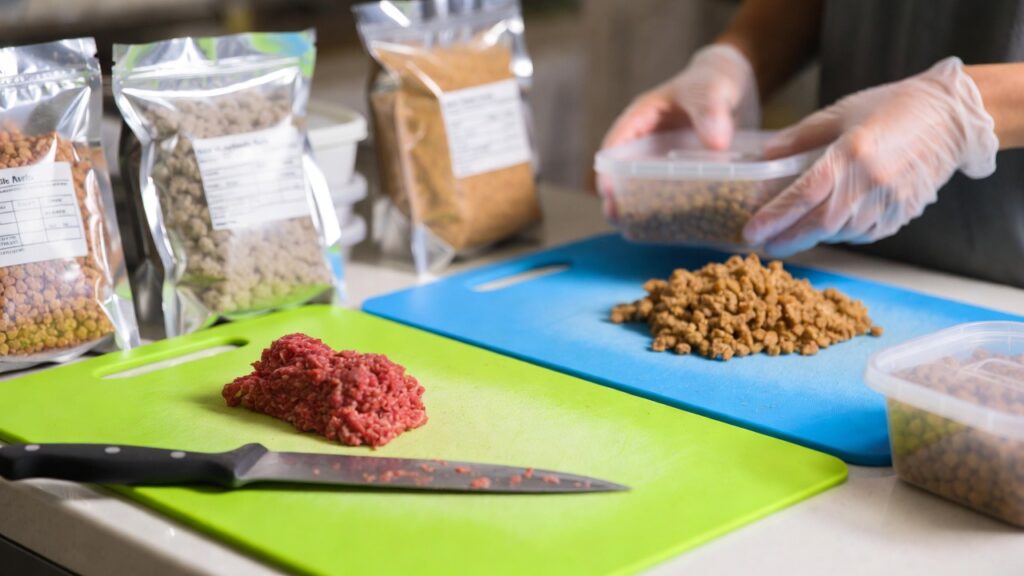
Handwashing, surface cleaning, and separation of pet food tools reduce cross contamination risk. FDA guidance includes washing and drying pet food bowls after each use and washing scooping and measuring utensils after each use.
CDC raw pet food safety adds:
- Wash hands with soap and water after handling raw pet food
- Clean items and surfaces that touched raw pet food
- Keep raw pet food separate from other foods in fridge and freezer
AVMA guidance also emphasizes prompt sealing and refrigeration of unused wet food at 40°F or below or discarding it, which strengthens the cold-chain rule for opened packs.
Hygiene checklist for daily use
- Dedicated pet food scoop and dedicated cutting surface.
- Separate storage shelf in refrigerator, ideally bottom shelf in a sealed container.
- Bowl wash after each meal, water bowl wash daily.
- Counter wipe after handling, then handwash.
What storage errors cause the biggest safety problems?
Counter thaw and room temperature leftovers create the highest risk patterns. CDC explicitly notes discarding leftovers that have been out at room temperature.
Common failure modes:
- Thawing on the counter
- Leaving the pack open in the refrigerator
- Storing pet food beside ready to eat human food without sealed containment
- Reusing a container without washing and drying
These errors combine temperature exposure with cross contamination exposure, which CDC and FDA guidance address directly through separation and sanitation steps.
What storage errors cause the biggest quality problems?
Air exposure causes freezer burn and odor transfer. Quality loss appears when moisture migrates and ice crystals form inside loosely sealed packs.
Quality failure patterns:
- Thin bags with trapped air
- Repeated open close cycles
- Freezing large blocks without portioning
- Storing next to strong odor foods without sealed containment
USDA notes quality loss from moisture loss during thaw and refreezing, which also aligns with freezer burn dynamics.
What is a practical freezing workflow for fresh dog food?
A practical workflow connects purchase, portioning, freezing, thawing, and bowl hygiene into one linear system.
Step 1: classify the food type
- Cooked fresh
- Raw fresh
Raw food adds strict separation and sanitation controls from CDC and WSAVA guidance.
Step 2: portion the food
Portion packs reduce repeated thaw cycles.
Step 3: seal and label
Sealed container storage and labeling supports both safety and traceability.
Step 4: freeze fast and store stable
Freeze packs flat to increase freezing speed and reduce ice crystal size.
Step 5: refrigerator thaw
CDC identifies refrigerator thaw as the core thaw control for raw pet food.
Step 6: wash bowls and tools
FDA includes washing bowls and utensils after each use.
Interactive tool: Freeze Ready Scorecard for fresh pet dog food
Score 1 point per “Yes.” Total range: 0 to 12.
- Refrigerator thermometer reads 40°F or below.
- Leftover wet food goes into the refrigerator promptly or goes to discard.
- Freezer packs stay sealed, leak-proof, and labeled.
- Food stays separate from human food in the refrigerator and freezer.
- Thaw happens in the refrigerator, not on the counter.
- Refreezing happens only after refrigerator thaw, not after warm exposure.
- Raw pet food handling includes handwashing and surface cleaning.
- Bowls get washed and dried after each meal.
- Scoops and measuring tools get washed and dried after use.
- Packages stay portioned to meal size to reduce repeated thaw.
- Quality checks happen for freezer burn and odor transfer.
- Lot label photo or written record exists for traceability.
Interpretation
- 10 to 12: storage control looks strong.
- 7 to 9: one or two failure points exist.
- 0 to 6: temperature and hygiene risk rises.
Frequently Asked Questions
Can you freeze fresh pet dog food in the original pack?
Yes. Original sealed packs freeze effectively, and sealed containment reduces contamination and odor transfer. CDC emphasizes sealed container storage and separation from other foods for raw pet food.
Can you freeze fresh pet dog food after opening?
Yes. FDA guidance emphasizes prompt refrigeration or discard of leftover wet or moist pet food and a refrigerator set to 40°F or below. Freezing adds time extension when sealing stays tight.
Can you refreeze fresh dog food after thawing?
Yes, after refrigerator thaw. USDA states refrigerator-thawed food can be refrozen, with quality loss as the main downside.
Does freezing make raw dog food pathogen-free?
No. WSAVA states freezing does not kill all bacteria in food.
What thaw method fits the lowest risk profile?
Refrigerator thaw in a sealed container fits the lowest risk profile in CDC raw pet food guidance.
Conclusion
Fresh pet dog food freezes safely when cold-chain discipline stays intact and the thaw step stays controlled. FDA and AVMA emphasize refrigeration of leftovers at 40°F or below and cleaning bowls and utensils. CDC emphasizes sealed storage, separation from other foods, and refrigerator thaw for raw pet food. USDA states refrigerator-thawed food can be refrozen, with quality loss as the main penalty.