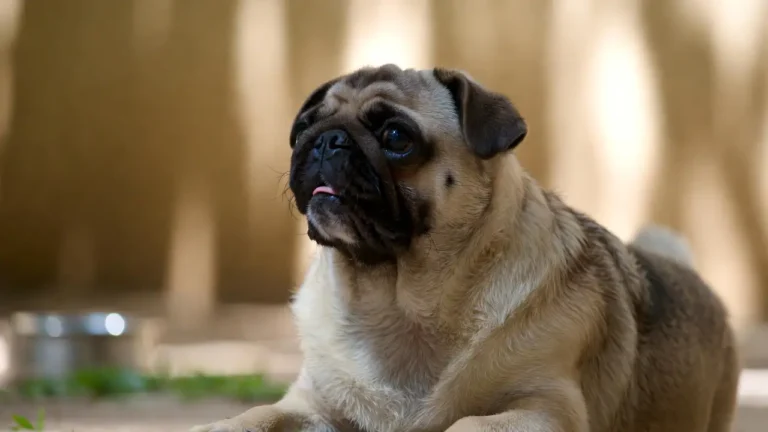
Pugs are often labeled “lazy,” but that label misses what is really happening inside their bodies. When a Pug stops early on a walk, pants heavily after mild play, or seeks out cool floors, it is easy to assume low motivation. In reality, many of these behaviors are driven by physical constraints, not personality. Breathing efficiency, heat dissipation, body condition, and airway structure all shape how long a Pug can move comfortably and safely. Misreading these signals can lead to frustration, unsafe exercise, or preventable heat events.
This article breaks down why Pugs look low-energy, what physiological limits sit behind that appearance, and how to tell constraint from temperament.
Benefits of Reading This Article
- Differentiate “Pug laziness” from physiologic limitation using measurable indicators tied to airway noise, heat load, and recovery time.
- Reduce preventable exertional and heat events by applying a risk segmentation framework aligned with published heat-related illness data and BOAS grading logic.
What Makes A Pug Look Lazy In Daily Life?
A Pug often appears low energy because airflow efficiency and heat dissipation capacity are constrained, which reduces comfortable activity time during play, walks, and warm indoor conditions. Flat-faced breeds are documented at increased risk of heat-related illness, and Pugs also show strong predispositions for airway-related disorders in primary care datasets.
What Is The Hidden Constraint Behind Pug Behavior That Looks “Lazy”?
The hidden constraint behind many “lazy Pug” observations is a combined limitation in upper airway function and thermoregulation, with body condition acting as a multiplier. Research on heat-related illness in UK primary care identifies brachycephalic conformation as a significant risk factor.
What does this look like as behavior?
A constraint-driven Pug often shows:
- Early stopping in walks
- Rapid panting escalation after mild effort
- Preference for cool floor contact
- Reduced tug or chase behavior in warm rooms
- Variable recovery time that expands with heat, excitement, or weight load
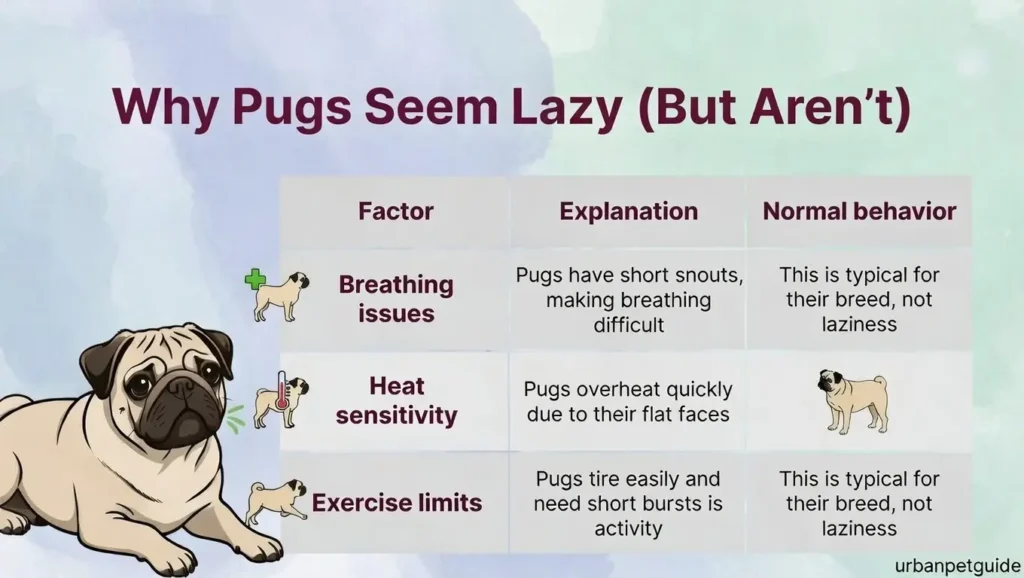
Are Pugs Lazy Or Limited By Physiology?
Pugs are frequently limited by physiology, not motivation, because brachycephalic airway mechanics and heat risk reduce the margin for safe exertion, especially during excitement or warm conditions.
What “Limited” Looks Like In Real Activity Patterns?
A constrained Pug often shows:
- Early pacing changes during a walk, such as stopping at short intervals.
- Rapid panting escalation after mild effort.
- Preference for cool surfaces and shorter play bouts.
- Fast recovery variability, where recovery time increases with warmth, excitement, or weight load.
These are functional signals that align with the concept of brachycephalic airway restriction and heat risk in flat-faced breeds.
What Evidence Says About Pug Predisposition?
In a VetCompass analysis comparing 4,308 Pugs with 21,835 non-Pugs, Pugs showed:
- Increased risk for 23 of 40 common disorders (57.5%)
- Reduced risk for 7 of 40 common disorders (17.5%)
Highest relative risk signals, including:
- BOAS: 53.9 times increased risk
- Narrowed nostrils: 51.3 times increased risk
- Eye ulcer: 13.0 times increased risk
- Skin fold dermatitis: 11.0 times increased risk
- Obesity: 3.9 times increased risk
Why Those Numbers Matter For “Low Energy”?
A Pug labeled “low energy” often shows activity truncation because the system load increases across:
- Airflow resistance
- Heat load
- Body mass load
- Irritation and pain load from the eyes, skin folds, ears, and teeth
What Hidden Constraint Most Commonly Sits Behind Pug’s Low Energy?
The most common hidden constraint behind Pug’s low energy is a combined airway and heat tolerance limitation that reduces exercise tolerance and increases recovery time.
Heat-related illness data from UK primary care shows:
- Brachycephalic dogs had 2.10 times the odds of heat-related illness compared with mesocephalic dogs.
- A VetCompass linked analysis reviewed over 900,000 dogs, with more than 1,200 dogs receiving veterinary care for heat stroke during the study period, and almost 400 were affected in a single year.
A Pug that stops, lies down, or refuses to continue a walk in warm conditions often displays constraint behavior, not disinterest.
What Do Large Datasets Say About The Pug Disorder Profile That Affects Activity?
Pugs carry a high documented disorder burden that includes multiple comfort-limiting conditions.
Prevalence Data From Primary Care Records
In a VetCompass primary-care study of 1,009 Pugs in England (2013), 688 Pugs (68.19%) had at least one disorder recorded during that year.
Most Prevalent Recorded Disorders
The Veterinary Ireland Journal VetCompass summary reports these prevalence values for Pugs in that 2013 sample:
- Overweight/obesity: 13.18% (95% CI 11.12–15.43)
- Corneal disorder: 8.72% (95% CI 7.05–10.63)
- Otitis externa: 7.53% (95% CI 5.98–9.34)
- Anal sac impaction: 6.54% (95% CI 5.09–8.25)
- Periodontal disease: 6.14% (95% CI 4.74–7.81)
Why This Matters For “Pug Low Energy”?
Each high-prevalence category above can reduce engagement through discomfort or physiologic load:
- Eye pain reduces play intensity and outdoor tolerance
- Ear inflammation reduces tolerance to handling and social interaction
- Oral pain reduces chewing and toy interest
- Obesity increases heat load and movement effort
What Is BOAS In Pugs And Why Does It Mimic Laziness?
BOAS (brachycephalic obstructive airway syndrome) is a syndrome where upper airway restriction and soft tissue dynamics reduce airflow, especially during exertion, heat, and excitement.
What does the BOAS Grading Scheme add?
The Respiratory Function Grading Scheme (RFGS) classifies dogs from Grade 0 to Grade 3:
- Grade 0: Clinically unaffected
- Grade 1: Clinically unaffected, mild noise
- Grade 2: Clinically affected, moderate signs
- Grade 3: Clinically affected, severe signs
This grading model turns “my Pug is lazy” into a functional question: noise, tolerance, recovery.
What BOAS Changes First in Day-to-Day Life?
The earliest visible behavior changes often include:
- Noise plus effort (snoring, stertor, stridor) during mild activity
- Exercise truncation (shorter play time, early stopping)
- Heat avoidance behavior (seeking cool floors, avoiding midday outdoors)
- Stress response (restlessness after exertion, difficulty settling)
These behaviors map to physiologic constraints rather than personality alone.
How Heat Intolerance Makes Pugs Look Unmotivated?
Heat intolerance alters Pug behavior because panting is the primary cooling mechanism in dogs, and brachycephalic anatomy can reduce effective airflow exchange. Heat-related illness poses an increased risk for flat-faced breeds, such as Pugs, framing heat as a predictable trigger for collapse, weakness, or exercise termination.
Brachycephalic dogs had higher odds of HRI (OR 2.10, 95% CI 1.68-2.64) compared to mesocephalic dogs.
Which Conditions Amplify Heat Risk In Pugs?
Heat risk increases with:
- High ambient temperature
- High humidity
- Poor airflow indoors
- High body condition score
- Recent exercise
- Excitement and stress
- Concurrent airway disease
A Pug that slows down in play or stops walking in warm conditions often displays risk-avoidant behavior driven by thermoregulation limits rather than lack of interest.
How Obesity Changes Breathing Load And Energy In Pugs?
Obesity changes Pug behavior by increasing metabolic heat, increasing respiratory workload, and increasing movement effort.
What Obesity Looks Like In Observable “Low Energy”
Obesity-associated limitations often present as:
- Short stride and early sitting
- Panting at rest in warm rooms
- Reluctance to jump
- Slow recovery after stairs
- Food-focused behavior plus low activity
These signs are non-specific, but they provide a high-value filter when combined with airway noise and heat sensitivity.
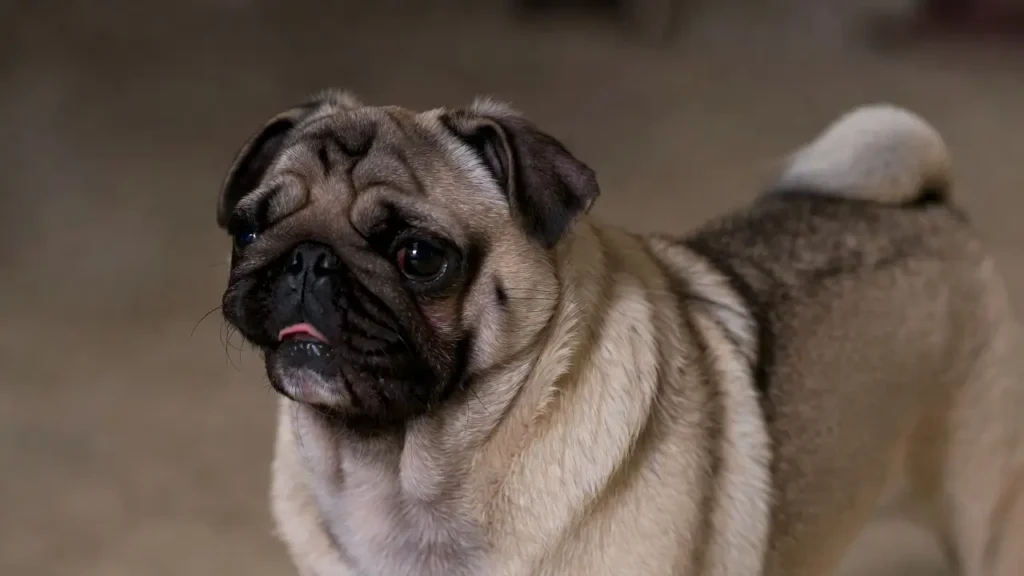
Obesity Versus Airway Constraint: Practical Differentiators
- Obesity dominant pattern: Slow movement, reluctance to jump, steady panting in warmth
- Airway dominant pattern: Noise with effort, abrupt stopping, rapid recovery variability with excitement
Both patterns can coexist in one Pug.
How Body Condition Score Adds Precision?
Body condition scoring provides a standardized clinical tool for quantifying adiposity. Published reviews describe a 9-point BCS scale used widely in practice, supporting consistent classification rather than subjective “looks fine” judgments.
What Other High-Frequency Pug Disorders Also Reduce Activity?
Reduced activity can reflect multi-factor load, not a single cause. Pugs show strong predispositions in areas that impact comfort. Low activity can also correlate with discomfort conditions that shift movement, play, and willingness to engage.
Eye Pain And Corneal Disease Signals
Pugs have documented predisposition signals for corneal ulceration in primary care data, with notable differences versus non-Pugs reported in the UK analysis. Ocular discomfort often reduces play intensity and increases avoidance of bright outdoor environments.
Skin Fold Dermatitis And Irritation Load
Skin fold dermatitis has been highlighted as a high-risk condition in flat-faced breeds, including the Pug, and irritation load can reduce play and increase agitation or withdrawal behaviors.
Periodontal Disease
Periodontal disease prevalence was 6.14% in the 2013 sample. Oral pain often reduces chewing engagement and can change appetite mechanics and toy interest.
Otitis Externa And Head Shaking Fatigue
Otitis externa appears among the prevalent recorded disorders in Pug-focused summaries, and recurring ear discomfort often changes social tolerance, head movement, and play behavior.
Otitis externa prevalence in the 2013 Pug sample was 7.53%. Otitis changes head movement tolerance and handling tolerance and can reduce play intensity.
Constraint Versus Temperament: A Short Diagnostic Logic Table
A constraint-driven pattern correlates with heat, exertion, airway noise, and recovery time.
| Observation | Constraint Signal | Temperament Signal |
| Stops early in warm weather | High | Low |
| Panting rises quickly after a mild effort | High | Low |
| Noisy breathing increases with excitement | High | Low |
| Activity improves in cooler rooms | High | Low |
| Refuses play in cool, calm conditions | Medium | Medium |
| Avoids interaction across contexts | Medium | High |
Decision Framework
Step 1: Does the activity stop early with heat or excitement
Early stopping and heavy panting in warm conditions suggest a heat-load constraint in brachycephalic dogs.
Step 2: Does noise accompany effort
Audible airway noise under mild exertion aligns with functional grading logic used for BOAS screening.
Step 3: Does recovery time expand after a mild effort
Delayed recovery after short play indicates physiologic strain rather than “lack of interest,” especially in a breed with documented airway disorder risk.
Step 4: Does body condition raise the workload
High adiposity increases heat and effort load, and obesity prevalence signals in Pugs support treating weight as a primary modifier.
How Heat And Excitement Turn Pug’s Low Energy Into A Safety Issue?
Heat-related illness is a defined veterinary risk event, not a mood state.
Heat Risk Evidence
| Risk Multiplier | Mechanism | Observable Output |
| Warm ambient temperature | Heat load rises | Early stopping, floor seeking |
| High humidity | Cooling efficiency drops | Persistent panting |
| Excitement | Airway dynamics worsen | Noisy breathing, gagging |
| Overweight status | Heat production rises | Reduced stamina |
| Poor airflow indoors | Heat retention rises | Restlessness, inability to settle |
These outputs map to heat illness epidemiology and brachycephalic risk.
A Four-Step Decision Framework: Is This Pug Lazy Or Limited?
A Pug is more likely limited when activity reduction correlates with heat, exertion, and recovery dynamics rather than with preference alone.
Step 1: Does the pattern bworsen with warmth?
Heat-related illness research quantifies a higher risk in brachycephalic dogs. A behavior pattern that worsens with warmth increases the probability of heat-load limitation.
Step 2: Does breathing noise rise with exertion or excitement?
BOAS pathophysiology descriptions connect airway obstruction to exertional signs and inspiratory noise.
Step 3: Does recovery time expand after mild activity?
Recovery-time expansion aligns with physiologic strain and appears repeatedly in BOAS descriptions and clinical grading discussions.
Step 4: Does body condition amplify the pattern?
Obesity is a prevalent disorder and a risk modifier in breed comparisons.
What Activity “Dosage” Looks Like For Pugs In A Risk-Controlled Plan?
Pug activity planning works best as dose and response, not a fixed distance goal. A dose model matches the functional grading concept used in BOAS evaluation and aligns with heat risk evidence in flat-faced dogs.
Activity Dose Variables
- Duration
- Intensity
- Temperature
- Humidity
- Surface heat
- Harness type
- Body condition
Activity Dose Matrix (Risk-Weighted)
| Dose Type | Heat Load | Airway Load | Typical Use Case |
| short sniff walk | low | low | warm days, low stamina days |
| interval walk with pauses | medium | medium | moderate climate, stable recovery |
| indoor enrichment | low | low | high heat, high humidity |
| chasing games | high | high | cool conditions only, close monitoring |
What “Lazy” Looks Like In Different Scenarios And What It Often Indicates?
Why Does Pug Stop Walking After A Few Minutes?
Early stopping often indicates heat load or airflow constraint, especially when accompanied by noisy breathing or rapid panting in mild conditions. Heat-related illness research identifies brachycephaly as a risk factor.
Why Does Pug Prefer Sleeping Over Playing?
High rest time often correlates with recovery demand after mild exertion, or discomfort drivers such as skin fold irritation, otitis, or ocular pain, which have documented prevalence or predisposition signals in Pugs.
Why Does Pug Pant Indoors With Minimal Activity?
Indoor panting often increases with warmth, stress, airway resistance, or excess body weight. Heat illness studies and obesity burden reporting provide the risk context for this pattern in flat-faced breeds and in Pugs.
What Improves Pug Engagement Without Increasing Risk?
The goal is to improve engagement under controlled load conditions.
Environment Controls
- Cool indoor airflow zones
- Shaded outdoor timing
- Avoidance of hot surfaces
Heat-related illness research supports exertional triggers as the dominant category, which elevates the value of timing and environmental control.
Handling Controls
- Calm transitions before play
- Short activity blocks
- Recovery observation
Monitoring Controls
- Weekly weight trend
- Recovery-time tracking
- Symptom logging tied to temperature
Why Prevention Has A Planning Value?
Population life expectancy estimates contextualize lifetime risk exposure.
Dog life expectancy at birth
- Pug: 7.7 years
- Jack Russell Terrier: 12.7 years
- Yorkshire Terrier: 12.5 years
- Border Collie: 12.1 years
- Springer Spaniel: 11.9 years
- Crossbred: 11.8 years
- Labrador Retriever: 11.7 years
- Staffordshire Bull Terrier: 11.3 years
- Cocker Spaniel: 11.3 years
- Cavalier King Charles Spaniel: 10.4 years
- German Shepherd Dog: 10.1 years
- Beagle: 9.8 years
- Husky: 9.5 years
- Chihuahua: 7.9 years
- American Bulldog: 7.7 years
- English Bulldog: 7.3 years
- French Bulldog: 4.5 years
This is not an individual prediction. It is a population estimate used for planning and risk framing.
What To Bring To A Vet Visit When “Lazy” Is The Complaint?
A structured evidence packet improves clinical interpretation because it reduces reliance on vague descriptions.
Pug Evidence Pack Checklist
- 14-day weight trend
- Two photos per week from side and top views
- Short video at rest
- Short video after mild activity
- Symptom log with temperature context
- List of triggers: warmth, excitement, stairs, car rides
What converts “Pug Laziness” Into Measurable Data?
Measurement improves clarity because it links Pug behavior to conditions.
6 High-Value Metrics
- Activity dose: Minutes walked, number of stops
- Recovery time: Minutes to calm breathing after a fixed short walk
- Breathing noise grade: None, mild, moderate, severe
- Ambient context: Temperature, humidity note, sun exposure
- Body mass tracking: Weekly weight trend
- Episode count: gagging, reverse sneezing, regurgitation events with timestamps
A Simple Symptom Log Template
| Date | Temp Context | Walk Minutes | Stops | Noise Grade | Recovery Minutes | Episodes |
| YYYY-MM-DD | indoor or outdoor | none mild moderate severe | gagging, reverse sneezing, and regurgitation |
The “Lazy Pug” Misinterpretations
Myth: A Pug rests because the breed prefers inactivity
Reality: Epidemiology and physiology describe measurable constraints in airflow and heat risk that shorten comfortable activity time in brachycephalic dogs.
Myth: Snoring and noisy breathing equal normal breed traits with no functional impact
Reality: BOAS grading frameworks classify functional impact using clinical signs and exercise response.
Myth: Weight does not change breathing in a Pug
Reality: Obesity is a common condition in Pugs and is associated with exercise intolerance and heat intolerance.
Your Pug Is Not Lazy: It Is Managing Breathing And Heat Load
A Pug that pauses, pants fast, or chooses the cool floor is not “being stubborn.” Most of the time, it is responding to a smaller safety margin for airflow and cooling. That is why the same dog can look “unmotivated” in warm, humid, or high-excitement moments, yet show more interest and stamina in cooler, calmer conditions. The practical takeaway is simple: stop judging effort by distance or speed, and start judging it by response, noise, recovery time, and heat sensitivity. When you track those signals, you replace guesswork with patterns you can act on: smarter timing, shorter activity blocks, better indoor enrichment, and earlier vet support when the signs don’t add up. Respecting the constraint does not reduce your Pug’s life; it protects it and often leads to safer, happier engagement.
Frequently Asked Questions
Are Pugs naturally lazy?
Many “lazy” behaviors are actually pacing to avoid respiratory strain or overheating.
How can I tell laziness from a breathing limitation?
If effort triggers noisy breathing, rapid panting, or slow recovery, this indicates a constraint pattern.
Why do Pugs stop walking after a few minutes?
Early stopping commonly happens when heat load or airway resistance rises faster than the dog can compensate.
Is noisy breathing normal in Pugs?
It may be common, but it is still a functional sign worth tracking, especially if it worsens with activity.
Why does my Pug prefer cool floors?
Cool surfaces help reduce body temperature when panting is less efficient.
Can excitement make breathing worse?
Yes, arousal can increase the risk of airway collapse and increase respiratory effort during play or greetings.
Does weight really affect Pug’s stamina?
Yes, extra body fat increases heat production and metabolic effort, thereby reducing the safe activity window.
What is BOAS, and why does it matter for exercise?
BOAS is an upper-airway restriction that can reduce airflow during exertion, heat, and stress.
When is “low energy” a vet issue, not a personality trait?
If there’s frequent collapse, blue/pale gums, repeated gagging, or recovery takes unusually long, get checked.
What is the safest way to exercise a Pug?
Use short, cool-time walks, frequent pauses, indoor enrichment, and track recovery like a simple score.