

There are dog breeds that impress you with their intelligence, some that dazzle you with their charm, and then there are breeds like the Scottish Deerhound—dogs that seem sculpted from myth, history, and the rolling mists of the Highlands themselves. Among the world’s tallest and most elegant canines, the Scottish Deerhound is a creature of both gentle spirit and powerful athleticism. It is a breed that has centuries of tradition, companionship, and purpose in its shaggy body.
The Scottish Deerhound, commonly known as the “Royal Dog of Scotland,” was once regarded so highly that only nobility could own them. Even though their original purpose of stag hunting has long gone, their noble nature, calm temper, and gorgeous beauty have gained them a faithful following among the lovers of the dog, who are amazed by the formerly majestic and extremely loving breed.
This is a dog that can trail a deer through a rocky path at a scalding pace and then, in a few seconds, stretch over a sofa with the composure of an old-fashioned couch wit. This comprehensive guide covers the Scottish Deerhound, such as their origin, temperament, care routine, health issues, training, nutrition, exercise needs, etc.
It could be a good idea to add one to your family, or you only want to know this marvelous breed better; this detailed source will open your eyes to the real picture of the Deerhound.
History of the Scottish Deerhound: A Mixed-Breed Deerhound with a Hazy or Mythical Origin
No breed has as many stories as the Scottish Deerhound or as many legends incorporated into the side of their history. They had a history of royalty, mountains, and hunting red deer, a job that demanded bravery as well as speed.
A Noble Heritage
The ancestry of the Deerhound can be supposed to go back more than a thousand years. The written accounts are varied, but there is a consensus that these dogs developed out of the early Celtic hounds and eventually became adapted to tracking and hunting down large deer in the Highlands.
They were so much valued for their ability to hunt and by their noble presence that:
- They could only be owned by Scottish chieftains or nobility.
- The gifting of a Deerhound was regarded as a privilege that was befitting kings.
- Losing a Deerhound during a hunt was treated almost like losing a valuable warrior.
Designed for the Highlands
The Deerhound is not a dog shaped by chance but by necessity:
- Their long, wiry coat protects against rain, snow, and cold.
- Their deep chest supports powerful lung capacity for long-distance pursuit.
- Their long legs and narrow frame are built for speed and endurance.
- Their sharp eyesight makes them notice the movement at a distance.
These characteristics enabled the Deerhound to work as a coursing hound way before the modern modes of hunting were available.
A Transition from Hunting to Companionship
When firearms substituted for dogs in the deer hunt and wild stags became scarce, the major purpose of the Deerhound was to give place to the firearm. Today, they no longer make good hunters, but rather good friends who have become the quiet and peaceful companions of any family fortunate enough to take them in.
What Does a Scottish Deerhound Look Like Close-up?
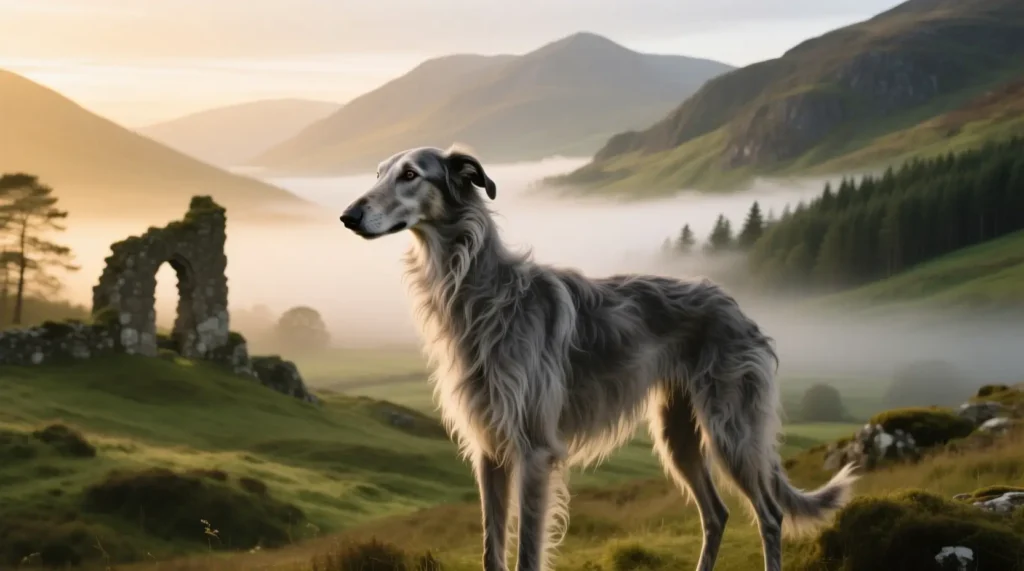
Although photographs portray the height and grace of a Deerhound, it would be impossible to realize the physical existence of this animal without thorough examination.
Size and Build
The Scottish Deerhound is a heavyweight that is commonly confused with the Irish Wolfhound; however, it is usually a bit smaller and more sophisticated.
- Height: 28–32 inches at the shoulder
- Weight: 75–110 pounds
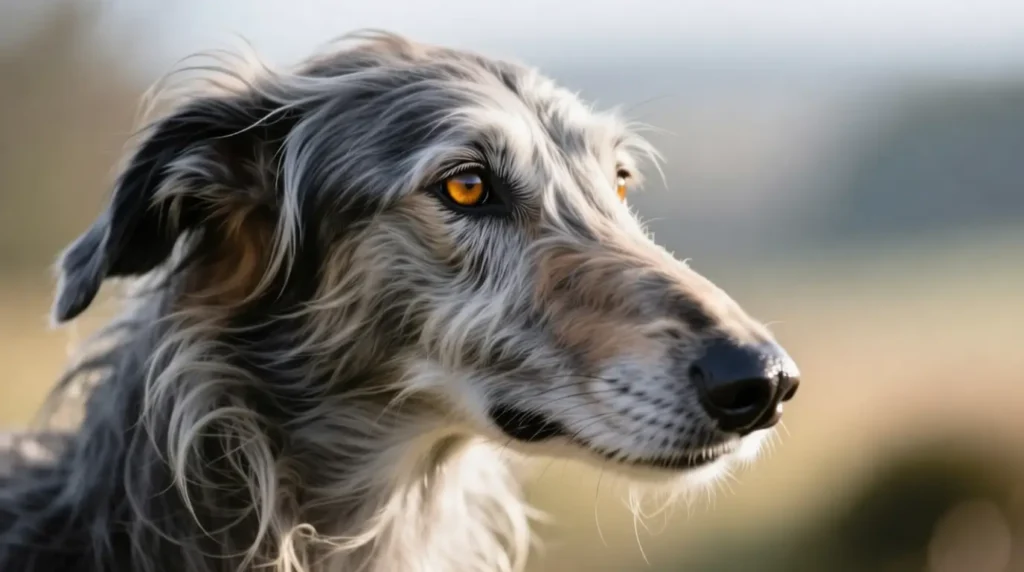
Deerhounds are lightweight and graciously carried regardless of their size. Their long legs, narrow waist, and deep chest create a silhouette reminiscent of a Greyhound—stretched taller, with a more rugged coat.
Coat and Color
The Deerhound’s coat is part of what gives them their iconic, weathered appearance.
- Texture: Wiry, coarse, and slightly rough
- Undercoat: Soft, insulating
- Length: Typically 3–4 inches
- Common colors: Gray, blue-gray, brindle, fawn-gray
Their facial furnishings—whiskers, beard, and distinctive eyebrows—replace the need for expressive eyebrows because their eyes do plenty of talking.
Expression
Deerhounds have gentle, soulful eyes that convey a certain depth of emotion. They often appear contemplative, slightly reserved, or dreamy, like a poet watching the world go by.
Is the Scottish Deerhound the Right Dog for Everyone?
No, the Scottish Deerhound is not an ideal breed for every household.
Their temperament is delightful, but their needs are specific—and sometimes challenging.
Let’s break this down to understand the type of environment where a Deerhound truly thrives.
Understanding the Scottish Deerhound Temperament
If you ask longtime Deerhound owners to describe the breed, you will hear words like
- Gentle
- Dignified
- Easygoing
- Patient
- Loyal
- Quiet
But beneath that tranquility lies an independent spirit shaped by centuries of working far ahead of their human partners during hunts.
A Calm and Polite Presence
Inside the home, the Deerhound is one of the gentlest and most relaxed breeds imaginable. They are content to stretch out on a couch, your bed, or a soft rug—usually occupying far more space than expected.
They are affectionate without being clingy, and unlike needy breeds that shadow you like personal assistants, the Deerhound is perfectly content lounging nearby with quiet companionship.
A Subtle Sense of Humor
Deerhounds have a charming way of expressing themselves:
- They may gently lay a giant paw on your lap.
- They may sigh dramatically when bored.
- They may lean their whole body against you to show affection.
- They might carry shoes around for fun—but rarely chew them.
Their humor is understated but deeply endearing.
Reserved but Friendly
Deerhounds tend to be friendly toward people but not overly enthusiastic. They are polite greeters rather than exuberant jumpers. With proper socialization, they are wonderful around children, guests, and other large dogs.
High Prey Drive
Because they were bred to chase deer, their instincts remain strong.
Small animals—cats, squirrels, birds, rabbits—may trigger an instinctive chase response, especially outdoors. Many Deerhounds live peacefully with indoor cats, but caution is required.
Do Scottish Deerhound Puppies Behave Wildly?
Yes, Scottish Deerhound puppies and adolescents can be extremely energetic, destructive, and chaotic compared to adults.
This is a phase every owner must be prepared for.
Why Deerhound Puppies Are Challenging
- They grow rapidly in a short time.
- They have long legs they don’t quite know how to control.
- Their bones are fragile while developing.
- Their energy comes in intense bursts.
Expect:
- Romping
- Zoomies
- Chewing
- Digging
- Mischievous experiments with furniture placement
By two years of age, however, most Deerhounds mellow out dramatically, settling into the calm, couch-loving personalities the breed is known for.
Exercise Needs: Do Scottish Deerhounds Need a Lot of Activity?
Yes, Deerhounds need a lot of daily exercise, although they act lazy indoors.
This two-sided character is an eye-opener to any first-time sighthound owner.
Why Exercise Is Essential
Their bodies were sprinters’ and runners.
- Long strides
- Expansion of the chest of the lungs
- Fast acceleration
- Strong hindquarters
Regular exercise keeps them:
- Fit
- Mentally healthy
- Less destructive
- More relaxed
How Much Exercise Is Enough?
A typical adult Deerhound thrives with:
- 1–2 hours of activity per day
- One of those elongated fenced-in running fields
- Multiple brisk walks
- Play sessions
- Chance to get their legs out of the way
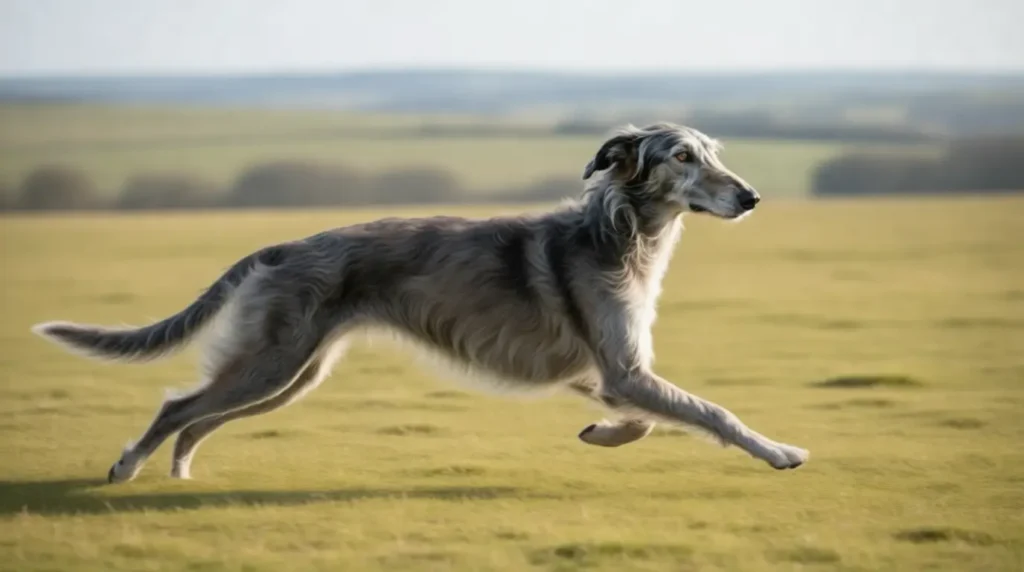
The Circumstance of Safe Running Spaces
Releasing a Deerhound in places with no fences is dangerous. In a moment, their predatory instincts may come into play, and when they are on the run, they may prove hard to pursue.
Training the Scottish Deerhound: Is It Difficult?
Yes, training a Deerhound can be challenging—not because they are not intelligent, but because they are independent thinkers.
A Different Kind of Intelligence
Deerhounds do not work like Border Collies or German Shepherds.
Where those breeds ask, “What do you need? How can I help?”
Deerhounds ask, “Is this worth my time?”
This doesn’t make them stubborn—just differently motivated.
Keys to Training Success
1. Positive Reinforcement
They respond extremely well to:
- High-value treats
- Praise
- Affection
- Gentle encouragement
Harsh methods or scolding damage trust and shut down their willingness to participate.
2. Short, Interesting Sessions
Deerhounds enjoy learning but get bored easily. Variety keeps them engaged.
3. Patience and Partnership
Raising a Deerhound is a talk and not a command job. The more respectful and patient you are, the better they respond.
Fun Activities Deerhounds Excel At
Though often couch potatoes at home, Deerhounds love sports that tap into their instincts:
- Lure coursing
- Nose work
- FastCAT (short-distance sprinting competitions)
- Agility (low-impact, modified for height)
- Long hikes
- Jogging with their owner
- Hunting simulations (in appropriate settings)
- Rally obedience
They enjoy being active partners, as long as the activity respects their physical needs.
How To Care for a Scottish Deerhound Daily
Owning a Deerhound is a rewarding experience, but it requires knowledge, consistency, and preparation.
Below is a complete breakdown of their care needs.
Grooming the Scottish Deerhound: Is It Hard?
No, Deerhounds are surprisingly easy to groom—especially compared to long-haired or heavily shedding breeds.
Coat Care
Their coat is
- Weather-resistant
- Dirt-resistant
- Slow to mat
- Easy to brush
- Naturally rugged
Weekly Brushing
It helps to brush your hair with a slicker brush or comb once a week.
- Remove dead hair
- Reduce shedding
- Distribute natural oils
- Keep the coat healthy
The Deerhounds that have thicker coats might require more frequent grooming.
Bathing
Deerhounds do not need baths very much except when they roll in mud or something with a dubious smell. Their coat is of a wiry nature, and it keeps off dirt.
Face and Eye Care
Deerhounds often have wispy facial hair that can grow into their eyes. A trim occasionally would keep the irritation at bay.
Ear Care
Their ears should be checked weekly for:
- Redness
- Odor
- Wax buildup
- Moisture
Sighthounds can be prone to ear infections when not monitored.
Nail Care
Despite their size, Deerhounds often have fast-growing nails that require trimming every 2–3 weeks.
Understanding Scottish Deerhound Health
Because they are giant, lean dogs, Deerhounds face several health concerns that every owner must understand. Awareness and early detection are key to keeping them healthy.
Below are the most common issues.
Do Scottish Deerhounds Have Many Health Problems?
Yes, Deerhounds are predisposed to several serious medical conditions. As they are usually fit and athletic, special attention should be paid to their genetic vulnerabilities.
Let’s explore them in detail.
Significant Health Issues of the Scottish Deerhound
1. Dilated Cardiomyopathy (DCM)
The effect of DCM on the heart muscle is weakening and enlargement. This makes pumping blood more difficult.
Symptoms
- Difficulty exercising
- Rapid breathing
- Fatigue
- Fainting
- Restlessness
Untreated, DCM can progress to congestive heart failure.
Nutrition Note
Some grain-free diets—particularly those with peas—have been linked to DCM in many breeds, including Deerhounds.
Consult a veterinarian before choosing dog food.
2. Osteosarcoma (Bone Cancer)
Sadly, large breeds such as the Deerhound are at a higher risk of being affected by osteosarcoma.
Common Signs
- Lameness
- Swelling
- Pain
- Acute weakness of the legs
Treatment often involves:
- Limb amputation
- Chemotherapy
- Pain management
Timely diagnosis enhances the results.
3. Bloat (Gastric Dilatation–Volvulus)
This is one of the most urgent and dangerous medical emergencies in the breed.
Signs of Bloat or GDV
- Distended abdomen
- Drooling
- Retching without vomiting
- Restlessness
- Pale gums
- Sudden weakness
A gastropexy (surgical stomach tacking) can prevent the stomach from twisting.
Other Health Concerns
Deerhounds may also experience:
- Liver shunt
- Hypothyroidism
- Anesthesia sensitivity
- Allergies
- Toenail injuries (due to long legs and thin nails)
- Bleeding disorders (in some lines)
Responsible breeders test for these issues.
How Long Do Scottish Deerhounds Live?
Deerhounds live less due to their huge size.
Most live 8–11 years, though some reach 12 or 13 with exceptional care and genetics.
Feeding and Nutrition: What Should a Scottish Deerhound Eat?
Feeding a Deerhound is not as simple as buying any dog food at the store.
They are small and growing, and their health needs sensitive nutrition.
What To Feed
Choose:
- AAFCO-approved formulas
- Massive breed-specific diets
- Foods appropriate to life stage (puppy, adult, senior)
- Diets recommended by your veterinarian
How Much To Feed
Take a general guideline depending on the food label; however, realize that:
- The deerhounds have an active metabolism
- The needs are dependent on the level of activity
- One should always maintain lean body weight
A veterinarian is able to give specific caloric advice.
Puppy Feeding
Puppies need:
- Large-breed puppy formulas
- Reduced, more frequent food intake (3 or 4 per day)
- Controlled calcium levels
- Careful weight monitoring
The fast growth enhances the chances of joint problems.
Food Safety: Prevention of Bloat at Mealtimes
To reduce risk:
- Use slow-feeder bowls
- Exercise should not be done just before or after meals
- Eat less often, twice a day
- Skip elevated bowls
- Offer serene times of eating
Behaviour and socialization: Comprehending Your Deerhound
Personality
Scottish Deerhounds are known for:
- Deep gentleness
- Quiet loyalty
- Contentment indoors
- A love for long naps
- Tone and emotional sensibility
They are loving and not clingy, and that is an ideal combination in most families
Interaction With Children
Deerhounds are generally patient and tolerant with kids, especially older or calm children. Supervision is necessary with toddlers simply because of the dog’s enormous size.
Interaction With Other Pets
- Good with other large dogs
- Potentially unsafe with small animals outdoors
- Indoor cats may be acceptable with early socialization
Challenges and solutions of training
What makes Deerhounds supposedly difficult to train sometimes?
Because they:
- Are independent
- Become bored easily
- Work best when they trust you
- Do not always see the need for commands
They are not defiant—just thoughtful.
Most Effective Training Techniques
- Positive reinforcement
- Gentle guidance
- Short sessions
- Changing routines
- Eating up excellence, not excellence
They understand fast, but they make decisions in regard to compliance.
Living With a Scottish Deerhound: What Is Daily Life Really Like?
The lifestyle associated with owning a Deerhound includes:
- Grace
- Quiet companionship
- Routine
- Outdoor time
- Occasional zoomies
- A lot of couch cuddling
- Flattering glances of passersby
Inside the Home
Surprisingly, they are not very energetic inside. Most love:
- Sleeping on soft surfaces
- Leaning against their owners
- Quiet evenings
- Staying near their family
Despite their size, they adapt well to calm households.
Outside the Home
They need:
- Space
- Running time
- Fresh air
- Secure fencing
A Deerhound with adequate exercise becomes one of the most relaxed breeds imaginable.
Grooming Breakdown
Coat Care
- Weekly brushing
- Occasional baths
- Seasonal attention for thicker coats
Skin Care
Their coat protects the skin so well that frequent bathing is unnecessary.
Eye Care
Pluck the fringe of hair on the eyes
Ear Care
The infections are prevented by checking weekly
Nail Care
It is necessary to trim regularly to avoid pain or injuries.
Is the Scottish Deerhound a Good Pet?
Yes, the Deerhound is a good pet for the right family.
They fit well on those people who:
- Have space
- Appreciate calm dogs
- Enjoy long walks
- Know the requirements of the sighthounds
- Need a kind, respectable friend
They may not be ideal for:
- First-time dog owners
- Very small homes
- Families having small pets that are unsupervised
- Individuals unable to exercise daily
The Scottish Deerhound is a noble, affectionate, dignified, and very faithful companion, and when known and well taken care of, one cannot forget him.
Conclusions: The Heart of the Scottish Deerhound
There are numerous great breeds of dogs in the world, which are not quite as majestic as the Scottish Deerhound. They are graceful creatures, strong and still tender, active and yet peaceful, noble and still tender.
It is about having a dog that helps you to relax in your house, provides loyalty in your life, and also adds a touch of classic grace to your daily universe.
To them, capable of satisfying their requirements and mindful of their breed, the Scottish Deerhound will be a companion like none other, faithful, loving, majestic, and irresistibly appealing.